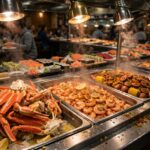
Walk into any buffet hungry and the line will make your decisions for you. The first thing you see goes on your plate, then the next thing, then the next, until you are sitting down with a mountain of food you did not actually choose — and no room left for the dishes you walked in hoping to eat. Buffets are designed that way. The cheap, filling stuff tends to sit right at the front, in big trays with big serving spoons, while the dishes worth the trip hide further down the line.
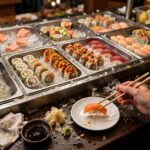
A plate-order strategy flips that around. It is not about eating less or being disciplined in some joyless way. It is about eating in an order that lets you taste the best of the line while you can still appreciate it. Here is a playbook that works at any buffet, tuned for the kind of Cajun, sushi, and Asian spread where the strongest section might be raw fish on one end and a bubbling hot line on the other.
First, Take the Lap
Before you pick up a plate, walk the whole line with empty hands. This is the single highest-return habit in buffet dining, and almost nobody does it. The lap tells you what actually exists: which sections are generous, which trays look freshly filled, where the carving or grill station sits, and what the dessert table holds. Without it, you are guessing. With it, you are choosing.
While you walk, make a rough mental ranking. Pick the two or three dishes you most want to try, note anything that looks like it will run out — a popular seafood tray, a small-batch specialty — and notice what you can safely skip. The lap takes ninety seconds and saves you from the classic regret of discovering the good stuff after you are already full.
Plate One: Explore, Don’t Commit
Your first plate should be small and curious, not a commitment. Think of it as a tasting flight: a few bites of several things rather than a full serving of one. A piece or two of sushi, a spoonful of something from the hot line, a taste of a salad or cold appetizer. The point is information. You are finding out which sections deserve a second visit and which ones you can cross off the list.
Keep flavors separate where you can. A small plate helps, and so does resisting the urge to stack wet, saucy dishes on top of delicate ones. If a strongly spiced Cajun dish shares a plate with a piece of sashimi, the sashimi loses. Give the delicate things their own space, even if it means an extra trip.
Plate one is also where you settle the freshness question. Taste the seafood and sushi early, while your palate is clean and while the trays are at their best. Raw fish and lightly cooked seafood reward a fresh palate in a way that a heavy, saucy dish does not — eat them after three plates of fried food and you will barely taste them.
Plate Two: Go Back to the Strongest Section
Now that you know what is good, go back with purpose. This is the plate where you eat the things you actually came for, in proper portions. If the sushi line was the star, this is your sushi plate. If the hot Cajun section won the tasting round, load up there. The first plate told you where the strength of the line is; the second plate is where you enjoy it.
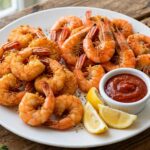
This is also the moment to apply the one rule that separates a good buffet meal from a disappointing one: eat the expensive, perishable, and hard-to-make dishes before the cheap fillers. Seafood, sashimi, carved meats, and made-to-order items belong on this plate. Rice, noodles, bread, and potatoes can wait. They are not going anywhere, they cost the kitchen almost nothing, and they expand in your stomach with ruthless efficiency. Save them for later and you will have room for the food you actually remember afterward.
Seafood Before the Fillers
The logic is simple, and it applies across the whole line. Starchy foods are satisfying in the moment and punishing in hindsight — they fill you up fast and dull your appetite for everything that comes after. Protein and seafood, by contrast, are satisfying without shutting down the meal. A plate that leads with sashimi, shrimp, or a well-made hot seafood dish leaves you room to keep exploring. A plate that leads with fried rice and rolls leaves you done.
That does not mean skipping the starches entirely. It means sequencing them. A scoop of rice alongside your second or third plate, once you have already eaten the best of the line, is a pleasure rather than a trap.
Pacing: The Pause Between Plates
Buffets punish speed. Eat three plates back to back and your stomach will file its complaint about twenty minutes after you have already finished. Build in a pause between plates — a few minutes of sitting, talking, drinking water.
Water is your best pacing tool. Sugary drinks and alcohol fill you up and blunt your palate at the same time, so if you want them, save them for later in the meal rather than starting with them. A glass of water between plates keeps you clear-headed about what you want next, and it costs you nothing in appetite.
For more on getting full value from a buffet visit without overdoing it, see our guide to getting the most value from a sushi buffet.
Working a Cajun-Sushi-Asian Line in Particular
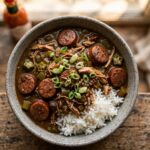
A line that mixes Cajun, sushi, and Asian cooking has a particular shape, and the order matters more here than at a single-cuisine buffet because the flavors are so different. Start at the delicate end — sushi and sashimi, cold salads, lighter appetizers — and move toward the bold end: spiced Cajun dishes, stir-fries, and rich sauces. Going the other direction, from a fiery, heavily seasoned dish straight to a piece of raw tuna, is like shouting and then trying to hear a whisper.
Within the hot section, the same principle holds. Taste the lighter preparations before the heaviest ones, and use small portions to find the dishes that are genuinely well made rather than merely loud. A buffet’s best dish is not always its spiciest or its most dramatic; often it is the quiet one — a well-seasoned soup, a properly cooked seafood dish — that the crowd walks past on the way to the fried things.
If a tray you wanted is empty or nearly so, do not settle for the tired remains. Wait for the refill or move on and circle back. Fresh trays taste better than old ones across the board, and a two-minute wait is a small price for food at its best. If you are unsure how fresh something is, a quick word with the staff will usually settle it.
Dessert: Scout Early, Eat Late
Dessert deserves the same reconnaissance treatment as the main line. Scout it during your first lap so you know whether it is worth saving room for, then ignore it until the end.
When the time comes, pick one or two things rather than a sample of everything. The best desserts on a buffet line are usually the ones that are hardest to make at home — a proper pudding, a fresh fruit preparation, something made in small batches — rather than the generic cakes that taste the same everywhere. Choose the interesting one, eat it slowly, and let it be the ending.
A Sample Run, Start to Finish
Put it together and a good buffet visit looks something like this. Lap the line with empty hands and rank what you see. Plate one: small tastes across the sections, delicate flavors first, seafood and sushi while your palate is fresh. Pause. Plate two: return to the strongest section and eat it properly, proteins and seafood before starches. Pause again. Plate three, if you still want it: the supporting dishes you skipped — rice, noodles, a second look at a favorite — in modest portions. Then dessert, chosen deliberately, eaten slowly.
The line will still be there on your next trip. The food you rushed past while you were full will not taste any better for having been eaten in a hurry.
And if you are still figuring out the manners of the line itself — how much to take, how to handle shared utensils, what counts as fair game — our guide to sushi buffet etiquette covers the unwritten rules that keep the whole thing pleasant for everyone.
The Real Payoff
A plate-order strategy does not make a buffet meal smaller. It makes it better. You leave having tasted the dishes that were worth the visit, with room to enjoy them, instead of leaving stuffed on filler and vaguely annoyed at yourself. The line did not change. The order you ate it in did — and that turns out to be most of the meal.

1 thought on “What to Eat First at a Buffet: The Plate-Order Strategy”