The first time you sit down with a plate of boiled snow crab legs, it can look like a puzzle. A cluster of long red legs, joined at a knuckle, with no obvious place to start — and everyone around you seems to know exactly what they are doing. The good news is that snow crab is the easiest crab there is to eat. The shells are thin, the meat comes out cleanly, and you barely need tools. Once you know the anatomy, the whole thing takes about a minute per cluster.
At Ombu Buffet in Marrero, the snow crab comes from the Fresh Boiled Seafood station, already cooked and served hot. Your job is only to get the meat out of the shell and into the butter. Here is how.
Know What You Are Looking At
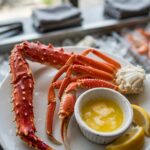
A snow crab cluster is several legs joined to a central piece — the shoulder, sometimes called the body section — by knuckles. Each leg has three parts worth knowing: the long middle segment, which holds the most meat; the joint, where the leg bends; and the pointed tip, which holds a thin sliver of meat and is mostly shell. The claw, when the cluster has one, is the thickest part and holds a chunk of firm meat.
The knuckle is the round joint between the leg and the shoulder. It looks unpromising, all shell and cartilage, but inside it sits a pocket of meat that is often the sweetest on the whole cluster. First-timers throw it away. Regulars never do.
Snow crab legs are sold as clusters, and one cluster is the right portion for a single trip to the line. Take one, eat it properly, and go back for another if you want more — better than loading your plate with three clusters that go cold while you are still working on the first.
What You Need (and What You Can Skip)
Your hands are the main tool. Snow crab shells are thin enough to break by bending, and the meat slides out without a fight. That is the whole reason snow crab is the buffet crab: nobody needs a toolbox to eat it.
A crab cracker or a pair of kitchen shears helps in exactly two spots — the claw and the knuckle — where the shell is thicker. If the buffet table has a cracker, take one. If it does not, the back of a spoon or a firm squeeze will do. A small seafood fork is handy for fishing meat out of the narrow tip of a leg, but a regular fork works, and your fingers work better.
What you do need is a plate with room, a small dish of melted butter, lemon wedges, and plenty of napkins. Crab is a hands-on meal and there is no tidy way to eat it. A shell bowl or an empty plate for the empties keeps the table civilized.
Step One: Break the Cluster Apart at the Joints
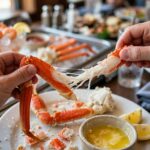
Hold the cluster in both hands and find the joints — the places where each leg bends and meets the knuckle. Twist one leg gently away from the cluster and it will snap off at the joint with a clean break. The joints are the softest part of the shell, and a slow twist does the work.
If a leg resists, bend it back and forth at the joint a few times instead of forcing it straight off. The wiggle loosens the connection, and the leg will come away without shattering the shell into the meat. Shell fragments in the meat are the most common beginner frustration, and they almost always come from rushing this step.
Step Two: Crack the Long Segment
Take one leg and hold it with both hands, thumbs on top. Press down gently in the middle of the long segment until you feel the shell give — a soft crack, not a snap. Then peel the top half of the shell away like opening a book, and the meat should be sitting there in one long piece.
The trick is the pressure. Too little and the shell stays shut; too much and you crush the meat along with it. Snow crab shells are thin, so a moderate squeeze is enough. If the leg is still very hot from the steam tray, let it cool for thirty seconds first — hot shells are harder to judge, and burnt fingers make everyone squeeze too hard.
Once the shell is open, pull the meat out with your fingers in one slow motion. Good snow crab meat slides out whole, in a single strand. Dip it in the melted butter, squeeze a little lemon over it, and eat it while it is still warm.
Step Three: Work the Knuckles and the Shoulder
With the legs done, turn to the knuckles — the round joints you snapped the legs off. Peel away the thin skin covering each knuckle and use a seafood pick or a fork to pull out the meat inside. There is less of it than in a leg, but it is dense and sweet, and it is the part most people leave behind.
Then the shoulder, the central piece of the cluster. Break it in half with your hands, then use a pick or your fingers to pull the meat out of each chamber. It is fiddly work and the pieces are smaller, but at a buffet — where you paid one price for the whole line — this is free crab, and it adds up.
For a fuller comparison of what you are eating and why the snow crab is the easy one on the line, see our snow crab vs. king crab guide. King crab needs a cracker and real effort; snow crab rewards patience more than strength.
Step Four: The Claw
If your cluster has a claw, save it for last — it is the thickest shell and the firmest meat, and it makes a good finish. Break the pincer off first, then crack the main part of the claw with a cracker, applying pressure gradually at the thickest, most curved part of the shell. A slow squeeze splits it cleanly; a sudden smash shatters it.
Pull the meat out in one piece if you can. The claw meat is firmer than the leg meat and holds together well, which makes it the best piece for a final dip in butter.
Butter, Lemon, and What Not to Do
Melted butter is the classic, and at Ombu it is the right call. Dip, do not drown: a light coating lets the crab’s sweetness come through, while a bath of butter turns everything into the same rich flavor. Lemon does the opposite job, cutting through the richness and brightening the meat — a squeeze over the leg meat before dipping is the sweet spot for most people.
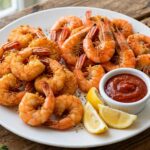
A pinch of seafood seasoning is fine if you like it, but go easy — the meat is mild, and heavy seasoning covers it up. Cocktail sauce is better saved for shrimp and the raw oysters on the half shell; on crab it fights with the flavor instead of lifting it.
One thing not to do: do not eat crab that has gone cold and rubbery off a tray that has been sitting for an hour. Snow crab is best hot, and the steam trays turn over fast during dinner service. If your cluster has gone cold while you worked through it, take a fresh one from a just-refilled tray — timing matters at a buffet, as our guide to when the line is at its best explains.
Buffet Manners for Crab Eaters
A few unwritten rules make the seafood station better for everyone. Take one cluster at a time and finish it before going back — a pile of cold, half-picked legs on your plate is waste, and the line is all-you-can-eat, so there is no reason to hoard. Keep your shells on your own plate or in the shell bowl, not on the serving tray, and do not pick through the tray with your hands looking for the biggest cluster.
It is also worth pacing yourself. Snow crab is light enough that it is easy to eat three clusters before you have even looked at the rest of the buffet. That is a fine way to spend a dinner, but a little room left for the sushi and the hot dishes makes for a better meal overall. For a plan, see what to eat first at a buffet before you load your first plate.
Once You Know It, It Is Second Nature
Twist the legs off at the joints. Press the shell open in the middle and pull the meat out whole. Pick the knuckles and the shoulder. Crack the claw last. Butter, lemon, napkins, repeat. The whole cluster takes about a minute once you have done it twice.
That is the real charm of boiled snow crab at a buffet: it is the one luxury on the line that asks nothing of you except a little patience and a willingness to get your hands messy. At Ombu Buffet, 5990 Lapalco Blvd in Marrero, the snow crab is on the Fresh Boiled Seafood station at dinner — $29.99 with drinks included, lunch $13.99, Monday through Friday 11:30 AM to 9:30 PM and Saturday 11:00 AM to 9:30 PM, closed Sundays.