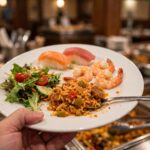
A buffet line is not the same meal twice. Walk in at noon on a Saturday and you will find trays coming out of the kitchen so fast the steam barely has time to settle. Walk in at half past three on a slow Tuesday and the same trays have been sitting under the heat lamps for an hour, the rice going dry at the edges and the shrimp losing the snap it had when it was fresh. Same restaurant, same menu, completely different dinner — and the difference is timing.
Ombu runs a Cajun, sushi, and Asian line in Marrero, and the logic below applies to the whole spread — the boiled seafood trays, the sushi case, and the hot Asian dishes alike.
The One Rule: Follow the Turnover
Everything about buffet timing comes back to a single idea: turnover. A tray that empties and gets refilled every twenty minutes is always fresh, because the food on it never gets old. A tray that sits untouched for an hour is the opposite, no matter how good it tasted when it first came out. So the best time to eat at a buffet is whenever the most people are eating there — not because crowds are pleasant, but because crowds force the kitchen to keep cooking.
It feels backwards, but at a buffet the opposite is true: a slow period is when food lingers. The one exception is the start of a service, when every tray is freshly filled and untouched — the first half hour after the doors open is the other golden hour, and regulars know it.
The Golden Windows
There are two moments in the day when the line is at its absolute best, and they sit at opposite ends of the rush. The first is opening: arrive within the first thirty minutes of a service and you get the line exactly as the kitchen intended it — every tray full, everything hot, the sushi case freshly stocked, nothing picked over. It is the calmest version of the buffet and the freshest one.
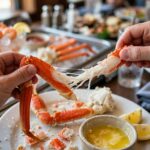
The second is the heart of the dinner rush. This is when turnover peaks and the kitchen is working hardest. On a Cajun-sushi line, this is also when the premium trays get the most attention. Snow crab legs — the best seller on Ombu’s menu — and the boiled seafood station move fastest when the room is full, which means the tray you take from is rarely more than a few minutes out of the pot. King crab legs, the premium item on the line, turn over just as fast on a busy night.
Between those two windows sits a useful piece of timing that experienced buffet diners swear by: the changeover. Many buffets run a lunch menu and a dinner menu, with dinner bringing out the premium dishes — the crab legs, the fuller sushi selection, the boiled seafood spread. Ombu runs lunch until mid-afternoon on weekdays and switches to dinner after that, and on Saturdays and holidays the dinner menu runs all day. Arriving a little before a switch means you catch the kitchen rolling out the fresh dinner trays for the evening crowd, and you get to eat from them while they are at their peak.
The Dead Zone to Avoid
Every buffet has a dead zone, usually in the middle of the afternoon, roughly between half past two and half past four. Lunch is over, dinner has not started, and the dining room empties out. The kitchen scales back production because there is nobody to cook for, and the trays that are out there just sit.
This is the worst time to judge a buffet. The food is not bad because the kitchen is bad — it is tired because it has been waiting. Rice dries out, fried things go soft, and seafood that was bright and firm at noon turns rubbery by three. If you do find yourself there in the dead zone, favor the dishes that hold up under the lamps — soups, braised dishes, anything in sauce — and skip the delicate stuff until you see a fresh tray come out.
The same logic applies to the last hour before closing. Once the kitchen starts breaking down for the night, it stops putting out full fresh pans. What is on the line is what there is, and the popular items may simply run out without being replaced. Plan your last trip to the line at least forty-five minutes before closing, while the kitchen is still cooking rather than cleaning.
Days of the Week Matter Too
Friday and Saturday evenings are the busiest nights at most buffets, and for turnover reasons the freshest ones too — the trade-off is the crowd: longer waits for a table, a busier line, more competition for the crab legs.
Weeknights are the calmer compromise. Tuesday through Thursday tend to be the slowest evenings, which means shorter waits and a quieter room, but also slower turnover — so on a slow night, time your visit to the dinner rush itself, when the after-work crowd arrives, rather than drifting in late when the kitchen has already started winding down.
Weekends have one more advantage worth knowing. Because the dinner menu runs all day on Saturdays and holidays at Ombu, a weekend lunch is not a lesser meal the way a weekday lunch can be. You get the full dinner spread — snow crab, king crab, the boiled seafood, the fuller sushi line — in the middle of the day, when the room is often calmer than it is at night. For families and anyone who prefers daylight to a dinner crowd, that is the best deal on the calendar.
How to Read the Line When You Arrive
Timing gets you most of the way there, but the last check happens with your eyes, the moment you walk up to the line. Before you take anything, do a slow lap and look at what is actually happening.
Watch for steam. A tray that is actively steaming was recently filled; a tray with condensation on the sneeze guard and no steam has been sitting. Look at the edges of the rice and the surface of the sauces — drying and skinning are the first signs a tray has waited too long. And watch the staff: if someone is carrying a fresh pan out of the kitchen, that is the tray to eat from, even if it means waiting thirty seconds.
On the sushi side, the same test applies. Freshly cut rolls look glossy and the rice looks moist; rice that has been sitting under the lights goes dull and firm at the edges. A busy sushi case with pieces disappearing and being replaced is a good sign.
If you spot a tray that looks tired, do not write the restaurant off — just skip it this round and come back in ten minutes. On a good night, the kitchen will have replaced it by then. That is the whole advantage of a buffet: the line refreshes itself, and patience is usually rewarded faster than you would expect.
Putting It Together: A Visit That Works
So what does a well-timed visit look like? For the freshest food with the least hassle, aim for the start of dinner service on a weeknight, or a weekend lunch when the dinner menu is running all day. Do a slow first lap, note which trays are steaming and which ones the staff is refilling, and build your first plate from the freshest sections — usually the boiled seafood and the sushi, since those suffer most from waiting. For the fullest experience, come for the Friday or Saturday dinner rush and accept the crowd as the price of freshness — but get there early in the rush, while the kitchen is still in full production.
And whenever you go, give yourself time. The worst buffet meals happen when people rush — arriving late, eating fast, and leaving before the line has had a chance to refresh. The best ones happen when you arrive at the right hour, take a lap, and let the kitchen do what it does best: cook, refill, and keep the line moving. For more on how to make the most of the food once you are there, see our guide to getting the most value out of a sushi buffet — and if you want the unwritten rules that keep the line pleasant for everyone, our sushi buffet etiquette guide covers those too.
Ombu Buffet is open six days a week for lunch and dinner in Marrero — Monday through Friday 11:30 AM to 9:30 PM, Saturday 11:00 AM to 9:30 PM, closed Sundays — with lunch running until 3:00 PM on weekdays before the dinner menu takes over. Walk-ins are welcome, no reservation needed. Pick your hour with the line in mind, and the line will take care of the rest.