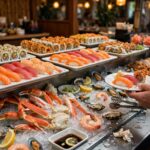
Walk into a sushi buffet for the first time and the line itself can feel like a test you never studied for. Everyone else seems to know exactly what to do: how much to take, which end of the chopsticks goes where, whether you’re supposed to eat that pink stuff on the side. Here is the honest version — the habits that keep the line moving, the food tasting its best, and the people around you happy to share a table with you.
The good news first: almost none of this is about impressing anyone. Sushi etiquette grew out of practical concerns — keeping delicate fish at its best, showing respect for the person who made it, and not making a mess of a shared meal. At a buffet, the rules relax a little. What matters most is consideration: for the food, for the staff, and for the next person in line.
First, Walk the Line Before You Load a Plate
It is tempting to grab a plate and start stacking the moment you see something good. Resist it for one lap. A slow walk past the whole line tells you what is actually on offer, so you don’t fill up on the first three trays and then discover the one thing you really wanted at the far end. It also lets you spot which trays look freshly filled and which ones are running low — useful information at any buffet, and doubly so when raw fish is involved.
That first lap also tells you the layout, so you spend less time crossing in front of other people later. Think of it as scouting, not stalling. You will eat better for it.
Take a Little, Then Come Back
The single biggest buffet mistake is the mountain plate. It looks ambitious for about thirty seconds, and then the rice goes cold, the fish warms up, the seaweed turns soggy, and half of it ends up uneaten. Sushi suffers from this more than most buffet food, because it was never meant to sit around. A piece of nigiri is at its best minutes after it is made; twenty minutes later, on a plate under warm dining-room air, it is a different and lesser thing.
Take two or three pieces at a time, eat them while they are still at their best, and go back for more. Nobody at a buffet is counting your trips — that is the entire point of all-you-can-eat. Small plates also make it easier to try things you are unsure about. One piece of something unfamiliar is a low-stakes experiment; a pile of it is a commitment you may regret.
And when you go back, take a fresh plate. It is a hygiene rule as much as a courtesy: a plate you have eaten from carries traces of what was on it, and dragging it back through the line risks passing those traces to the serving utensils and the food. Fresh plates are stacked right there for a reason.
Chopsticks, Hands, and the Pieces in Between
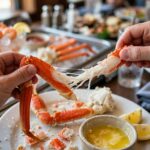
Here is the question every newcomer worries about, so let’s settle it plainly: you may eat nigiri and rolls with your hands. Sushi began as finger food in Japan, and plenty of experienced diners still eat it that way. Sashimi — plain slices of fish with no rice — is the exception, and chopsticks are the tool for that. If chopsticks feel clumsy in your hands, nobody at a buffet is grading your technique, and asking for a fork is a far better choice than struggling through a meal you can’t enjoy.
A few chopstick habits are worth knowing because they genuinely bother people. Don’t stand your chopsticks upright in a bowl of rice — in Japan that mirrors a funeral offering. Don’t pass food from your chopsticks to someone else’s chopsticks, for the same reason; set the piece on their plate instead. When you take something from a shared plate, use the serving utensils provided, or, failing that, the thick back ends of your chopsticks rather than the ends that go in your mouth. Snapping disposable chopsticks apart is fine; rubbing them together afterwards implies the restaurant gave you cheap ones, so skip that unless you actually find a splinter, in which case quietly ask for a fresh pair.
One more practical point: eat each piece in one bite when you can. Nigiri is shaped to be eaten whole, fish side down against the tongue, so you taste the fish first and the seasoned rice second. If a piece is genuinely too big, two bites are fine — just don’t set a half-eaten piece back on your plate. That seasoned rice is doing real work in the flavor of the piece, and once the fish and rice come apart, the balance the chef built is gone.
The Soy Sauce Dish Is Not a Swimming Pool
If there is one habit that marks a beginner, it is drowning sushi in soy sauce. A light touch is all you need, and the fish — not the rice — is what should meet the sauce. Turn the piece on its side and touch the fish to the soy, rather than dunking it rice-first. Rice soaks up sauce like a sponge, falls apart, and overwhelms the fish completely. Pour only a little sauce into your dish at a time; a leftover pool at the end of the meal is wasted sauce and a small insult to the kitchen besides.
The same restraint applies to wasabi. In a proper nigiri, the chef has already placed a dab of wasabi between the fish and the rice, measured for that particular fish. Stirring a big green cloud into your soy dish is not how it is meant to work, and it mostly masks what you are eating. If you want more heat, a tiny amount applied directly to the fish is the honest way to do it. Rolls that already carry a sauce — eel with its sweet glaze, anything with spicy mayo — generally need no soy at all. Taste first, dip second.
Ginger Is a Reset, Not a Topping
That pale pink pile beside your sushi is pickled ginger, and its job is to clear your palate between different kinds of fish. Eat a slice between pieces, not on top of them — piling ginger onto a roll buries the flavor of the fish under vinegar and sweetness. A few slices per plate are plenty.
Be a Good Neighbor in Line
Buffet lines run on small courtesies that add up fast. Use the serving utensil that belongs to each dish, and put it back where it belongs when you are done — handles out of the food, not buried in it. Mixing utensils between trays spreads flavors and allergens where they don’t belong, and a missing tong means the next person is stuck improvising. Don’t eat while standing in line, don’t reach across someone, and don’t hold up the line deciding while your plate hovers over the tray. Step aside if you need a moment; the line will still be there.
Two more rules matter more than people think. Don’t take the last of a popular dish in its entirety when others are waiting behind you, and don’t take food to go — buffet pricing covers what you eat in the room. If a tray is empty, give the staff room to swap it rather than hovering over them.
Kids, Sharing, and the Rest of the Table
Buffets are family territory, and a little coaching goes a long way with younger diners. Help small children serve themselves with the proper utensils, keep little hands out of the trays, and remind them that tasting means taking a small piece onto their own plate, not sampling over the line. Sharing from your own plate at the table is fine and generous; passing food chopstick-to-chopstick is not, for the reason above. And if someone at your table wants to try something new, the buffet is the kindest place to do it — one piece, no commitment, no wasted order.
What Not to Worry About
For all the rules above, plenty of supposed etiquette is simply not worth your anxiety. There is no mandatory order for eating your pieces, even though moving from lighter fish to richer ones is a pleasant way to pace a meal. You don’t need to finish every grain of rice to prove your appreciation, though leaving a lot of food uneaten is wasteful in its own right. And nobody reasonable expects a buffet diner to observe the full formality of a Tokyo counter. The spirit of the thing is simple: take what you’ll enjoy, eat it while it’s at its best, handle shared food cleanly, and leave the line as pleasant as you found it.
Do that, and the unwritten rules take care of themselves.