Put a bowl of plain rice in front of someone who loves Japanese food and watch what happens. Nothing is added to it. No sauce, no topping, no garnish worth mentioning. Just rice, steam, and a pair of chopsticks. And yet it is not boring. Anyone who has eaten a truly good bowl of rice knows the difference immediately: the grains are distinct but clinging, glossy without being wet, sweet in a quiet way that only shows itself when there is nothing else competing for attention.
In Japan, rice is not a side dish. It is the center of the meal, and the rest of the food arranges itself around it. The Japanese word for a meal, gohan, is also the word for cooked rice. That is not a coincidence. It is a statement about what matters.
A Grain With a Job Description
The first thing to understand is that Japanese rice is not the same ingredient as the rice most of the world eats. It belongs to the japonica subspecies of rice, with short, plump grains and a particular starch makeup: more amylopectin, the branched starch that makes grains cling together, and less amylose, the straight starch that keeps long-grain rice separate and fluffy. That chemistry is the whole story. It is why Japanese rice can be picked up with chopsticks, pressed into a ball, or shaped by hand without falling apart, and why a long-grain rice like basmati, however good it is on its own terms, simply cannot do the same jobs.
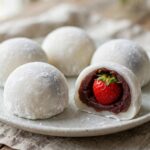
Japan also draws a line that most rice-eating cultures do not. Everyday table rice is uruchimai, the non-glutinous short-grain rice used for nearly everything. Then there is mochigome, glutinous rice, which is a different beast entirely: it cooks to a dense, sticky mass and is used for mochi, the pounded rice cakes eaten at New Year and turned into sweets all year. Confusing the two is the fastest way to ruin a dish. They look similar in the bag. They behave nothing alike in the pot.
The Varieties Worth Knowing
Japan grows around 260 varieties of staple rice, and choosing among them is a quiet, everyday form of expertise. A few names do most of the work.
Koshihikari is the reference point. Bred in Fukui Prefecture in 1956 for eating quality rather than yield, it now accounts for roughly 30 percent of the country’s rice-growing area, a dominance it has held for decades. Cooked, it is soft, glossy, and gently sweet, with a fragrance you can catch in the steam. For plain table rice, it is the standard other varieties are measured against.
Sasanishiki was once the other great name, and it still has its devotees. It is a little less sticky than Koshihikari, with a cleaner, lighter finish, and it was historically the preferred rice for traditional Edo-style sushi, where a less sweet, more neutral grain lets the fish speak more clearly. It is rarer now, but sushi purists still seek it out, sometimes blended with Koshihikari.
Hitomebore, from Miyagi Prefecture, is a Koshihikari descendant with a cleaner taste and similar shine, a reliable everyday rice that handles most dishes well. Akitakomachi, from Akita, makes slightly smaller grains with a bit less stickiness, which turns out to be an advantage: it holds up better at room temperature, making it a favorite for rice balls that need to survive a few hours in a lunchbox. Each variety reflects the climate and soil of its home region, and Japanese cooks tend to be loyal to the rice of their own prefecture in the way other people are loyal to a local wine.
The Right Rice for the Dish
Here is where Japanese rice culture gets genuinely instructive. The question is never simply which rice is best. It is always best for what.
For sushi, the rice is seasoned after cooking with rice vinegar, sugar, and salt, turning plain cooked rice into sumeshi. The word sushi itself comes from “sour rice,” which tells you where the emphasis lies: the fish is the guest, the rice is the host. Good sushi rice must be sticky enough to hold together when pressed by hand, but it must also absorb the vinegar seasoning without collapsing into paste, and each grain should stay distinguishable even as the whole holds together. Sushi chefs season the rice while it is still warm, folding the dressing in with a wooden paddle in gentle cutting motions so the grains are coated, not crushed.
For onigiri, the rice balls found in every convenience store and lunchbox in Japan, the demand is different: the rice must hold its shape for hours without hardening or crumbling as it cools. That is why Akitakomachi and Hitomebore get recommended for it, and why a variety that is too dry will produce rice balls that fall apart in your hands.
For donburi, rice bowls topped with meat, fish, or tempura, the grain needs enough substance to carry a topping and soak up sauce without turning to mush. Koshihikari is the usual answer. For okayu, rice porridge, the variety hardly matters at all: the grains are simmered in five to seven times their volume of water until they break down into a creamy, starchy softness, and the differences between premium varieties dissolve along with them. And for fried rice, the logic reverses completely. Freshly cooked sticky rice clumps in a hot wok, so cooks reach for day-old leftover rice, which has dried out overnight and separates cleanly, or for a lighter variety in the first place.
Cooking It Properly
Good rice starts before the heat goes on. Japanese rice is rinsed several times, swirled gently in water until the water runs mostly clear, which washes away excess surface starch that would otherwise make the finished rice gummy. Then it rests, soaking for half an hour or so, so the grains absorb water evenly. The usual ratio is about one part rice to one part water by volume, less than long-grain rice needs. Then it cooks undisturbed, lid on, and rests again after the heat is off, so the moisture redistributes through the pot.
The details matter more than the equipment. A clay pot or an automatic rice cooker both work well; what matters is not peeking, not stirring, and giving the rice its rest. And if you ever cook rice in a heavy iron pot over a fire, keep an eye out for the prize at the bottom: okoge, the golden crust that sticks to the pot. Chewy, toasty, and deeply savory, it is a small reward modern rice cookers do not offer.
Measuring Rice the Japanese Way
One charming detail: in Japan, rice is traditionally measured by volume, not weight, in a unit called the go, about 180 milliliters. A household batch is usually three to six go, and ten go make a sho. The measuring cup that comes with a rice cooker is, in effect, a go cup: a small reminder that rice has its own unit, because it has its own status.
Shinmai: The Season of New Rice
There is one more dimension to Japanese rice culture that has no real equivalent elsewhere: shinmai, new-crop rice. Rice harvested each autumn, from October onward, is labeled as shinmai and treated with something close to reverence. Freshly harvested rice holds more moisture than rice stored for months, so it cooks up stickier, more fragrant, and noticeably more alive in the mouth.
The most prized shinmai comes from Uonuma, a mountain sub-region of Niigata Prefecture, where cold air and mountain water produce Koshihikari of exceptional sweetness and fragrance. Cooks who get their hands on it cut back the water slightly, to allow for the extra moisture in the grain. The brief shinmai window each autumn is, for many Japanese cooks, the clearest example of how deeply seasonal thinking runs through the country’s food: even the most everyday ingredient has a best moment, and it is worth waiting for.
Why Sushi Starts With Rice
It is easy, outside Japan, to treat sushi as a fish delivery system. The fish gets the attention, the photography, the price tag. But ask a sushi chef what makes or breaks a piece of nigiri and the answer will be the rice: its temperature, its seasoning, its texture under the fingers. The fish is raw and, at its best, barely touched. The rice is cooked, seasoned, shaped, and judged, all in the space of a few minutes, and it carries the whole piece.
That is the deeper lesson of Japanese rice culture, and it is not really about rice at all. It is about paying attention to the ingredient that seems too ordinary to notice. A bowl of plain rice, eaten slowly, with nothing to hide behind, is one of the hardest things in cooking to get right, and one of the most satisfying when it is.



6 thoughts on “For the Love of Rice: Why Rice Matters”