Winter in Japan does not announce itself with bright colors. The summer markets are gone, the glossy eggplants and tomatoes replaced by something quieter: muddy roots, pale cabbages, bunches of greens tied with string. To an outsider, the winter vegetable shelf can look almost apologetic. To a Japanese cook, it is the best time of year.
There is a word for this way of eating, and it shapes the whole cuisine: shun, the moment when an ingredient is at its peak. Winter vegetables earn their place not by looking impressive but by tasting better than at any other time. Leafy greens turn sweeter after frost, roots grow dense and sugary as they store energy underground, and everything is abundant and cheap.
Why Cold Weather Makes Vegetables Sweeter
It sounds like folk wisdom, but it holds up. When temperatures drop, many plants convert starches into sugars, a kind of antifreeze that protects their cells. The result is a cabbage that tastes rounder and gentler in January than it did in October, and a turnip that needs almost nothing done to it to taste good.
This is also why winter cooking in Japan leans so heavily on the pot. The vegetables of the season are not salad vegetables, for the most part. They want heat, time, and broth: simmered in dashi until they give up their sweetness to the liquid around them, then eaten with that liquid, not apart from it. A winter vegetable that is boiled and drained is a wasted opportunity.
The Roots: Daikon, Kabu, and Gobo
Start with the one you will see everywhere. Daikon literally means “large root,” and it lives up to the name: a white radish that can grow longer than your forearm. Raw, it has a clean radish bite. Cooked, that sharpness melts away and it turns sweet and almost translucent, soaking up whatever broth it sits in. That sponge-like quality is why daikon shows up in oden, the winter stew of fish cakes and vegetables sold at convenience stores, and in nimono, the simmered dishes that anchor home cooking. Grated raw, it becomes daikon oroshi, the fluffy white condiment served beside fried fish and grilled meat to cut the richness.
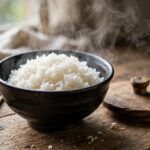
If you ever find a daikon with its leaves still attached and fresh, do not throw them away. Blanched, squeezed dry, chopped fine, and tossed quickly in a pan with sesame oil and a splash of soy sauce, the peppery greens make a savory tangle that is wonderful stirred through freshly cooked rice.
Beside the daikon you will usually find kabu, small white turnips, often sold in bunches with their greens still on. Kabu are milder and sweeter than Western turnips, and they are at their best with very little fuss: sliced thin and eaten raw in salads, pickled overnight in salt, or dropped whole into a clear soup where they turn silky in minutes. They are one of the few winter roots that do not demand a long simmer.
Then there is gobo, burdock root, the vegetable most likely to be mistaken for a stick. Long, brown, and knobby, it has a distinctly earthy, almost bitter edge that puts some people off. Treat it right, though, and it is one of the great flavors of the season. The classic preparation is kinpira gobo: the root shaved into matchsticks and stir-fried with carrot, soy sauce, and a little sugar until savory and slightly sweet. It also goes into miso soup and stews, where its earthiness deepens everything around it.
Two more roots round out the winter pantry. Renkon, lotus root, is the one with the beautiful cross-section, a pattern of holes that looks almost decorative. Boiled briefly it stays crunchy; simmered longer it turns soft and yielding, and it is often cooked in dashi or sliced and fried as tempura. And satoimo, taro, small and slightly slippery when peeled, thickens a soup or stew from the inside as it cooks, giving the broth a gentle body that no stock cube can imitate.
The Leaves: Hakusai, Mizuna, and Their Cousins
If daikon is the king of winter roots, hakusai is the queen of winter leaves. This is Chinese or napa cabbage, a big, pale, tightly packed head, and the workhorse of the season. Like daikon, it absorbs the flavor of whatever it is cooked in, which makes it the default green in hot pots. It can also be eaten raw, sliced thin and lightly salted, but it is better cooked: wilted into soup, layered into stew, or fermented into pickles.
Mizuna is the opposite kind of leaf: delicate, feathery, and peppery, somewhere in the neighborhood of arugula. It originally comes from the Kyoto region and was not widely known in Tokyo a generation ago; now it is everywhere. It is excellent raw in salads, where its crisp stems add texture, and just as good dropped into a hot pot at the very last second. The one rule is not to overcook it. Thirty seconds in simmering broth is plenty; any longer and you lose the bite that makes it special.
Two more greens deserve a place on the list. Shungiku, chrysanthemum leaves, are fragrant and slightly bitter, with a flavor that is hard to mistake for anything else, and they wilt in moments in a hot pot. Komatsuna, a mild mustard green, is less dramatic but more versatile: blanched and dressed with sesame, wilted into soup, or stir-fried without complaint. If mizuna is the green you notice, komatsuna is the green you rely on.
Negi: The Onion That Is Not Quite an Onion
No guide to Japanese winter vegetables is complete without negi, and negi refuses to be one thing. The common kind in Tokyo and eastern Japan, called naga-negi, sits somewhere between a leek and a spring onion: a long white stalk with green tops, sweet like a leek but with a sharper edge. It is used everywhere, raw as a garnish sliced thin, or cooked into soups, stews, and grilled skewers, where it turns meltingly sweet.
In western Japan the green, leafy kinds dominate instead. Then there are the specialists: Shimonita-negi, from Gunma Prefecture, fatter and shorter than the common kind and famously sweet when cooked, often used in place of leeks; and the skinny garnish negi like banno-negi, mild enough to scatter over sashimi and stews without overpowering anything.
How Winter Vegetables Get Cooked
Almost everything above ends up in one of a handful of preparations, and knowing them is more useful than memorizing recipes. Nabe, hot pot, is the big one: a pot of broth in the middle of the table, filled with whatever is in season, eaten communally through the cold months. Shabu-shabu and sukiyaki are the famous versions, but there are dozens of regional and household variations, and the vegetables are not a side act. They are the point.
Oden is the other great winter institution, a long-simmered pot of daikon, fish cakes, eggs, and konnyaku in a light dashi broth, sold from carts and convenience stores all winter. Nimono covers the home-style simmered dishes, vegetables cooked slowly in dashi, soy, and mirin until the flavors marry. Kinpira is the quick stir-fry method used for gobo and other roots. And tsukemono, pickles, are how winter vegetables stretch further: daikon and kabu pickled in salt, rice bran, or vinegar keep for weeks and show up beside almost every meal.
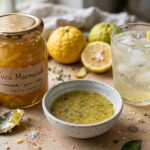
One more winter ingredient belongs in this picture even though it is not a vegetable: yuzu, the fragrant citrus that ripens in the cold months. A little yuzu zest or juice over simmered daikon or a hot pot lifts the whole dish, which is one reason winter cooking tastes so complete. If you want to know the fruit better, our guide to yuzu, Japan’s fragrant citrus, and how to use it is a good place to start.
Buying and Storing Them
Winter vegetables reward a few simple habits. Roots should feel heavy for their size and firm all the way through; a daikon that bends or feels light has been sitting too long. Leaves should look perky, not wilted, and if the greens are still attached to a root, that is usually a sign of freshness rather than a nuisance. Leafy greens keep best wrapped loosely and used within a few days, while roots are far more forgiving: daikon, kabu, and gobo will last a week or more in the refrigerator, and kabocha squash, harvested in autumn, keeps for weeks into winter and is traditionally eaten at the winter solstice.
The deeper point is the one Japanese cooks have always understood. Winter vegetables do not need rescuing. They are not a compromise for the months when nothing grows; they are the reason the cold months have a cuisine of their own. Cooked slowly, seasoned simply, and eaten together around a steaming pot, they are about as good as vegetables get.




4 thoughts on “Japanese Winter Vegetables: Roots, Leaves, and How to Use Them”