It is a fair question, and one that comes up every time someone eyes a sushi buffet with equal parts appetite and suspicion. Raw fish, sitting out on a line, in a room full of people, at a price that seems too low for what it promises. Something in the back of your mind asks whether this can really be safe. The honest answer is: usually yes, with conditions — and those conditions are mostly things you can check with your own eyes before you ever pick up a plate.
Buffet sushi is not inherently dangerous, and it is not inherently suspect either. The good ones handle the same basic risks the same way: cold fish, clean handling, and fast turnover. Where buffets differ is that you can see the handling — or the lack of it — for yourself. That visibility is your best protection, if you know what to look for.
The Short Answer, With the Fine Print
Yes, all-you-can-eat sushi can be perfectly safe to eat. sushi as a category has not been linked to large numbers of foodborne illness reports. But “can be” is doing real work in that sentence. Safety at a buffet depends on how the fish was handled before it reached the line, how cold it is kept while it sits there, and how long it has been sitting. A busy, well-run buffet where trays turn over quickly is a very different proposition from a quiet room where the same tray has been sitting under warm lights since lunch.
It also depends on you. People who are pregnant, elderly, very young, or living with a weakened immune system face higher risk from raw seafood, and the U.S. Food and Drug Administration advises those groups to avoid raw fish altogether. That advice applies to sushi everywhere, not just buffets.
Why Raw Fish Isn’t the Whole Story
Most people focus on the raw fish, but food-safety experts will tell you it is only part of the picture — and not always the riskiest part. Fish served raw in the United States is, under FDA guidance, frozen before serving to kill parasites: held at -4°F (-20°C) or below for seven days, or flash-frozen at -31°F (-35°C) or below for fifteen hours. That deep freeze is what makes raw fish service possible at scale, and reputable suppliers follow it as a matter of routine. Tuna species commonly used for sushi are generally exempt from the freezing requirement because they are not typical parasite hosts, but the freezing rule covers the rest.
The quieter risk is the rice. Cooked rice can harbor a bacterium called Bacillus cereus, which grows when rice is left sitting at warm temperatures. This is one reason proper sushi rice matters so much: the vinegar seasoning that gives sushi rice its flavor also makes it acidic, and that acidity discourages bacterial growth. It is not a magic shield — rice that sits warm for hours is still a problem — but it is one more reason the vinegared, properly handled rice at the heart of good sushi is a safety feature as well as a flavor one.
Then there is the handling between kitchen and line. Raw fish gets no cooking step that would kill bacteria, so every touch matters: clean hands, clean utensils, cold surfaces. At a counter you trust a chef you can watch; at a buffet, you are trusting a whole room of fellow diners as well.
Temperature Is the Real Test
If you remember one number from this article, make it 40°F. Below that temperature, the bacteria that cause food poisoning grow slowly or not at all; above it, they multiply, and the warmer the food, the faster they go. Food-safety guidance draws the line at two hours: perishable food should not sit at room temperature longer than that, and on a hot day the limit shrinks to one hour. Sushi trays should be sitting on ice or in a refrigerated display, not warming under heat lamps or beside hot dishes.
This is where the buffet’s own logic can work for you. A busy dining room is a safer dining room, because trays empty and get refilled. Fish that has been on the line for ten minutes is a different thing from fish that has been there for two hours, and the only reliable way to tell is turnover. Go during active dining hours — the lunch or dinner rush, when the room is full and the kitchen is refilling constantly — and you are eating the freshest version of everything on the line. A nearly empty dining room at an off hour, with full trays and nobody eating, is the one scenario worth walking away from, or at least steering toward the cooked dishes.
Look at the fish itself while you are at it. Fresh sashimi looks moist and glossy, with clean edges and vivid color. Fish that has dried out around the edges, turned dull, or developed a sour smell has been out too long. Rice that is dry and crumbly tells the same story.
How to Read a Buffet Line Before You Eat
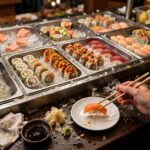
Before you commit to a plate, take a minute to read the room the way a health inspector would, minus the clipboard. The signs are plain once you know them. Is there a sneeze guard over the sushi, and is it actually positioned between the food and the diners? Can you see the preparation area, or chefs working, rather than food appearing from a hidden back room with no sign of activity? Are trays being refilled in small batches, or does everything arrive in one big morning load? Small, frequent refills are the hallmark of a kitchen that is paying attention.
Watch the serving utensils, too. Each dish should have its own tongs or spoon, resting in its proper place, not dropped into the food or swapped between trays. And wash your own hands before you approach the line — everyone touches those same utensils, and your hands are part of the chain.
One more check costs nothing: look the place up before you go. Reviews that repeatedly mention old-tasting fish or trays that never get replaced are a pattern, not a coincidence. A buffet that makes its sushi to order, or that you can watch being prepared behind glass, is a safer bet than one where everything sits pre-made and untouched for hours.
What to Favor, and What to Skip
Not every item on a sushi line carries the same risk, and that is useful knowledge when you are deciding what to eat on a visit you feel less sure about. Cooked items — tempura rolls, California rolls, anything with cooked shrimp or crab, eel with its sweet glaze — sidestep the raw-fish question entirely. Vegetable rolls and cooked seafood are the sensible opening move at an unfamiliar buffet.
For raw items, favor the trays that are clearly turning over: the ones with a crowd around them, the ones staff have just refilled, the ones where the fish still glistens. And however good it tastes, don’t take buffet sushi home for later. Sushi is meant to be eaten the day it is made, and buffet food, which has already spent time on a line, is an even worse candidate for leftovers.
Who Should Be Extra Careful
This part deserves plain language, not reassurance. The FDA advises pregnant women, young children, older adults, and people with weakened immune systems to avoid raw or undercooked seafood, because the consequences of foodborne illness are more serious for them. If that describes you or someone at your table, the buffet still has plenty to offer — the cooked rolls, the hot dishes, the soups — but the raw line is one to sit out. No meal is worth that gamble, and no article telling you buffet sushi is “generally safe” overrides advice aimed at your situation. If you are unsure, ask your doctor, not a food blog.
For everyone else, the symptoms worth knowing are the standard ones: stomach cramps, nausea, vomiting, or diarrhea within hours to a couple of days of eating. Most cases are miserable and brief, but anything severe — high fever, bloody stool, signs of dehydration — is a doctor’s visit, not a wait-it-out situation.
So, Should You Eat It?
For most diners, at a busy, well-kept buffet, the answer is yes — with your eyes open. Choose the active hours, when turnover is fastest. Favor trays that are cold, glossy, and recently refilled. Use the serving utensils properly, wash your hands, and skip anything that looks tired.
That is really the whole secret, and it is less dramatic than the question implies. Buffet sushi is not a dare. It is a kitchen’s food, held to the same rules as any other restaurant’s food, and judged the same way: by temperature, turnover, and cleanliness. Learn to spot those three things, and you can walk up to the line with confidence instead of suspicion.



1 thought on “Is All-You-Can-Eat Sushi Safe? What to Know”