You’re at the grocery store two days before the big dinner. The meat case is picked over, but there are still a few hams left — some labeled “shank portion,” others “butt portion.” They look almost identical. The price difference is a dollar or two. You grab one, second-guess yourself, put it back, and grab the other.
Here’s the short answer so you can stop hovering over the meat case: the shank end is leaner and easier to carve, while the butt end is fattier, more flavorful, and a little trickier to slice around the bone. For a picture-perfect holiday centerpiece that carves cleanly, grab the shank. For richer flavor and juicier leftovers, go with the butt.
That’s the quick version. But if you want to actually understand what you’re buying — and why the difference shows up on your plate — it’s worth spending a few more minutes on this.
What These Two Cuts Actually Are
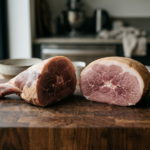
A whole ham comes from the pig’s hind leg. That’s a big piece of meat, often 18 to 25 pounds, so most producers split it in half before it ever reaches your grocery store. The cut happens roughly at the knee joint.
The shank portion ham is the lower half — the part that runs from the knee down toward the hoof. It’s the section that includes the long, straight leg bone. Think of it like the shin area on a human leg.
The butt portion ham is the upper half — the part closest to the hip. And before you picture the pig’s backside, the word “butt” in pork terminology is a bit misleading. It refers to the thick, rounded upper thigh area, not the rear end. (If you’ve ever wondered about confusing pork cut names, the same thing happens with Boston butt and pork shoulder, where “butt” actually comes from the front of the animal.)
Both halves come from the same leg, so the fundamental flavor profile is similar. The differences are about fat distribution, bone structure, and texture — and those differences matter more than most label descriptions let on.
The Differences That Actually Show Up on Your Plate
Fat and Flavor
The butt end sits closer to the hip, which means it gets more intramuscular fat marbling. That fat translates to a richer, more savory flavor and a juicier bite, especially after reheating. If you’ve ever had a slice of ham that tasted almost buttery, you were probably eating from the butt portion.
The shank end is leaner. The meat is tighter and more uniform, with a cleaner ham flavor that isn’t as heavy. Some people prefer this — especially if they’re serving the ham alongside rich sides like scalloped potatoes or mac and cheese and don’t want the main course to feel overly heavy.
A detail that’s easy to overlook: the fat difference becomes more noticeable the next day. Butt ham leftovers tend to stay moist in the fridge. Shank ham leftovers can dry out a bit faster, so you’ll want to store them with a splash of broth or cover them tightly.
Carving
This is where the shank end wins for most home cooks, and it’s not even close.
The shank portion has one long, straight bone running through the center. You can set it flat-side down on a cutting board and carve neat, even slices right off the bone. It’s intuitive. Even if you’ve never carved a ham before, you’ll figure it out in about thirty seconds.
The butt portion contains the aitch bone — a curved, irregular hip bone that runs at an awkward angle through the meat. Carving around it takes more patience and a sharper knife. You’ll get uneven slices if you rush, and there’s more meat left clinging to the bone when you’re done. Experienced cooks don’t mind this, but if you’re carving in front of guests and want clean presentation, the shank is the lower-stress option.
Texture
Shank meat has a firmer, denser texture because it comes from a part of the leg that does more work. It holds its shape well when sliced thin, which makes it great for sandwiches.
Butt meat is more tender and has a slightly softer bite because of the extra fat. It shreds more easily, which is a plus if you’re planning to chop up leftovers for hash, omelets, or soups.
Price and Yield
Butt portion ham usually costs a little more per pound — typically 50 cents to a dollar more than shank. That’s because of the higher fat content and the richer flavor profile.
But here’s the thing most people don’t factor in: yield. The butt end has more fat and a more complex bone structure, which means you’re paying for some weight that won’t end up on the plate. The shank end gives you a slightly higher ratio of usable meat to total weight. So the actual cost per serving is closer than the sticker price suggests.
| Shank Portion Ham | Butt Portion Ham | |
|---|---|---|
| Location on leg | Lower (knee to ankle) | Upper (hip to knee) |
| Fat content | Leaner | More marbling |
| Flavor | Clean, classic ham | Richer, more savory |
| Carving difficulty | Easy (one straight bone) | Moderate (irregular aitch bone) |
| Texture | Firm, holds shape | Tender, softer bite |
| Best for | Presentation, thin slicing | Flavor, juicy leftovers |
| Price | Slightly less | Slightly more |
When to Pick Which
The “best” cut depends entirely on what you’re doing with it. There’s no universally superior option.
Pick the shank portion when:
- You’re hosting a formal dinner and want clean, attractive slices on the platter
- You’re relatively new to carving and don’t want to wrestle with an awkward bone in front of company
- You plan to use leftovers primarily for sandwiches (the firmer texture slices thin without falling apart)
- You’re serving a rich menu and want the ham to be a lighter component
Pick the butt portion when:
- Flavor is your top priority and you don’t mind a less uniform presentation
- You’re feeding a crowd that cares more about taste than Instagram-worthy slices
- You want leftovers that stay juicy for several days
- You’re planning to use the ham in cooked dishes like fried rice, split pea soup, or quiche where texture matters less than depth of flavor
If you’re buying a whole bone-in ham and the butcher offers to split it for you, you can actually get both portions. That’s the best of both worlds — carve the shank end for the dinner table, and save the butt end for the days after when presentation doesn’t matter.
What to Check on the Label Before You Buy
The shank vs butt decision matters, but there are a couple of other things on the label that will affect your ham more than the cut itself.
Look at the water content. Hams are labeled by how much water has been added during processing. “Ham” with no qualifier means no water added — this is the most flavorful but also the most expensive. “Ham with natural juices” has a small amount of water and is the sweet spot for most home cooks. “Ham, water added” and “ham and water product” contain progressively more water, which dilutes the flavor and creates a spongier texture. A shank portion with natural juices will almost always taste better than a butt portion that’s been pumped full of water.
Check whether it’s fully cooked or partially cooked. The vast majority of hams in American grocery stores are fully cooked and just need reheating. But some specialty hams are sold partially cooked or uncooked, and those require a completely different approach. Read the label carefully. If you’re reheating a fully cooked ham, a reliable meat thermometer will help you hit the right internal temperature without drying it out — usually around 140°F for a pre-cooked ham.
Spiral-cut or whole? Spiral-cut hams are pre-sliced in a continuous spiral around the bone, which makes serving incredibly easy. The trade-off is that spiral-cut hams dry out faster during reheating because all that exposed surface area loses moisture quickly. If you go spiral-cut, tent it tightly with foil and add a little liquid to the bottom of the pan. The shank vs butt difference still applies with spiral-cut hams, but the carving advantage of the shank becomes less relevant since the slicing is already done for you.
A Note on Bone-In vs Boneless
This article focuses on bone-in shank and butt portions because that’s where the real ham cut comparison matters. Boneless hams are a different product entirely — they’re typically made from chunks of ham meat that have been pressed and formed into a uniform shape. They’re convenient and easy to slice, but the texture and flavor don’t compare to a bone-in ham. The bone contributes flavor during the curing and smoking process, and it also helps the meat retain moisture during reheating.
If you’re choosing between a bone-in shank and a boneless ham, the bone-in shank will almost always give you a better eating experience, even though it takes a few extra minutes to carve.
The Bottom Line for Holiday Shopping
The shank vs butt ham debate doesn’t have a single right answer, and anyone who tells you one is definitively better than the other is oversimplifying it. The ham shank or butt which is better question really comes down to your priorities for that specific meal.
If you want the easiest carving experience and clean presentation, the shank portion is your friend. If you want the deepest flavor and don’t mind a slightly messier slice, the butt portion will reward you. And if you can swing a whole ham, you don’t have to choose at all.
Next time you’re at the meat counter, flip the package over and check the water content before you check the cut. That label detail will affect your dinner more than whether the ham came from the top or bottom of the leg. Then grab whichever portion fits your menu, reheat it low and slow with a little liquid in the pan, and don’t overthink it. Ham is one of the most forgiving things you can put on a holiday table — both cuts will be good as long as you don’t blast them at 400°F until they’re leather.
Frequently Asked Questions
Is shank or butt ham better for Easter dinner?
For Easter, the shank portion is the more popular choice because it carves into clean, attractive slices that look great on a spring dinner table. If your family prioritizes flavor over presentation, though, the butt portion will give you a richer, juicier ham. Either way, make sure you’re buying a ham with natural juices rather than one with a high water-added percentage.
Does spiral-cut change which portion I should pick?
It reduces the difference. Since spiral-cut hams are pre-sliced, the carving advantage of the shank portion becomes less important. Focus instead on flavor and moisture — the butt portion’s extra fat helps offset the drying that spiral-cut hams are prone to during reheating. If you go spiral-cut butt, reheat it covered with foil at a low temperature (around 275°F) and baste it once or twice.
Can I buy a whole ham and get both the shank and butt?
Yes, and this is the best option if you’re feeding a large group. A whole bone-in ham gives you the easy-carving shank end for the main meal and the flavorful butt end for leftovers. Ask your butcher to score the skin and remove the aitch bone from the butt end if you want to make carving easier. Whole hams also tend to stay moister during reheating because there’s more mass and less exposed surface area.
Why is it called “butt” ham if it’s not from the pig’s rear?
The term comes from old English butchery, where “butt” referred to the thick, wide end of a cask or barrel — basically the fattest, roundest part of something. In pork, the “butt” end of the hind leg is the thick upper portion near the hip. It’s the same naming logic behind the “Boston butt,” which confusingly comes from the pig’s front shoulder. Pork terminology has a long history of being unhelpful.