You’re standing at the stove or the grill, tongs in hand, and you just sliced into a pork sausage link. There’s a faint blush of pink near the center. Is it done? Is it safe? Do you throw it back on and risk turning it into a rubber hockey puck?
Here’s the short answer: pork sausage is cooked when it reaches an internal temperature of 160°F (71°C). At that temperature, harmful bacteria like Salmonella and E. coli are destroyed, and the sausage is safe to eat.
That number is your anchor. Everything else — color, texture, juice clarity — is secondary. Let’s break down why that specific temperature matters, how to check it properly, and the situations where the rules shift a bit.
The Safe Pork Sausage Internal Temperature (and Why It’s 160°F)
You might have heard that whole cuts of pork are safe at 145°F. That’s true — the USDA updated its recommendation for whole-muscle pork like chops and tenderloin back in 2011. But sausage is a different story.
Pork sausage is made from ground meat. The grinding process takes any bacteria that were on the surface of the meat and distributes them throughout the entire mixture. That’s the same reason hamburger internal temperature also needs to hit 160°F, while a whole steak can be safely served at a much lower temp. The bacteria aren’t just on the outside anymore; they’re mixed into the middle.
So the pork sausage done temperature is 160°F, full stop. This applies to fresh bratwurst, Italian sausage, breakfast links, chorizo, and any other raw pork sausage you buy at the store or make yourself.
A quick note on carryover cooking: if you pull your sausages off the heat at around 155°F and let them rest for a few minutes, the internal temperature will typically climb another 3–5 degrees as residual heat continues to work. This is a useful trick for keeping sausage juicy while still hitting the safe sausage temperature of 160°F. Just make sure you actually verify the final temp before serving, especially when you’re still getting a feel for your grill or stovetop.
Where to Place the Thermometer
This is a small detail that a lot of people get wrong, and it matters more than you’d think.
With a sausage link, insert the thermometer probe through the end of the link and push it into the center of the meat, running lengthwise. Don’t poke straight through the side — you risk the tip touching the pan or the grill grate, which gives you a falsely high reading. If you’re working with sausage patties, insert the probe from the side into the thickest part of the patty.
If you’re not confident in your thermometer technique, this guide on how to read a meat thermometer covers the basics clearly.
How to Tell When Pork Sausage Is Cooked (Beyond the Thermometer)
A good instant-read thermometer is the only truly reliable way to confirm your pork sausage internal temp. But there are situations where you don’t have one handy — you’re at a campsite, tailgating, or your thermometer battery died at the worst possible moment. In those cases, you can stack a few visual and tactile clues to make a reasonable judgment.
Firmness. Raw sausage feels soft and almost squishy when you press it with tongs. Fully cooked sausage feels firm and springs back slightly. If it still gives easily under pressure, it needs more time.
Juice color. Pierce the sausage with a fork or the tip of a knife. The juices that run out should be clear, not pink or cloudy. This isn’t a perfect test — some seasonings and curing agents can tint the juices — but clear liquid is a good sign.
Exterior color. A properly cooked sausage will have a deep golden-brown exterior with some caramelization. A pale, greyish surface usually means it hasn’t spent enough time on the heat.
Interior color. When you cut into it, the meat should be uniformly greyish-white or light brown with no raw-looking pink patches. Now, here’s where it gets tricky: a slight pink tint doesn’t automatically mean the sausage is undercooked. Certain ingredients like paprika, red pepper, and curing salts can leave a pinkish hue even in fully cooked meat. This is the same phenomenon that makes pink pork tenderloin safe at the right temperature. Color is a clue, not a verdict.
The takeaway? Use these signs together, not in isolation. And the next time you’re at the store, grab a cheap instant-read thermometer. It removes all the guesswork.
Fresh Sausage vs. Pre-Cooked — Know the Difference
Not all pork sausage starts out raw, and this distinction trips up a lot of home cooks.
Fresh pork sausage — the kind sold in the refrigerated section, labeled as “raw” or “uncooked” — must reach 160°F. This includes fresh bratwurst, raw Italian links, breakfast sausage, and fresh chorizo. Treat it like any other ground pork product.
Pre-cooked or smoked sausage — like kielbasa, andouille, or hot dogs — has already been fully cooked during processing. You’re reheating it, not cooking it from raw. The target here is an internal temperature of 140°F, which is the standard for safely holding and serving pre-cooked meats. You can eat these cold straight from the package if you want (though they taste better warmed up). The goal is just to heat them through until they’re steaming and lightly browned on the outside.
If you’re ever unsure which type you have, check the packaging. It will say “fully cooked” or “uncooked” somewhere on the label. When in doubt, treat it as fresh and aim for 160°F. You won’t hurt anything by heating pre-cooked sausage a bit more — you’ll just risk drying it out slightly.
Cooking Times by Method
Times vary based on sausage thickness, starting temperature (fridge-cold vs. room temp), and your specific equipment, so treat these as starting points rather than guarantees. Always verify with a thermometer.
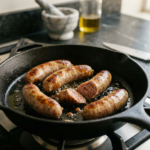
Pan-frying (medium heat): 12–16 minutes for standard links, turning every few minutes. Patties usually take 8–12 minutes.
Grilling (medium heat, around 350–400°F): 15–20 minutes for links, turning regularly. This is where carryover cooking really helps — pull them at 155°F and let them rest on a plate for five minutes.
Oven-baking (375°F): 20–25 minutes on a sheet pan, flipping halfway through. Great for cooking a large batch without standing over the stove.
Boiling then searing: Simmer links in water or beer for 10–12 minutes, then finish in a hot pan or on the grill for 2–3 minutes per side to get a crispy exterior. This method is forgiving and helps prevent the casing from splitting.
Air fryer (375°F): 10–14 minutes, shaking the basket halfway. Surprisingly effective for sausage links.
If you’re cooking on a pellet grill or smoker at lower temperatures, the process will take longer. Low-and-slow sausage at 225–250°F can take 45–60 minutes. The same 160°F target applies regardless of method.
Mistakes That Ruin Sausage (or Make It Unsafe)
Cooking on screaming-hot heat. High heat chars the outside while leaving the inside undercooked. You end up with a burnt casing and a raw center — the worst of both worlds. Medium heat is your friend. Patience pays off here.
Poking holes in the casing. You’ll see this advice floating around, but it’s counterproductive. Piercing the casing lets all the flavorful fat and moisture escape, leaving you with dry, bland sausage. The casing is there for a reason. If you’re worried about splitting, cook at a gentler heat instead.
Skipping the rest period. Cutting into sausage the second it comes off the heat releases a rush of steam and juice onto the plate instead of keeping it inside the meat. Give it 3–5 minutes. This is also when carryover cooking does its work, nudging that pork sausage internal temperature up to the safe zone.
Judging doneness by the clock alone. A recipe that says “cook for 15 minutes” is a rough estimate. Your sausage might be thicker, colder, or crowded in the pan. The thermometer doesn’t lie; the timer is just a suggestion.
Ignoring the type of sausage. As mentioned above, treating pre-cooked kielbasa like raw bratwurst leads to overcooked, dry results. Know what’s in your pan before you start cooking.
Frequently Asked Questions
Is it okay if pork sausage is slightly pink inside?
It can be. If the sausage has reached 160°F internally, a faint pink tint is usually caused by seasonings like paprika or curing agents, not undercooking. However, if the pink area looks raw or translucent and the temperature is below 160°F, it needs more time on the heat. When in doubt, trust the thermometer over your eyes.
Can you overcook pork sausage?
Absolutely, and it happens more often than undercooking. Sausage cooked well past 160°F starts losing moisture rapidly. By 175°F or higher, the fat has rendered out, the proteins have tightened up, and you’re left with a dry, crumbly, rubbery texture. Aim for 160–165°F and no higher.
How long does pork sausage last in the fridge after cooking?
Cooked pork sausage stays good in the refrigerator for 3–4 days when stored in an airtight container. If you need to keep it longer, freeze it for up to 2–3 months. This is similar to how long cooked salmon lasts in the fridge — the 3–4 day window is a reliable rule for most cooked proteins.
What temperature is pork sausage done on the grill?
The same as any other method: 160°F. The grill doesn’t change the safe temperature, though the cooking time and technique will differ from stovetop or oven methods. Keep the grill at medium heat and turn the links frequently to avoid flare-ups charring the casing before the inside is done.
The single most useful thing you can do the next time you cook pork sausage is to stop guessing and start measuring. A 160°F target takes all the anxiety out of the process — you know it’s safe, you know it’s not overcooked, and you can actually enjoy the meal instead of worrying about it.
Grab a thermometer, cook at medium heat, let the sausage rest for a few minutes, and you’ll get consistently juicy, properly cooked results every time. That’s really all there is to it.