The USDA says pork is safe to eat at 145°F. But try pulling a pork shoulder apart at that temperature, and you’ll be sawing through it with a knife — not shredding it with forks. That’s the single biggest point of confusion around pulled pork internal temp, and it trips up a lot of first-timers.
The pulled pork done temperature — the point where the meat actually shreds into tender, juicy strands — is between 195°F and 205°F. That’s a full 50–60 degrees above the food safety minimum, and the difference between those two numbers is everything.
Let’s break down why that range exists, how to hit it consistently, and what to do when the temperature seems to stall and your pork shoulder just refuses to cooperate.
Why 145°F Is Safe but 195°F Is the Real Target
Pork is technically safe to eat once its internal temperature reaches 145°F (with a 3-minute rest), according to USDA guidelines updated back in 2011. At that temperature, harmful bacteria are eliminated. You could eat it, and you wouldn’t get sick.
But pulled pork isn’t about safety alone. It’s about texture.
Pork shoulder (also called pork butt or Boston butt — yes, the naming is confusing) is loaded with connective tissue and collagen. That collagen doesn’t start breaking down into gelatin in any meaningful way until you push well past 160°F. The real magic happens between 195°F and 205°F, where the collagen has fully rendered, the fat has softened, and the muscle fibers separate easily.
If you’ve ever tried pulling pork at 180°F because it “looked done,” you know the result: chewy, tough, and disappointing. The meat might even look cooked through, but the internal structure hasn’t transformed yet.
So when someone asks “what temp for pulled pork?” — the answer has two layers. Safe? 145°F. Pullable? 195–205°F. Those are very different goals.
If you’re curious about the distinction between a Boston butt and a pork shoulder, it’s worth understanding before your next cook — the fat content and shape affect timing.
The 195–205°F Window: Where to Aim
Saying “195 to 205” is accurate, but it’s also a 10-degree range that leaves people wondering where exactly to pull the meat off the heat.
Here’s a more practical way to think about it:
Around 195°F — The pork will shred, but it may need a bit more effort. Some pieces might feel slightly firm. This is fine if you prefer pulled pork with a bit more texture and bite. It’s also a reasonable stopping point if you’re worried about drying the meat out.
Around 200–203°F — This is the sweet spot most experienced pitmasters target. The probe slides in with almost no resistance (more on the “probe test” in a minute), the fat has rendered beautifully, and the meat practically falls apart.
Above 205°F — You’re entering risky territory. The meat can start to dry out, especially the leaner sections near the surface. It won’t be a disaster at 207°F, but consistently pushing past 205°F means you’re leaving moisture on the table.
A good rule of thumb: aim for 202°F and use the probe test to confirm. Temperature gets you close. Feel confirms you’re there.
The Probe Test: Why Temperature Alone Isn’t Enough
Here’s something that most pulled pork temp guides gloss over — two different pork shoulders cooked to the exact same internal temperature can feel completely different.
One might shred beautifully at 198°F. Another might still feel a bit tight at 200°F. Variations in the size of the cut, fat distribution, connective tissue density, and even the specific pig all affect when the collagen fully breaks down.
That’s why experienced cooks rely on the probe test alongside the thermometer.
The probe test is simple: slide your temperature probe (or a toothpick, skewer, or thin knife) into the thickest part of the meat. If it slides in and out with almost no resistance — like poking warm butter — the pork is done. If there’s a noticeable grab or tug, give it more time regardless of what the thermometer reads.
This is one of those small details beginners often overlook. They hit 200°F, pull the meat immediately, and then struggle to shred it because that particular shoulder needed another 20–30 minutes. Trust the thermometer to get you in the zone, but trust the probe feel to tell you when you’ve arrived.
If you’re unsure about how to read a meat thermometer accurately, getting that right before your cook makes a real difference.
The Stall: When Your Pork Shoulder Stops Climbing
If you’ve never smoked a pork shoulder before, the stall will test your patience — and possibly your sanity.
Somewhere between 150°F and 170°F, the internal temperature will plateau. It might sit at 162°F for two hours. Sometimes three. You’ll check the thermometer repeatedly, convinced it’s broken.
It’s not broken. This is called the stall, and it happens because moisture is evaporating from the surface of the meat. That evaporation cools the surface at roughly the same rate the smoker is heating the interior. It’s the same principle as sweating — your body cools itself through evaporation, and so does the pork.
Eventually, the surface dries enough that evaporative cooling slows down, and the temperature starts climbing again. But “eventually” can mean an extra 2–4 hours on your cook time, depending on the size of the shoulder and your cooking temperature.
Two ways to handle the stall:
If you’re choosing between butcher paper and parchment paper for wrapping, they’re not interchangeable. Butcher paper is breathable; parchment isn’t a great substitute here.
Neither approach is wrong. It comes down to how much time you have and how much you value a crispy bark.
Cooking Temperature vs. Internal Temperature — Don’t Confuse the Two
A common mix-up, especially for newer cooks: the smoker temperature (the heat you’re cooking at) and the pork shoulder internal temp for pulling (the meat’s doneness) are two completely separate numbers.
Most recipes recommend smoking a pork shoulder at a smoker temperature somewhere between 225°F and 275°F. Here’s how the choice affects things:
Regardless of your smoker temperature, the pulled pork done temperature remains the same: 195–205°F internal. A higher smoker temp just gets you there faster.
Where to Place Your Thermometer Probe
This sounds basic, but incorrect probe placement is one of the most common reasons people misjudge when pulled pork is done.
Insert the probe into the thickest part of the meat, avoiding:
- Bone (bone conducts heat differently and will give you a false high reading)
- Fat pockets (fat renders at a different rate and can read higher or lower than the surrounding meat)
- The edge of the meat (thinner areas cook faster)
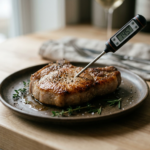
If you’re cooking a bone-in pork shoulder, angle the probe so it reaches the center of the thickest muscle, well away from the bone. Ideally, use a leave-in probe thermometer so you can monitor the temperature without opening the lid repeatedly. Every time you open the smoker, you lose heat and extend the cook.
Bone-In vs. Boneless: Does It Change the Target Temp?
The target pulled pork temperature stays the same whether you’re cooking bone-in or boneless. You’re still aiming for 195–205°F.
What changes is the cook time and, to some extent, the texture.
Bone-in shoulders take longer to cook because the bone insulates the surrounding meat. The upside? That bone and the connective tissue around it add moisture and richness. When the pork is done, the bone should slide out cleanly with very little effort — that’s actually another doneness indicator beyond temperature.
Boneless shoulders cook a bit faster and more evenly. They’re easier to wrap and fit into smaller smokers. The tradeoff is slightly less flavor from the missing bone and surrounding tissue.
Both work well. If you’re buying specifically for pulled pork, bone-in is the traditional choice, but boneless won’t let you down.
Resting: The Step Most People Rush
You’ve spent 10–14 hours cooking this pork shoulder. The internal temp hit 203°F. The probe slides in like butter. It’s finally done.
Don’t shred it yet.
Resting lets the juices redistribute through the meat. If you shred immediately, a lot of that moisture spills out onto your cutting board instead of staying in the pork. A proper rest makes a noticeable difference in how juicy the final product turns out.
How to rest pulled pork:
Pull the shoulder off the smoker, leave it wrapped (or wrap it loosely in foil if it isn’t already), and let it rest for at least 30 minutes. An hour is better. Some people rest for up to two hours by placing the wrapped pork in a cooler (no ice) lined with towels — it’ll stay well above safe serving temperature for several hours this way.
During the rest, the internal temperature will actually rise a few degrees from carryover cooking. If you pulled the pork at 200°F, it might coast up to 203–205°F during the rest. Keep this in mind — it’s another reason not to push the temperature too high before removing from the smoker.
What If You Overshoot 205°F?
It happens. Maybe you fell asleep, maybe the smoker ran hot, maybe you just lost track of time. If your pork shoulder hits 210°F or even 215°F, don’t panic.
Pulled pork is more forgiving than something like brisket. The high fat and collagen content in a pork shoulder acts as a buffer against drying out. At 210°F, you might notice the outer portions are a bit drier, but the interior is usually still moist and shreddable. Mix the drier outer pieces with the juicier interior when you shred, and add some of the collected juices or a splash of your finishing sauce.
That said, consistently cooking to 215°F+ as your target isn’t ideal. If your smoker tends to run hot, factor that into your planning and consider pulling the meat a few degrees earlier.
If you’re also curious about temperature precision for other cuts, a similar principle applies when you’re checking what temperature brisket is done — it’s a comparable range with the same reliance on probe feel.
Quick Reference: Pulled Pork Temp at a Glance
| Stage | Internal Temp | What’s Happening |
|---|---|---|
| USDA safe minimum | 145°F | Safe to eat, but meat is firm and won’t shred |
| Stall zone | 150–170°F | Evaporative cooling slows the cook; patience or wrapping needed |
| Collagen breakdown accelerates | 180–190°F | Connective tissue is rendering; meat is softening |
| Pullable range begins | 195°F | Meat starts to shred; may still have some resistance |
| Ideal target | 200–203°F | Probe slides in easily; meat falls apart; best balance of moisture and tenderness |
| Upper limit | 205°F | Still great; beyond this, drying risk increases |
Choosing Your Cooking Method
Pulled pork isn’t limited to smokers. The internal temp target stays the same regardless of how you apply heat.
Smoker (charcoal, wood, or pellet) — The traditional choice. Adds smoke flavor that’s hard to replicate. If you’re comparing pellet grills and gas grills for this kind of cook, pellet grills make long smoking sessions much easier to manage since they regulate temperature automatically.
Oven — Set to 250–275°F, place the shoulder in a roasting pan with a bit of liquid, cover tightly with foil. You won’t get a smoke ring or much bark, but the pulled pork will still be tender and flavorful. This is a perfectly valid method if you don’t have a smoker.
Slow cooker — Works on the same collagen-breakdown principle but with moist heat. Cook on low for 8–10 hours. You won’t get bark or smoke flavor, but the shredding texture will be there. Use a thermometer to confirm you’re in the 195–205°F range before pulling.
No matter the method, the internal temp for pulled pork is your north star.
FAQ
Can I pull pork at 190°F?
You can try, but expect tougher results. At 190°F, the collagen hasn’t fully broken down in most cuts. Some pieces will shred, others will resist. If you’re in a time crunch, you can pull at 190°F and let the pork rest in a wrapped cooler for 1–2 hours — carryover heat and extended resting can help soften it further, but it’s not a guarantee.
How long does it take a pork shoulder to reach 200°F?
At a smoker temperature of 225°F, plan for roughly 1.5–2 hours per pound, though the stall can stretch this significantly. An 8-pound bone-in shoulder might take 12–16 hours. At 275°F, expect closer to 60–80 minutes per pound. These are estimates — always cook to temperature, not to time.
Does pulled pork need to rest before shredding?
Yes. Resting for at least 30–60 minutes lets juices redistribute and makes the meat noticeably juicier. Shredding immediately after cooking means losing moisture you spent hours building up. A cooler with towels can keep the pork at serving temperature during a longer rest.
Is the pulled pork temperature the same for pork loin?
No. Pork loin is a lean cut with very little connective tissue — cooking it to 195°F would dry it out completely. Pork loin is best cooked to 145°F for a juicy result, and it should be sliced, not pulled. Pork chop internal temp follows similar guidelines since chops come from the loin area. Pulled pork specifically requires fatty, collagen-rich cuts like pork shoulder or pork butt.
Why does my pulled pork turn out dry even at the right temperature?
A few possible reasons: the smoker ran too hot for too long, the meat wasn’t wrapped during the stall (losing excess moisture), or the pork wasn’t rested before shredding. Another overlooked cause — using too lean a cut. A well-marbled pork shoulder with a decent fat cap holds up much better during a long cook than a trimmed-down piece.
The real answer to “when is pulled pork done” isn’t a single number — it’s a combination of hitting that 195–205°F range and confirming with the probe test that the connective tissue has given up the fight. Nail those two things, rest the meat properly, and you’ll have pulled pork that shreds with barely any effort. Set your thermometer alarm for 195°F so you can start checking, and trust the feel of the probe more than the exact digit on the screen.

1 thought on “Pulled Pork Internal Temp: The Only Number That Actually Matters”
Comments are closed.