Most dry, tough pork chops aren’t caused by a bad recipe. They’re caused by overcooking — and overcooking almost always happens because someone’s guessing instead of checking the actual pork chop internal temp.
Here’s the short answer: the USDA recommends cooking pork chops to an internal temperature of 145°F (63°C), followed by a 3-minute rest. That’s it. At 145°F, pork is safe to eat, and your chops will still be juicy with just a hint of pink in the center.
If you grew up hearing that pork needed to hit 160°F or higher, you’re not alone. That outdated guideline was revised back in 2011, but plenty of people — and even some recipe sites — still repeat the old number. The result? Millions of perfectly good pork chops cooked into shoe leather every year.
Let’s break down what you actually need to know about pork chop internal temperature, why the number matters, how to measure it properly, and what to do differently depending on how you’re cooking your chops.
Why 145°F and Not 160°F?
For decades, the standard advice was to cook all pork to 160°F. The reasoning had to do with trichinosis, a parasitic infection historically associated with pork. But trichinella parasites are actually killed at 137°F. Modern farming practices have also made trichinosis extremely rare in commercially raised pork in the United States.
In 2011, the USDA updated its guidelines and lowered the safe pork chop temperature to 145°F with a 3-minute rest. During that rest period, the internal temperature holds steady or even rises slightly through carryover cooking, which is enough to eliminate harmful bacteria.
The difference between 145°F and 160°F might seem small on a thermometer, but it’s enormous on your plate. At 145°F, pork chops are tender and slightly pink inside. At 160°F, they’ve lost significantly more moisture and can taste dry and chalky.
One detail that’s easy to overlook: the 3-minute rest isn’t optional. It’s part of the safety equation. If you cut into the chop the moment it comes off heat, you’re not giving the residual temperature time to finish the job. Set the chop on a plate or cutting board, loosely tent it with foil if you want, and wait.
The Pink Inside Isn’t a Problem
This trips up a lot of home cooks. You slice into a pork chop that hit 145°F, see some pink, and panic. But pink pork at 145°F is completely safe.
The color of cooked meat depends on several factors — the pH of the meat, the cooking method, whether it was brined, and even the animal’s diet. Color alone is an unreliable way to judge doneness. A pork chop can look pink at 145°F and be perfectly safe, while another chop might look white throughout at the same temperature.
This is why learning how to read a meat thermometer properly is worth the five minutes it takes. It removes the guesswork entirely.
If you’re curious whether this same logic applies to other cuts, the rules do shift depending on the type of pork. Ground pork, for example, still needs to reach 160°F because grinding spreads any surface bacteria throughout the meat. Whole muscle cuts like chops, loins, and roasts follow the 145°F guideline. You can read more about pulled pork internal temp if you’re working with larger cuts that require low-and-slow cooking — those go much higher, but for tenderness reasons rather than safety.
How to Tell When Pork Chops Are Done
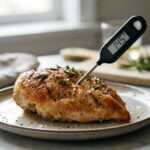
The only reliable method is an instant-read meat thermometer. Everything else — pressing the meat with your finger, checking the color of the juices, cutting into it — is a rough guess at best.
Here’s how to do it right:
- Insert the thermometer probe into the thickest part of the chop, avoiding bone if it’s a bone-in cut. Bone conducts heat differently and can give you a falsely high reading.
- Push the probe to the center of the meat, not just below the surface.
- Wait for the reading to stabilize. Most instant-read thermometers take 2–5 seconds.
Quick Fact: Checking temp near the end of cooking matters more than checking early. Start checking about 5 minutes before you think the chop will be done. Pork chops — especially thinner ones — can go from 140°F to 155°F surprisingly fast.
A common mistake is only owning an oven-safe probe thermometer and not having an instant-read option for quick checks. Oven probes are great for roasts and smoking, but for something that cooks as quickly as a pork chop, an instant-read thermometer is the better tool.
Pork Chop Cooking Temperature by Method
What temp to cook pork chops depends partly on how you’re cooking them. The internal target stays the same — 145°F — but the cooking temperature and timing shift based on your method and the thickness of the chop.
Grilling
Grill pork chops over direct medium-high heat, roughly 400–450°F at the grate level. Bone-in chops that are about 1 inch thick typically need 4–5 minutes per side. Thicker cuts (1.5 inches) may need closer to 6–7 minutes per side, or you can sear over direct heat and then move them to indirect heat to finish.
If you’re using a pellet grill or a gas setup, the approach is similar — get a good sear, then moderate the heat to bring the center to temp without charring the outside. And if you’re wondering about grilling in less-than-ideal weather, check out this piece on grilling in the rain.
Oven-Baked
Preheat to 400°F. Sear the chops in a hot skillet for about 2 minutes per side first, then transfer the skillet (or move to a baking sheet) and bake until the pork chop done temp hits 145°F. For 1-inch chops, this usually takes 12–15 minutes in the oven after searing.
Baking at lower temperatures (like 350°F) works too, but it takes longer and you risk drying out thinner chops. If you skip the sear, you’ll get a pale exterior with less flavor.
Pan-Seared (Stovetop Only)
Medium to medium-high heat in a heavy skillet with a bit of oil. Cook 4–5 minutes per side for 1-inch chops. This works best for boneless chops. The key is not moving them around too much — let them develop a crust before flipping.
Smoking
Set your smoker to 225–250°F. Pork chops aren’t the most common smoked cut, but they can be excellent — especially thick-cut, bone-in chops. Expect about 45–60 minutes to reach an internal temp of 145°F at these lower cooking temperatures. Use a fruit wood like apple or cherry for a milder smoke flavor that won’t overpower the pork.
Thickness Matters More Than You Think
This is something most pork chop temperature guides skip over, and it makes a real difference.
A thin-cut boneless chop (½ inch) behaves very differently from a thick bone-in chop (1.5 inches). Thin chops can go from perfectly done to overcooked in under two minutes. Thick chops give you more margin for error but need more careful heat management to cook evenly.
Here’s a rough reference:
| Chop Thickness | Cooking Method | Approximate Time | Internal Temp Target |
|---|---|---|---|
| ½ inch (boneless) | Pan-sear | 2–3 min per side | 145°F |
| ¾ inch (boneless) | Pan-sear or grill | 3–4 min per side | 145°F |
| 1 inch (bone-in) | Grill, oven, or pan | 4–5 min per side | 145°F |
| 1.5 inches (bone-in) | Sear + oven or indirect grill | 5–7 min sear + 10–15 min indirect | 145°F |
These times are guidelines, not guarantees. Your actual stove, grill, or oven will vary. That’s exactly why checking the pork chop internal temperature with a thermometer beats relying on timing alone.
Carryover Cooking: Pull Early, Rest Smart
Pork chops continue cooking after you take them off the heat. This is called carryover cooking, and depending on the thickness of the cut and how hot your cooking surface was, the internal temp can rise 3–7°F during the rest.
For most pork chops, pulling them off heat at 140–142°F and resting them for 3–5 minutes will land you right at that 145°F target. This is especially useful for thicker chops cooked over high heat.
If you wait until the thermometer reads 145°F on the grill and then rest the chop, you might end up closer to 150–152°F internally — still fine, but you’re leaving juiciness on the table.
Thinner chops have less carryover, so pulling them right at 145°F is usually more accurate.
Bone-In vs. Boneless: Does It Change the Target?
The safe pork chop temperature doesn’t change based on whether the chop has a bone. Both bone-in and boneless chops should reach 145°F.
What does change is how they cook. Bone-in chops take slightly longer because the bone slows down heat transfer to the meat closest to it. This actually works in your favor — the bone acts as a bit of insulation, which helps prevent the center from overcooking.
Boneless chops cook faster and more evenly, but they’re also less forgiving. Without the bone’s buffer, they can dry out quickly if you’re not watching the temp.
If you’re looking for the most flavorful, juiciest result, bone-in chops tend to win. The bone helps retain moisture, and the meat around it often has more flavor.
What About Brining and Marinating?
Brining a pork chop — even for just 30 minutes in a simple saltwater solution — makes a noticeable difference in how juicy it stays at 145°F. The salt changes the protein structure of the meat, allowing it to retain more moisture during cooking.
A basic brine is about ¼ cup of kosher salt per 4 cups of water. Submerge the chops in the fridge for 30 minutes to 4 hours. Any longer and the texture can get a bit spongy.
Marinades add flavor but don’t penetrate as deeply as brines. They’re still worth using, especially acidic marinades (citrus, vinegar-based) that tenderize the surface slightly.
Neither brining nor marinating changes the safe pork chop temperature. You’re still aiming for 145°F regardless of how the chop was prepped.
When Pork Sausage Is a Different Story
If you’re cooking pork sausages alongside your chops, keep in mind that ground pork products follow a different rule. Ground pork needs to hit 160°F because the grinding process can mix surface bacteria into the interior of the meat. The same applies to pork burgers, meatballs, and meatloaf.
You can read the full breakdown on when pork sausage is fully cooked — the guidelines are straightforward but worth knowing if you’re handling both whole-muscle and ground pork at the same cookout.
For similar internal temp guidance on other proteins, the steak doneness guide covers beef in detail.
FAQ
Can pork chops be slightly pink at 145°F?
Yes. A slight pink hue in the center of a pork chop at 145°F is normal and safe. The color doesn’t indicate undercooking — it’s a result of the meat’s pH, myoglobin levels, and cooking method. Trust the thermometer over the color.
What happens if I accidentally cook my pork chops to 165°F?
They’ll be safe to eat but likely dry and tough, especially if they’re boneless or thin-cut. At 165°F, pork has lost a significant amount of moisture. You can salvage them somewhat by slicing thin and serving with a sauce or gravy.
Do I need to rest pork chops after cooking?
Yes. Resting for at least 3 minutes is part of the USDA’s safety recommendation at 145°F. It also allows the juices to redistribute, so the chop is more evenly moist when you cut into it.
Is the safe temperature different for stuffed pork chops?
Yes. Stuffed pork chops should reach 165°F at the center of the stuffing, since the stuffing may contain ingredients (like eggs or breadcrumbs with butter) that need a higher temperature for safety. Insert the thermometer into the stuffing, not just the meat.
What’s the best thermometer for checking pork chop temperature?
An instant-read digital thermometer is the best option for pork chops. Look for one that gives a reading in under 5 seconds. Probe-style thermometers designed for ovens and smokers work too, but they’re overkill for something that cooks as fast as a chop.
The single best thing you can do for your pork chops isn’t buying a fancier cut or following a more complex recipe. It’s using a thermometer, pulling at 140–142°F, and resting for a few minutes. That’s the whole secret. A $15 instant-read thermometer will improve your pork chops more than any spice rub or marinade ever could.