Most steaks don’t get ruined by bad seasoning or cheap cuts. They get ruined because people pull them off the heat at the wrong time.
You might have a gorgeous ribeye, a properly preheated grill, and every intention of nailing a medium rare — but without knowing your target temperature and how to check it, you’re basically guessing. And guessing with a $25 steak isn’t a great feeling.
This steak doneness guide breaks down every level from rare to well done, gives you the exact internal temperatures to aim for, and covers the practical details that actually affect whether your steak turns out the way you want it.
What Steak Doneness Really Means
Doneness isn’t just about color inside. It’s about what’s happening to the proteins and fats in the meat at specific temperatures.
As a steak heats up, the muscle fibers contract and squeeze out moisture. The hotter the internal temperature goes, the firmer and drier the steak becomes. Fat starts rendering at certain temps, which is why a well-marbled cut can still taste juicy at medium even though a lean cut at the same temp might feel dry.
That’s the real reason doneness matters — it directly affects texture, juiciness, and flavor. Two steaks from the same animal, cooked to different internal temperatures, will taste like completely different meals.
Steak Doneness Levels and Internal Temperatures
Here’s a straightforward steak internal temperature chart covering each doneness level. These are the temperatures you want to read on your thermometer before resting (more on carryover cooking below).
| Doneness | Internal Temperature | What to Expect |
|---|---|---|
| Blue Rare | 115–120°F (46–49°C) | Cool, deep red center. Very soft. Seared exterior only. |
| Rare | 120–125°F (49–52°C) | Cool-to-warm red center. Soft with slight resistance. |
| Medium Rare | 130–135°F (54–57°C) | Warm red center. Tender, juicy, some firmness at edges. |
| Medium | 135–145°F (57–63°C) | Warm pink center. Firmer texture. Still juicy if well-marbled. |
| Medium Well | 145–155°F (63–68°C) | Slight hint of pink. Noticeably firmer. Less juice. |
| Well Done | 155°F+ (68°C+) | No pink. Firm throughout. Can be dry unless managed carefully. |
A few important notes on these numbers. The USDA recommends 145°F as the minimum safe temperature for whole cuts of beef, followed by a 3-minute rest. That puts you right around medium. Cooking below that level — like rare or medium rare — is a personal choice that most restaurants and experienced home cooks make regularly with high-quality beef, but it’s worth knowing the official guideline.
Breaking Down Each Level
Rare Steak Temp: 120–125°F
A rare steak has a cool-to-slightly-warm red center. The exterior is seared, but most of the interior hasn’t changed much from its raw state. The texture is very soft — almost slippery to some people.
Rare works best with high-quality, tender cuts like filet mignon or a good tenderloin. Tougher cuts with more connective tissue don’t do well at this temp because those fibers haven’t had enough heat to soften.
One thing to keep in mind: if your steak is cold from the fridge when it hits the heat, the center takes longer to warm up while the outside overcooks. Pulling your steak out 30–40 minutes before cooking makes hitting a true rare much easier.
Medium Rare Steak Temp: 130–135°F
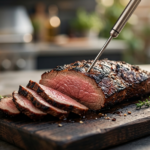
This is the sweet spot for most steak lovers and the default recommendation at most steakhouses. The center is warm and red, the edges transition to pink, and there’s a balance of tenderness and flavor that’s hard to beat.
At this temperature, the fat in well-marbled cuts like ribeye or strip steaks starts rendering just enough to add richness without the steak losing its juiciness. That’s the real reason medium rare gets so much love — it’s the temperature where fat, moisture, and texture hit a natural balance.
If you’re new to cooking steaks and want a reliable target, medium rare is where to start.
Medium Steak Temp: 135–145°F
A medium steak has a warm pink center with firmer edges. It’s noticeably less soft than medium rare, but still has good moisture — especially in fattier cuts.
This is a solid choice if you want some pink but prefer your steak a little more “cooked.” It’s also more forgiving than rare or medium rare in terms of timing. You have a wider window before it crosses into medium well territory.
Leaner cuts like top round can start to feel dry at this level, so if you’re cooking a lean steak to medium, consider a quick marinade or basting with butter during the cook.
Medium Well: 145–155°F
There’s only a faint trace of pink left. The steak is firm, and the juiciness drops off compared to medium. For a lot of people, this is where steak starts to lose what makes it special.
That said, if medium well is your preference, you can still get a decent result. Choosing a well-marbled cut makes a huge difference here. A Choice or Prime grade ribeye at medium well will still have flavor and some moisture, while a lean sirloin at the same temp can feel like chewing cardboard.
Well Done Steak Temp: 155°F+
A well done steak has no pink, a uniform gray-brown interior, and a firm texture throughout. It’s the most polarizing doneness level — a lot of cooks cringe at the idea, but plenty of people genuinely prefer it.
The key to a well done steak that’s not a total loss: low and slow finishing heat after a good sear. Blasting a steak on high the entire time until it hits 160°F is how you end up with something tough and dried out. Sear it hard, then drop the heat and let it come up to temp gradually. This gives the exterior time to develop flavor without turning the interior into leather.
A cast iron pan with a butter baste works well here. So does reverse searing — cooking low in the oven first, then finishing with a hard sear.
Carryover Cooking: The Detail Most People Miss
Here’s the thing that trips up even experienced home cooks. Your steak keeps cooking after you take it off the heat.
This is called carryover cooking, and it typically raises the internal temperature by 5–10°F during rest. A thick steak retains more heat and carries over more. A thin steak, less so.
So if you want a finished temp of 135°F (medium rare), you should pull the steak off when it reads around 125–130°F. Let it rest for 5–7 minutes, and it’ll coast up to your target.
Skipping this step is probably the single biggest reason people overshoot their target doneness. They cook to the final temp on the grill, then the steak climbs another 8 degrees on the cutting board, and suddenly their medium rare is a solid medium.
How to Tell Steak Doneness Accurately
Use an Instant-Read Thermometer
This is the most reliable method, full stop. An instant-read thermometer takes the guesswork out entirely. Insert the probe into the thickest part of the steak, away from bone or fat, and you’ll know exactly where you stand.
If you’re not sure how to read a meat thermometer properly, it’s worth taking two minutes to learn. The probe tip needs to be in the center of the meat — not touching the pan, not poking through to the other side.
Digital instant-read thermometers are inexpensive and accurate. If you cook meat regularly, this is the single most useful tool you can own.
The Hand/Touch Test
You’ve probably seen this one: press the base of your thumb while touching different fingers and compare the firmness to your steak. Open hand = rare. Thumb to middle finger = medium. And so on.
It works in a general sense, but it’s unreliable for most home cooks. Everyone’s hands feel different, and the test doesn’t account for thickness, cut, or fat content. It’s better than nothing if you’re without a thermometer at a campsite, but it shouldn’t be your go-to method at home.
Visual Cues (Cut Test)
Cutting into the steak to check the color tells you something, but it has drawbacks. You lose juices, the color changes fast once exposed to air, and by the time you see the problem, it might be too late to fix.
If you must do this, cut near the edge — not through the center. And keep in mind that lighting affects how pink the meat looks. Under warm kitchen lights, a medium steak can look more done than it actually is.
Why the Cut Matters as Much as the Temperature
Not all steaks behave the same way at the same temperature. A filet mignon at 135°F and a flank steak at 135°F are two very different eating experiences.
Tender cuts — ribeye, strip, tenderloin, porterhouse — are built for the classic sear-and-rest method. They’re naturally tender, so you’re mostly managing fat rendering and moisture.
Leaner, tougher cuts — flank, skirt, top round, tri-tip — can be great at medium rare, but they need thin slicing against the grain to feel tender. Cook them past medium and they tighten up fast.
Heavily marbled beef like Wagyu has so much intramuscular fat that it can handle higher temps without drying out. Some people actually prefer Wagyu closer to medium because the extra fat needs a bit more heat to fully render and release its flavor.
The takeaway: your target doneness should factor in the cut you’re working with, not just your general preference.
Steak Cooking Methods and How They Affect Doneness
The way you apply heat changes how easy or hard it is to hit your target temperature evenly.
Direct high heat (grilling, cast iron sear): Great for thin to medium-thick steaks. You get a strong crust fast, but the window between medium rare and medium is narrow. Timing matters more.
Reverse sear (low oven, then sear): Ideal for thick steaks — anything over 1.5 inches. You bring the steak up to about 10–15°F below your target in a 250°F oven, then finish with a hard sear. This gives you edge-to-edge even doneness instead of a gray band around a red center.
Sous vide: The most precise method. You set the water bath to your exact target temp, and the steak can’t overshoot. Then you sear for crust. It’s almost foolproof for doneness, though some people feel the texture is slightly different from a traditionally cooked steak.
If you’re cooking on a pellet grill or gas grill, the reverse sear works especially well. Use indirect heat to bring the steak up slowly, then move it to the hottest zone for a final sear.
Common Mistakes That Wreck Your Steak’s Doneness
A few pitfalls that come up again and again:
- Cooking straight from the fridge. A cold steak cooks unevenly. The outside overcooks while the center stays underdone. Let it sit at room temperature for 30–40 minutes before cooking.
- Not resting the steak. Cutting into a steak right off the grill means juices pour onto the cutting board instead of staying in the meat. Rest it for at least 5 minutes — longer for thick cuts.
- Relying on cooking time instead of temperature. “Four minutes per side” means nothing if your steak is a different thickness, your grill is a different temp, or your pan is hotter or cooler than usual. Use a thermometer.
- Pressing the steak down with a spatula. This squeezes out moisture and does nothing useful. Let the steak sit undisturbed so it can develop a proper crust.
Storing Leftover Steak
If you’ve got leftover cooked steak, it keeps well in the fridge for 3–4 days when stored in an airtight container. Reheat gently — a low oven (250°F) works better than a microwave for keeping the steak from drying out and pushing past your original doneness level.
FAQ
Is medium rare steak safe to eat?
For whole cuts of beef (not ground beef), medium rare at 130–135°F is widely considered safe. Harmful bacteria live on the surface of whole muscle cuts, and searing the exterior kills them. The USDA’s official recommendation is 145°F with a 3-minute rest, but most restaurants serve steak below that without issue. Ground beef is different — it should reach 160°F because bacteria can be mixed throughout during grinding.
What’s the best doneness for ribeye?
Medium rare to medium (130–145°F) tends to bring out the best in a ribeye. The intramuscular fat needs enough heat to start rendering, which adds flavor and richness. A rare ribeye can taste a bit waxy because the fat hasn’t softened yet.
Can you fix an overcooked steak?
Not really. Once the proteins have tightened and the moisture has left, there’s no way to reverse that. You can slice it thin and use it in tacos, sandwiches, or stir-fry where sauces and other ingredients compensate. But bringing it back to a juicier state isn’t possible.
Does steak doneness depend on thickness?
Thickness doesn’t change the target temperature, but it changes how you get there. A one-inch steak cooks fast and is easy to overshoot. A two-inch steak gives you more time but needs a method (like reverse sear) that heats it evenly. Same target temp either way — the technique just changes.
Is the hand test for steak doneness accurate?
It gives you a rough ballpark, but it’s not precise enough to rely on. Different cuts, thicknesses, and even hand anatomy make it inconsistent. An instant-read thermometer costs under $15 and is dramatically more accurate.
The One Thing That Actually Matters
If you take one thing from this steak cooking guide, make it this: get an instant-read thermometer and learn to pull your steak 5–10°F before your target. That single habit will improve your results more than any seasoning blend, fancy cut, or expensive grill ever could.
Once you’ve got that down, you can start experimenting with different steak cuts, cooking methods, and doneness levels with real confidence — knowing you’ll hit your mark every time.


3 thoughts on “Steak Doneness Guide: Temperatures, Timing, and What Actually Matters”
Comments are closed.