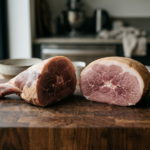
You just pulled your turkey breast off the grill or out of the oven, stuck a thermometer in, and it reads 150°F. Now you’re standing in your kitchen wondering: is this actually safe to eat, or am I about to ruin Thanksgiving for everyone?
Here’s the short answer: turkey breast at 150°F is not considered safe by the USDA’s standard recommendation of 165°F. But that 165°F number doesn’t tell the whole story. Food safety isn’t just about hitting one magic temperature — it’s about temperature and time working together. A turkey breast held at 150°F for a specific duration can actually achieve the same level of pathogen reduction as one pulled at 165°F.
Let’s break down exactly what that means, when 150°F can be safe, and when it’s genuinely risky.
Why the USDA Says 165°F (and Why That Number Is Simplified)
The USDA’s recommendation of 165°F for all poultry exists because at that temperature, harmful bacteria like Salmonella are destroyed instantly. There’s no waiting, no holding time, no guesswork. You hit 165°F, and it’s safe. Period.
That makes it a perfect guideline for the general public. Not everyone owns a reliable thermometer, not everyone understands pasteurization curves, and not everyone wants to do math while cooking dinner.
But here’s the part most people don’t realize: the USDA’s own data shows that Salmonella is destroyed at temperatures well below 165°F — it just takes longer. At 165°F, the kill is instantaneous. At 160°F, it takes about 14 seconds. At 155°F, roughly 50 seconds. At 150°F, it takes approximately 3.7 minutes to achieve the same 7-log reduction in Salmonella (meaning 99.99999% of the bacteria are eliminated).
So turkey breast at 150 degrees isn’t inherently dangerous. The critical factor is how long it stays at that temperature.
This is the same principle commercial food producers and professional chefs use every day. It’s called pasteurization, and it applies to poultry just like it applies to milk.
How Pasteurization Time Works With Turkey Breast
Think of it this way: cooking to a safe temperature isn’t a light switch. It’s more like a dimmer. The higher you go, the faster bacteria die. The lower the temperature, the more time you need.
The USDA publishes time-and-temperature tables for poultry (available through their guidelines and referenced in the USDA Food Safety and Inspection Service appendices). Here’s a simplified look at the key data points for turkey breast:
| Internal Temperature | Time Needed to Pasteurize |
|---|---|
| 165°F (73.9°C) | Instant (less than 1 second) |
| 160°F (71.1°C) | ~14 seconds |
| 155°F (68.3°C) | ~50 seconds |
| 150°F (65.6°C) | ~3.7 minutes |
| 145°F (62.8°C) | ~13.6 minutes |
What this means in practice: if your turkey breast reaches an internal temp of 150°F and you let it rest (tented with foil, for example), the temperature typically holds at or above 150°F for well beyond 3.7 minutes. During that resting period, pasteurization is happening. The meat doesn’t need to climb all the way to 165°F to be safe.
Quick Fact: Carryover cooking — the rise in temperature that happens after you remove meat from heat — often adds 5–10°F to turkey breast. So pulling at 150°F often means the meat actually reaches 155–160°F during rest.
Turkey Breast 150 vs 165: What’s the Real Difference?
The difference between a turkey breast pulled at 150°F (with proper rest) and one cooked to 165°F isn’t safety — assuming you handle the lower temperature correctly. The difference is texture and moisture.
Turkey breast is extremely lean. It has very little intramuscular fat to keep it juicy. Every degree above about 155°F pushes more moisture out of the muscle fibers. By the time you hit 165°F, a significant amount of juice has been squeezed out. That’s why turkey breast cooked to the USDA’s recommended temperature often tastes dry, chalky, or needs gravy to be edible.
At 150°F (allowed to rest properly), the breast retains noticeably more moisture. The texture is tender, the meat is juicy, and it doesn’t have that stringy, overcooked quality.
This is exactly why many professional chefs and competition barbecue cooks pull turkey breast below 165°F. They’re not being reckless — they understand pasteurization and are using it deliberately.
That said, there’s an important distinction to make: this approach requires an accurate thermometer and an understanding of what you’re doing. If you’re guessing at temperatures or using a cheap, unreliable thermometer, sticking with 165°F is the safer choice.
If you’re serious about getting accurate reads on your meat, our guide on how to read a meat thermometer covers everything you need to know.
When Pulling Turkey Breast at 150°F Is Risky
Not every situation is the same. There are times when pulling at 150°F is a bad idea, even if the science supports it under ideal conditions.
Stuffed turkey: If you’ve stuffed your turkey, the stuffing inside can harbor bacteria that haven’t reached safe temperatures even when the meat itself reads 150°F. The USDA recommends the stuffing reach 165°F regardless. This is one situation where hitting the full 165°F in the breast (or better yet, cooking stuffing separately) really matters.
Unreliable thermometer: If your thermometer is off by even 5 degrees, your “150°F” reading could actually be 145°F — which requires much longer pasteurization time. A difference that small matters.
Compromised immune systems: For very young children, elderly individuals, pregnant women, or anyone with a weakened immune system, the standard 165°F recommendation is worth following. The margin of error at lower temperatures, while scientifically manageable, isn’t worth the risk for vulnerable people.
Inconsistent cooking temperature: If your oven or smoker had significant temperature swings during cooking, parts of the breast may not have reached 150°F uniformly. This is especially common with smokers that run too low or have poor temperature control. If you’re comparing pellet grills vs gas grills for something like this, consistent heat matters more than you might think.
No resting period: Pulling at 150°F and immediately slicing means the meat hasn’t had time to pasteurize at that temperature. You need those few minutes of rest. Don’t skip it.
How to Safely Cook Turkey Breast to 150°F
If you want to try pulling your turkey breast at a lower temperature for better texture, here’s how to do it properly:
Use a quality instant-read or leave-in probe thermometer. This isn’t optional. You need accurate, reliable readings. Check calibration occasionally by testing in boiling water (it should read 212°F at sea level).
Measure at the thickest part of the breast. Avoid touching bone, which conducts heat differently and can give you a false high reading.
Pull the turkey breast when the thermometer reads 150°F at the thickest point. Tent it loosely with aluminum foil.
Let it rest for at least 10–15 minutes. During this time, carryover cooking will push the temperature higher, and the meat will hold at or above 150°F for well beyond the ~3.7 minutes needed for pasteurization. Most turkey breasts will climb to 155–160°F during rest.
Check the temperature again after resting. If it hasn’t climbed above 150°F or has dropped quickly, something went wrong — the breast may have been undercooked in parts, or the ambient temperature was too cold.
This approach works beautifully for bone-in turkey breast cooked in the oven, on a smoker, or on a grill. If you’re smoking turkey, keeping your smoker at a steady temperature is critical. Knowing what temperature to target on your smoker for different meats gives you a solid foundation, and the same principles of temperature management apply to turkey.
What About Other Poultry Temperatures?
The same pasteurization science applies to chicken as well. If you’ve ever wondered whether 145°F is safe for chicken, the answer follows the same logic — it depends on hold time. And for turkey burgers, which are ground poultry (a higher-risk category because bacteria can be mixed throughout), the safe internal temperature for turkey burgers is genuinely more important to hit precisely, since ground meat doesn’t pasteurize as predictably as whole muscle.
Ground poultry is different from whole turkey breast. With a whole breast, bacteria are on the surface and get killed early in cooking. With ground turkey, bacteria can be distributed throughout the meat. That’s why ground poultry should always reach at least 165°F — the pasteurization-at-lower-temps approach is really meant for whole-muscle cuts.
The Texture Test: How 150°F Turkey Breast Actually Looks
One thing that catches people off guard: turkey breast pulled at 150°F and rested can still look slightly pink near the bone or in certain areas. This does not necessarily mean it’s undercooked.
Pink color in turkey can come from several sources — myoglobin reactions, the smoking process (smoke rings are a classic example), or even the age of the bird. Color alone is not a reliable indicator of doneness. Temperature is.
If your thermometer reads 150°F at the thickest point and you’ve rested the meat properly, it’s pasteurized regardless of color. This is the same reason a steak doneness guide relies on temperature rather than just visual cues.
FAQ
Is 150°F turkey breast safe to serve at a large gathering?
It can be, but you need to be confident in your thermometer’s accuracy and your resting process. For large gatherings where you’re serving elderly guests, children, or people with health concerns, cooking to 160–165°F eliminates any room for error and is the more cautious choice.
Does carryover cooking really raise the temperature enough?
For turkey breast, yes — typically 5–10°F when tented with foil. Bone-in breasts tend to carry over more than boneless. The key is pulling at the right moment and letting the meat rest undisturbed.
Can I use the 150°F approach with a deep-fried turkey?
Deep frying cooks turkey very quickly at high oil temperatures, so the surface hits well above pasteurization temps almost immediately. The concern with deep-fried turkey is usually overcooking, not undercooking. Still, check the internal temperature at the thickest point. The 150°F-with-rest approach can work, though deep-fried turkeys often climb past 160°F quickly on their own.
What if my turkey breast reads 150°F in one spot but lower in another?
Go by the lowest reading. The coldest spot is the one that determines safety. Reposition the probe to check multiple areas — especially if the breast is uneven in thickness.
Should I brine my turkey breast if I’m pulling it at 150°F?
Brining adds moisture and seasoning, which complements a lower-temperature pull nicely. A brined turkey breast pulled at 150°F and rested properly is about as juicy as turkey gets. If you’re curious about brining techniques, the same principles used for brining brisket apply to turkey — salt, water, time, and patience.
The bottom line: turkey breast at 150°F can absolutely be safe, but it’s not as simple as just pulling it early and hoping for the best. You need an accurate thermometer, proper resting time, and an understanding that pasteurization is a function of both temperature and time. If you have those pieces in place, you’ll end up with a turkey breast that’s both safe and noticeably juicier than one cooked to the standard 165°F.
If any part of the process feels uncertain — your thermometer is questionable, you’re cooking for vulnerable people, or you’re working with ground turkey — stick with 165°F. It’s a safe, reliable number for a reason.