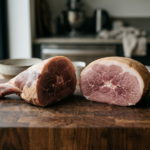
The short answer: most pitmasters smoke brisket between 225°F and 250°F, and either end of that range can produce outstanding results. The right brisket smoking temperature for you depends on the size of your cut, the type of smoker you’re using, how much time you have, and — honestly — how comfortable you are managing a long cook.
But the number on your temperature dial is only part of the equation. A lot of people fixate on finding the single “perfect” brisket smoke temp and overlook the things that actually make or break the cook: maintaining a steady temperature, knowing when to wrap, and pulling the brisket at the right internal temp.
Let’s walk through all of it so you can pick the temperature that matches your setup, your schedule, and your skill level — and actually end up with a brisket worth bragging about.
Why Temperature Matters So Much for Brisket
Brisket is one of the toughest cuts on the animal. It comes from the chest of the cow, and that muscle does a lot of work during the animal’s life, which means it’s packed with connective tissue — mainly collagen. If you understand what part of the cow brisket comes from, you already know why it needs special treatment.
Collagen doesn’t break down quickly. It needs sustained heat over a long period to convert into gelatin, which is what gives properly smoked brisket that rich, melt-in-your-mouth texture. Cook too hot and the outside dries out before the inside finishes rendering. Cook too cool and you’re looking at an incredibly long cook time with a higher risk of the meat sitting in unsafe temperature zones.
The brisket low and slow temperature range of 225–250°F sits in a sweet spot: hot enough to render fat and convert collagen efficiently, but gentle enough that the meat doesn’t tighten up and squeeze out all its moisture.
Smoking Brisket at 225: The Traditional Approach
If you ask old-school competition pitmasters what temperature to smoke brisket, many of them will say 225°F without hesitation. There’s a reason this number has become the gold standard.
What you get at 225°F:
- Maximum smoke absorption. The longer your brisket spends at lower temps, the more smoke flavor penetrates the meat, and the better bark you develop.
- A more forgiving cook. Lower heat gives you a wider window before things go wrong. You’re less likely to overshoot your target internal temperature.
- Deeper collagen breakdown. That extra time lets connective tissue render more completely, which often translates to a more tender finished product.
The trade-off: Time. A full packer brisket (12–16 pounds) smoked at 225°F can take anywhere from 14 to 20 hours, depending on its thickness and your smoker’s consistency. That’s a serious commitment, and it usually means an overnight cook or a very early alarm.
One detail that’s easy to overlook: smoking brisket at 225 demands a smoker that holds temperature well. If your cooker swings 30–40 degrees regularly, you’re not really cooking at 225 — you’re cooking at an average that might not deliver the results you expect. Offset smokers and kamado-style cookers tend to hold steady temperatures well once dialed in, while some cheaper pellet grills and thin-walled bullet smokers can struggle. If you’re comparing smoker types, the differences between pellet grills and gas grills are worth understanding before you commit to a long cook.
Smoking Brisket at 250: The Practical Sweet Spot
More and more experienced pitmasters — including some of the biggest names in competitive barbecue — have shifted toward 250°F as their go-to brisket smoking temperature. The results are nearly identical to 225°F cooks, but you save a meaningful chunk of time.
At 250°F, a full packer brisket typically finishes in 12 to 16 hours. That’s not a small difference when you’re managing a fire and trying to time dinner. The bark development is still excellent, smoke penetration is strong, and the collagen renders beautifully.
A common concern is that 250 will dry the brisket out. In practice, that 25-degree difference doesn’t cause noticeably more moisture loss as long as you’re managing the rest of the cook properly — wrapping at the right time, pulling at the right internal temp, and resting the meat before slicing.
Quick Fact: Aaron Franklin, arguably the most famous brisket cook in the world, runs his smoker at around 250–275°F. That alone should put to rest any worry that 225 is the only way to get great results.
Going Higher: 275°F and Above
Some pitmasters push brisket smoke temp to 275°F or even 300°F. This is sometimes called the “hot and fast” method, and it does work — but it requires more attention and experience.
At higher temperatures, your margin for error shrinks. The stall (more on that below) happens faster and can be more dramatic, the bark can get too dark before the inside is done, and the flat portion of the brisket — which is leaner — is more prone to drying out.
That said, there are legitimate reasons to go hotter:
- Time constraints. A 275°F cook can bring a full packer in around 8–12 hours.
- Certain smoker types. Some cookers, especially large offset smokers with thick steel, are actually designed to run a bit hotter and produce great results in that range.
- Smaller cuts. If you’re smoking a brisket flat by itself (not a full packer), higher temps work better because there’s less mass to worry about. Knowing the differences between a brisket flat and a full packer helps you decide how to adjust your cook.
If you’re relatively new to brisket, stick with the 225–250°F range until you’ve got a few cooks under your belt. Higher temperatures are less forgiving, and the learning curve gets steeper.
The Stall — And Why It Makes People Panic
Somewhere around 150–170°F internal temperature, your brisket will seem to stop cooking. The internal temp might plateau for hours, sometimes even dropping a degree or two. This is called the stall, and it’s completely normal.
What’s happening: moisture on the surface of the meat is evaporating, and that evaporative cooling effect counteracts the heat from your smoker. It’s the same principle as sweating — your body cools itself the same way.
The stall is not a sign that something went wrong. But it is the point where most beginners make mistakes:
- Cranking up the heat. This usually backfires. You’ll blow past the stall faster, but you risk drying out the flat.
- Opening the smoker constantly to check. Every time you open the lid, you lose heat and extend the cook. Trust your probe thermometer.
- Pulling the brisket too early because they assume it must be done after 10 hours.
The most popular way to handle the stall is the Texas Crutch — wrapping the brisket in butcher paper or foil once it hits around 165–170°F internal. This traps moisture, pushes through the stall faster, and protects the bark. If you’re unsure about when to wrap, check out this guide on what temp to wrap brisket for a more detailed breakdown.
Butcher paper is generally preferred over foil because it’s breathable — you still get bark texture instead of a steamed exterior. Foil works faster but can soften the bark significantly. Understanding the differences between butcher paper and parchment paper can save you a frustrating mistake at the wrapping stage.
What Internal Temperature Means “Done”
This is where a lot of briskets go wrong. People pull at a fixed number — say 195°F or 200°F — without actually checking whether the meat is ready.
The general target range is 200–210°F internal temperature, measured in the thickest part of the flat. But the number alone isn’t what matters. What you’re really looking for is probe tenderness. When you slide a thermometer probe or a toothpick into the thickest part of the brisket and it goes in with almost no resistance — like pushing into warm butter — the brisket is done. Some briskets hit that point at 197°F. Others might need 207°F. The grade of meat, the amount of marbling, and the specific animal all play a role.
For a deeper dive into doneness, this article on what temperature brisket is done covers the nuances well.
Warning: Pulling brisket at 190°F because you’re impatient is one of the most common reasons for tough, chewy results. That last 10–15 degrees is where the magic happens — the remaining collagen finishes converting, and the fat fully renders. Don’t rush it.
225 vs. 250: Which Should You Choose?
Here’s a straightforward comparison to help you decide:
| Factor | 225°F | 250°F |
|---|---|---|
| Cook time (full packer) | 14–20 hours | 12–16 hours |
| Smoke flavor | Slightly more intense | Still excellent |
| Bark development | Thick, dark crust | Very good — slightly less time to develop |
| Margin for error | More forgiving | Slightly less forgiving |
| Best for | Weekend cooks with time, beginners wanting a safety net | Experienced cooks, weekday cooks, most general situations |
| Moisture retention | Excellent when managed well | Excellent when managed well |
For most people, 250°F is the ideal brisket temperature. You get nearly identical quality with a meaningful time savings. If you’re cooking overnight and time isn’t a factor, 225°F gives you a slight edge in smoke depth and an easier cook to manage.
Honestly, the difference between a brisket smoked at 225 versus 250 is far smaller than the difference made by proper wrapping, accurate probing, and a good rest period.
The Rest Period: The Step Most People Skip
After you pull your brisket off the smoker, it needs to rest. Not 15 minutes like a steak — at least one hour, and ideally two to four hours.
Wrap the finished brisket tightly in butcher paper (if it isn’t already wrapped), then in an old towel, and place it in a cooler with the lid closed. No ice — the cooler acts as an insulator to hold temperature. The brisket will stay at a safe, serving-ready temperature for several hours this way.
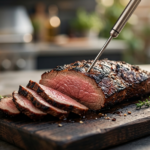
During the rest, juices redistribute throughout the meat. If you slice immediately, those juices pour out onto the cutting board and your brisket tastes drier. A properly rested brisket will be noticeably juicier when you slice into it.
This is also a great buffer for timing. If the brisket finishes earlier than expected (which happens), the cooler rest keeps it perfect until you’re ready to serve. And when it’s time to cut, knowing how to slice brisket correctly — always against the grain — makes a real difference in texture.
Smoker Type and Temperature Control
Not all smokers behave the same at 225°F or 250°F, and this is something people rarely talk about.
Offset smokers run on wood or charcoal and require active fire management. Holding 225°F on an offset takes practice and attention — you’re adding fuel, adjusting vents, and monitoring constantly. Many offset users find 250–275°F easier to maintain consistently.
Pellet grills (Traeger, Pit Boss, Z Grills, etc.) use a digital controller to feed pellets automatically. They’re the easiest option for holding a steady brisket smoking temperature, especially at 225°F. If you’re having trouble keeping temps consistent on a pellet grill, a look at the Pit Boss P-setting guide might help dial things in.
Kamado grills (Big Green Egg, Kamado Joe) are excellent at holding low temperatures because of their thick ceramic walls. Once set, they barely fluctuate.
Electric smokers hold temperature precisely but often struggle to produce deep smoke flavor. If you’re using one, 225°F works well since the longer cook time helps compensate for lighter smoke output.
Charcoal bullet smokers (like the Weber Smokey Mountain) are popular and capable, but temperature can swing if you’re not managing vents carefully. Understanding whether Weber grills are worth the investment is a fair question if you’re still deciding on your setup.
The point: your ideal brisket temperature partly depends on what your smoker can actually hold steady. A consistent 250°F beats a fluctuating 225°F every time.
Common Mistakes That Ruin Brisket (Regardless of Temperature)
Even if you nail the perfect brisket smoke temp, other errors can sink the cook:
- Not using a probe thermometer. Guessing doneness by time alone is a recipe for disappointment. A reliable leave-in probe thermometer is non-negotiable. If you’re unsure how to read one, this guide on reading a meat thermometer is helpful.
- Probing in the wrong spot. The probe should sit in the thickest part of the flat, not touching fat or the point muscle. Knowing where to probe brisket saves you from false readings.
- Not enough seasoning. Brisket is a thick, dense cut. A light dusting of rub won’t cut it. Apply a generous coat — coarse black pepper and kosher salt (a classic dalmatian rub) is all you need, but use enough of it.
- Slicing with the grain. This turns perfectly cooked brisket into tough, stringy slices. Always cut against the grain, and remember that the grain direction changes between the flat and the point.
- Skipping the rest. Already covered above, but it’s worth repeating because it’s that important.
FAQ
Can I smoke brisket at 200°F for even more tenderness?
You can, but it’s not recommended. At 200°F, the cook time becomes extremely long (potentially 20+ hours for a full packer), and the meat spends more time in temperature ranges where bacterial growth is a concern. The risk-to-reward ratio isn’t great. Stick with 225°F as your low end.
Does the type of wood affect what temperature I should use?
Not really — wood choice affects flavor, not cooking temperature. Stronger woods like mesquite can become overpowering on very long, low-temp cooks, so if you’re smoking brisket at 225 for 16+ hours, a milder wood like oak or cherry might be a better match. For a comparison, check out the differences between hickory and mesquite.
How long does brisket take at 225 vs. 250?
As a rough guide, plan for about 1 to 1.5 hours per pound at 225°F and closer to 50–75 minutes per pound at 250°F. These are estimates — every brisket is different. A detailed breakdown of timing at the lower end is available in this article on how long to smoke brisket at 225.
Should I choose choice or prime brisket?
Prime brisket has more intramuscular marbling, which gives you extra insurance against drying out — especially helpful at higher smoking temperatures. Choice brisket works fine too, but you need to be more careful about not overcooking the flat. Here’s a closer look at prime vs. choice brisket if you want to weigh the cost difference.
Is it okay to open the smoker to spritz the brisket?
Spritzing with apple cider vinegar or apple juice can help with bark development and moisture, but every time you open the lid, you lose 15–25 degrees and add time to the cook. If you’re going to spritz, do it quickly and no more than once per hour. On pellet grills and kamados that recover heat quickly, it’s less of an issue than on thin-walled smokers.
Pick a Temperature, Then Focus on Everything Else
Here’s the thing nobody tells you when you first start researching the best temp to smoke brisket: the difference between 225 and 250 is far less important than consistency, proper wrapping, accurate temperature monitoring, and a long rest. Get those four things right at any temperature in the 225–275°F range, and you’ll produce a brisket that impresses.
If you’re doing your first brisket, go with 250°F. It’s forgiving enough for beginners, fast enough to keep you sane, and produces results that compete with anything coming off a competition rig. Save the 225°F marathon for a weekend when you’ve got nothing else going on and want to chase that extra layer of smoke depth.
And if the brisket doesn’t come out perfect the first time? That’s normal. Brisket is one of the hardest cooks in barbecue. Every one you smoke teaches you something. Adjust, take notes, and try again.