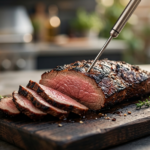
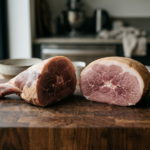
The short answer you’re probably looking for: 130–135°F is the sweet spot for flank steak. That gives you a warm, pink, medium-rare center — which is exactly where this particular cut shines. Pull it off the heat around 125–130°F and let carryover cooking do the rest.
If you walk away with nothing else from this page, that’s the number. But flank steak is one of those cuts where the temperature target alone won’t save you if you don’t understand why the window is so narrow. So let’s get into it.
Why Flank Steak Is Less Forgiving Than a Ribeye
A ribeye or a New York strip (if you want a deeper comparison, this steak doneness guide walks through the full range of cuts) has generous marbling — little streaks of fat woven through the muscle. That fat melts during cooking, basting the meat from the inside and keeping it juicy even if you accidentally overshoot the target by ten degrees.
Flank steak doesn’t have that luxury. It comes from the abdominal muscles of the cow, which work hard and stay lean. The grain is long, pronounced, and tightly packed. There’s almost no intramuscular fat to cushion your mistakes.
What does that mean in practice? If you nail a ribeye at 140°F, it’s still pretty good. If you nail a flank steak at 140°F, you’re heading into chewy territory. And if you push it to 155°F or beyond, you might as well be chewing on a leather belt. The lack of fat means there’s nothing left to keep the texture pleasant once the muscle fibers tighten up.
This is why the flank steak internal temperature matters more than it does for fattier cuts. You have a real window of about ten degrees between “excellent” and “disappointing.”
The Temperature Chart (and What Each Stage Actually Looks Like)
Here’s the breakdown most people come looking for. These are final temperatures — meaning the number on your thermometer after the steak has rested.
| Doneness | Pull Temp (Off the Heat) | Final Temp (After Resting) | What to Expect |
|---|---|---|---|
| Rare | 115–120°F | 120–125°F | Cool red center, very soft. Safe for most adults, but the texture can feel mushy on a thin cut like flank. |
| Medium-Rare | 125–130°F | 130–135°F | Warm pink center, tender, juicy. This is the target. |
| Medium | 130–135°F | 135–145°F | Slight pink in the middle, firmer. Still acceptable, but you’re starting to lose tenderness. |
| Medium-Well | 140–145°F | 145–155°F | Mostly gray with a faint blush of pink. Noticeably tougher. |
| Well-Done | 150°F+ | 155°F+ | Fully gray, dry, and chewy. Flank steak at this stage is genuinely difficult to enjoy. |
The medium rare flank steak temp of 130–135°F is where the muscle fibers have relaxed enough to be tender but haven’t yet squeezed out all their moisture. Push past medium and the long grain that makes flank steak distinctive starts working against you.
Pull Temperature vs. Final Temperature: The Detail Most People Miss
This is where a lot of home cooks get tripped up. The number you see on your instant-read thermometer when you pull the steak off the grill is not the final number.
Carryover cooking is the phenomenon where residual heat continues to raise the internal temperature after the meat leaves the heat source. For a thick cut like a tri-tip, carryover can add 10°F or more. Flank steak is thinner, so the effect is slightly smaller — usually around 5°F — but it still matters when your margin for error is this tight.
If your target is 135°F final, pull the steak at roughly 130°F. If you wait until the thermometer reads 135°F on the grill, you’ll land closer to 140°F by the time you slice it, and you’ve just drifted out of the ideal zone.
A good habit: start checking the flank steak internal temp about two minutes before you think it’s done. Thin cuts go from perfect to overdone in a shockingly short window, especially over high heat.
How to Actually Probe a Thin Steak
Flank steak is typically only about an inch thick, sometimes less at the tapered edges. This creates a practical problem: where do you put the thermometer probe?
If you stab straight down from the top, the probe tip might poke through the bottom and read the temperature of the air or the grill grate instead of the meat. That gives you a falsely low reading, which means you leave the steak on the heat longer than necessary, which means you overcook it. Classic trap.
The better approach is to insert the probe horizontally through the side of the steak, pushing it into the thickest part of the center. Make sure the sensing area of the probe (usually the last half-inch to one inch of the tip) is fully embedded in the meat and not touching the grill surface. If you’re not sure how your thermometer reads, this guide on how to read a meat thermometer clears up a lot of common confusion.
One more thing: check the temperature in the thickest part of the steak, not the thin tapered ends. The ends will always read higher and will cook faster. If you pull the steak when the thin end hits 130°F, the thick center might still be at 115°F. Aim for the thickest section and accept that the edges will be a touch more done. That’s just the nature of an unevenly shaped cut.
What Happens When You Overshoot
Let’s say you got distracted. The phone rang, someone asked you a question, or you simply lost track of time. Your flank steak cooking temperature climbed to 150°F or higher. What now?
Unfortunately, there’s no undo button. The muscle fibers in lean beef contract as they heat up, squeezing out moisture. Past about 145°F, that process accelerates quickly. With a well-marbled steak, the rendered fat compensates somewhat. With flank, there’s no fat to compensate. The result is a dry, stringy texture that no amount of sauce fully disguises.
If it happens, your best option is to slice the steak as thinly as you possibly can against the grain and use it in something where texture is less front-and-center — tacos, stir-fry, a sandwich with a good chimichurri or aioli. Thin slices cut across the grain shorten those long muscle fibers and make chewiness less noticeable.
But honestly, the better move is prevention. Set a timer. Start checking early. Keep your instant-read thermometer within arm’s reach the entire time the steak is on the heat.
Resting and Slicing: The Two Things That Happen After Temperature
You hit the right flank steak done temperature. Great. Two more things will determine whether the steak actually eats well.
Rest it for 5 to 10 minutes. This gives the juices time to redistribute through the meat instead of pouring out onto the cutting board the moment you make your first cut. Tent it loosely with foil if you’re worried about it cooling too much, though a thin flank steak won’t hold heat for long regardless. Don’t skip this step — five minutes of patience makes a real difference in juiciness.
Slice against the grain. This is non-negotiable for flank steak. The grain runs in long, visible lines along the length of the cut. You want to cut perpendicular to those lines, at a slight angle, in slices no thicker than a quarter inch. Slicing with the grain leaves those long fibers intact, and your jaw will feel every single one of them. Slicing against the grain cuts them into short segments, making each bite dramatically more tender.
Temperature gets you to the finish line. Resting and slicing get you across it.
Grilling vs. Other Methods: Does the Temperature Change?
The target internal temperature stays the same regardless of how you cook the steak. Whether you’re searing it in a cast iron skillet, broiling it in the oven, or cooking it over charcoal, the medium rare flank steak temp is still 130–135°F final.
What does change is how quickly you get there and how much carryover cooking you’ll see. A screaming hot cast iron pan will sear the outside fast and leave the interior relatively cool, which is actually ideal for a thin cut. A gas grill on medium-high heat gives you a bit more control. A charcoal grill running hot can take a flank steak from rare to medium in under four minutes per side, so stay alert.
If you’re grilling and want more control over the heat, understanding your equipment helps. For example, if you’re deciding between fuel types, this pellet grill vs. gas grill comparison covers some of the practical differences in heat management.
A Note on Food Safety
The USDA recommends cooking whole cuts of beef to a minimum of 145°F with a three-minute rest. That lands you at medium, which is perfectly fine if that’s your preference — flank steak at 145°F is still edible, just firmer.
That said, most chefs and experienced home cooks serve flank steak at medium-rare (130–135°F) because the risk of foodborne illness from the interior of a whole, intact muscle cut is very low. Harmful bacteria live on the surface of the meat, and a proper sear takes care of that. The interior of a solid piece of beef is essentially sterile. If you’re cooking for someone who is immunocompromised, pregnant, or very young, err on the side of the USDA recommendation. For everyone else, medium-rare is widely considered safe and is the standard in restaurants.
FAQ
Is flank steak safe to eat at 130°F?
For most healthy adults, yes. The surface of the steak reaches much higher temperatures during searing, which kills surface bacteria. The interior of a whole muscle cut is generally sterile. If you’re cooking for someone with a compromised immune system, aim for the USDA-recommended 145°F.
Why did my flank steak turn out tough even though I hit the right temperature?
The most common culprit is slicing with the grain instead of against it. Flank steak has very long muscle fibers, and cutting parallel to them leaves those fibers intact, making every bite chewy. The second most common issue is not letting the steak rest, which causes the juices to drain out immediately. Temperature is only one piece of the puzzle.
Can I use the touch test instead of a thermometer for flank steak?
You can, but it’s unreliable for thin cuts. The classic “press your palm and compare firmness” method works better for thick steaks like ribeyes or filets. Flank steak is thin and irregularly shaped, so the firmness varies across the surface. An instant-read thermometer costs about fifteen dollars and removes the guesswork entirely.
Your next move is simple: grab a thermometer, aim for 125–130°F on the grill, let the steak rest for five minutes, and slice it thin against the grain. That’s the whole game. Flank steak doesn’t need complicated techniques or expensive equipment — it just needs you to pay attention for the four to six minutes it’s actually over the heat. Get the flank steak internal temperature right, and you’ll wonder why you ever overcooked it in the first place.