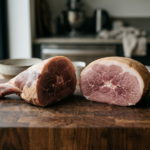
Top round gets a bad reputation, and most of it comes from people who cook it the same way they’d cook a ribeye. That’s the fastest route to a tough, chewy dinner.
Here’s the thing — top round is a lean, affordable cut from the hindquarters of the cow, and it can absolutely taste great on the grill. But it plays by different rules. You need a good marinade, the right heat, careful timing, and proper slicing. Skip any of those, and you’ll understand why people call it a “roast only” cut.
This top round steak grilling guide covers everything: how to prep it, how long to grill it, what temperature to pull it at, and the small details that make the difference between a steak people compliment and one they politely chew through.
Why Top Round Needs a Different Approach
Top round comes from the rear leg — a muscle that does a lot of work. That means it’s lean, dense, and has long muscle fibers with very little intramuscular fat (marbling). Compare that to a ribeye or New York strip, which have generous fat running through them that keeps things juicy even if you slightly overcook them.
Top round doesn’t give you that safety net. Cook it past medium and the lack of fat means the meat dries out fast. The dense fibers tighten up, and you’re left with something that’s genuinely hard to chew.
But here’s what top round does offer: strong beefy flavor, a lower price point than premium steaks, and a satisfying texture when you handle it correctly. Think of it less like a luxury steak and more like a cut that rewards technique.
The three non-negotiable keys for grilling top round steak:
- Marinade — to add moisture, flavor, and break down surface fibers
- High, fast heat — to get a good sear without overcooking the interior
- Thin slicing against the grain — to shorten those tough muscle fibers so every bite feels tender
Get those three right and you’re most of the way there.
Choosing and Prepping Your Top Round
At the butcher counter or grocery store, you’ll find top round sold as both steaks and roasts. For grilling, steaks between ¾ inch and 1½ inches thick work best. Anything thinner burns before you get a proper crust. Anything much thicker makes it hard to keep the center from overcooking before the outside is done.
If you can only find a grilled top round roast (a whole muscle piece), you can slice it into steaks yourself — about 1 inch thick is a sweet spot.
Look for pieces with a relatively even thickness. Uneven steaks cook unevenly, which is a bigger problem with a lean cut like this than with something fatty.
Pro Tip: If your top round has a thick fat cap on one side, leave a thin layer (about ⅛ inch) for flavor during grilling, but trim away any large chunks. Unlike brisket fat, this external cap doesn’t render down enough during the short grill time to add much.
The Marinade Makes or Breaks It
A top round steak marinade isn’t optional — it’s the single most impactful step. The marinade does three things: adds flavor that penetrates the meat, introduces moisture, and uses acid to gently break down the surface proteins so the steak feels more tender.
Here’s a reliable marinade that works well specifically for top round:
- ¼ cup soy sauce
- 2 tablespoons olive oil
- 2 tablespoons red wine vinegar or Worcestershire sauce
- 3 cloves garlic, minced
- 1 teaspoon black pepper
- 1 teaspoon smoked paprika
- Pinch of brown sugar or honey (balances the acid and helps with browning)
Whisk everything together, pour it into a zip-lock bag or shallow dish with the steak, and refrigerate.
How long to marinate: At least 4 hours. Overnight (8–12 hours) is better. Don’t go past 24 hours — the acid starts breaking the surface down too much, and the texture gets mushy rather than tender. That’s a common mistake, especially with thinner steaks.
One detail people overlook: pull the steak out of the marinade about 30–45 minutes before grilling and let it come closer to room temperature. Cold steak hitting a hot grill contracts aggressively, squeezing out moisture. You don’t need it to be fully room temp — just take the deep chill off.
Pat the surface dry with paper towels before it goes on the grill. Wet surfaces steam instead of sear, and the sear is where you get flavor and texture contrast.
Setting Up Your Grill
Whether you’re using gas or charcoal, you want a two-zone setup — one area of direct high heat and one area of indirect (lower or no) heat. This gives you a searing zone and a safety zone if the steak needs a few more minutes without burning the outside.
If you’re working with a propane grill, light all burners to high and let the grill preheat for 10–15 minutes with the lid closed. Then turn one burner down to low or off to create your indirect zone.
For charcoal, pile coals on one side. The hot side should be screaming hot — you shouldn’t be able to hold your hand 4 inches above the grate for more than 2 seconds.
Clean and oil the grates before the steak goes on. A wad of paper towels dipped in vegetable oil and held with tongs works fine. This prevents sticking, which is a real issue with lean cuts since they don’t have much of their own fat lubricating the surface.
Wondering whether your grill choice matters? For top round specifically, any grill that can reach 500°F+ at the grate level works. If you’re curious about the differences between grill types, the pellet grill vs. gas grill comparison is worth a read. For top round, though, a standard gas or charcoal grill with good heat output is all you need.
How to Grill Top Round: Step by Step
Here’s where it all comes together. The key principle for top round grill time is hot and fast — you want a strong sear on both sides with a pink, juicy interior.
1. Sear over direct heat.
Place the steak directly over the hottest part of the grill. Don’t touch it for 3–4 minutes. You want a dark brown crust to form before you flip. If the steak sticks when you try to lift it, it’s not ready — give it another 30 seconds.
2. Flip once.
Use tongs, not a fork. Piercing the meat pushes out juices you can’t afford to lose with a cut this lean. Sear the second side for another 3–4 minutes.
3. Check the internal temperature.
This is where a good instant-read meat thermometer becomes essential. Knowing how to read a meat thermometer accurately matters here because the margin for error is small. Insert it into the thickest part of the steak.
4. Move to indirect heat if needed.
If the outside is well-seared but the center is still too cool, slide the steak to the indirect zone, close the lid, and let it come up to temperature gently. This might take another 3–5 minutes depending on thickness.
5. Pull it early.
Remove the steak when it hits 130°F for medium-rare or 135°F for medium. Carryover cooking will add another 3–5 degrees while the steak rests. Going past 140°F internal with top round puts you in dry, tough territory.
| Doneness | Pull from Grill | After Resting |
|---|---|---|
| Rare | 120–125°F | 125–130°F |
| Medium-Rare | 128–132°F | 133–137°F |
| Medium | 135–138°F | 140–143°F |
| Beyond Medium | Not recommended for top round | — |
6. Rest the steak.
Set it on a cutting board and tent loosely with foil for 8–10 minutes. Resting lets the muscle fibers relax and reabsorb juices. Cut into a lean steak immediately after grilling and you’ll watch a puddle of liquid run out onto the board — liquid that should be in the meat.
For a deeper look at different doneness levels and how they affect various cuts, the steak doneness guide breaks it all down.
Slicing: The Step Most People Rush
Slicing is where a lot of grilled top round goes from “pretty good” to “really good” — or from “okay” to “why is this so chewy.”
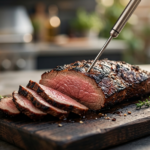
Always slice against the grain. Look at the surface of the meat and you’ll see lines (muscle fibers) running in one direction. Your knife should cut perpendicular to those lines. This shortens the fibers, which makes each bite dramatically easier to chew.
Slice thin — about ¼ inch thick or even thinner. Top round isn’t a cut you serve in thick steak-house slabs. Thin slices across the grain turn a naturally tough piece of beef into something that feels almost buttery.
A sharp knife matters here more than with fattier steaks. Dull knives tear the meat instead of cutting cleanly, which makes the texture feel rougher.
When to Grill a Top Round Roast Instead of Steaks
If you have a whole top round roast (2–4 pounds), you can grill it as a single piece, but the technique shifts. You’re essentially reverse-searing a roast.
Start over indirect heat with the lid closed, maintaining grill temperature around 275–300°F. Cook until the internal temperature reaches about 120°F — this usually takes 45–60 minutes for a 3-pound roast, but thickness matters more than weight, so rely on your thermometer.
Then move the roast to direct high heat and sear all sides for about 2 minutes per side to build a crust. Pull it at 130°F internal and rest for 15 minutes before slicing thin.
A grilled top round roast done this way makes fantastic sandwich meat, works great sliced over salads, and can feed a crowd at a fraction of the cost of prime rib.
Common Mistakes That Ruin Top Round on the Grill
Skipping the marinade. Top round without a marinade is noticeably tougher. Even a simple mix of oil, acid, and salt for a few hours makes a real difference.
Cooking to well-done. This is the number one reason people say top round is “too tough for grilling.” At medium-well or beyond, the proteins tighten so much that even perfect slicing can’t save it.
Slicing with the grain. It seems minor, but it’s the difference between tender slices and strips you have to fight with your teeth.
Not preheating the grill. A lukewarm grill means the steak sits there slowly cooking without developing a crust. By the time the surface browns, the inside is already overcooked.
Using a fork to flip. Tongs, always. Every puncture lets juice escape from a cut that has precious little juice to spare.
Cutting immediately after grilling. Patience during the rest pays off enormously. Even 5 minutes helps, though 8–10 is better.
What to Serve With Grilled Top Round
Top round’s strong beef flavor pairs well with bold sides. Chimichurri is a classic pairing — the herb and vinegar brightness cuts through the meatiness. Grilled vegetables, roasted potatoes, or a simple arugula salad with shaved parmesan all work well.
If you’re slicing it for sandwiches, pile it on crusty bread with horseradish cream, caramelized onions, and peppery greens. That’s genuinely one of the best uses for this cut.
Leftover grilled top round also holds up well in the fridge for a couple of days — similar to how long cooked steak lasts. Slice it cold for next-day sandwiches or warm it gently in a pan with a splash of beef broth.
FAQ
Can you grill top round without marinating it?
You can, but expect a noticeably tougher result. At minimum, season it generously with salt an hour before grilling — the salt draws out surface moisture, which then gets reabsorbed along with the salt, lightly tenderizing the meat. A proper marinade with acid (vinegar, citrus, or wine) makes a bigger difference, though.
What’s the ideal thickness for grilling top round steak?
Between ¾ inch and 1½ inches. Steaks in this range give you enough time to develop a good sear without overcooking the center. If the steak is thinner than ¾ inch, use the highest heat possible and reduce cook time to about 2 minutes per side.
Is top round good for grilling compared to other cuts?
It’s not the easiest steak to grill — cuts with more marbling like ribeye or strip are more forgiving. But top round is significantly cheaper and, with the right technique, delivers solid beefy flavor and a satisfying meal. It’s especially good for feeding a group without spending a fortune.
How can I tell which direction the grain runs?
Look at the raw steak closely. You’ll see thin parallel lines running across the surface — those are the muscle fibers. Some people find it easier to spot the grain before cooking, so note the direction when the meat is raw and remember it when you’re ready to slice.
Can I grill frozen top round?
It’s not ideal. A frozen steak’s surface overcooks badly before the inside thaws enough to cook through. Thaw it in the fridge overnight, or use the cold water method (sealed bag submerged in cold water, changed every 30 minutes) if you’re short on time.
Top round isn’t a set-it-and-forget-it steak — it asks you to pay attention. Marinade it properly, grill it hot and fast, pull it before it’s overdone, let it rest, and slice it thin against the grain. Follow those steps and this budget-friendly cut delivers far more than its price tag suggests. Next time you see top round on sale, grab it with confidence. You know exactly how to handle it now.