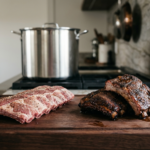
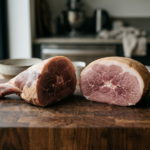
Brisket comes from the lower chest of the cow, right between and slightly below the front legs. If you picture a cow standing in front of you, the brisket sits in that broad, muscular area of the breast — the section that supports a huge portion of the animal’s body weight every time it stands, walks, or lies down.
That’s the short answer. But understanding the brisket cut location — and why it sits where it does — explains a lot about how this cut behaves in the kitchen, why it needs low-and-slow cooking, and why it tastes the way it does when it’s done right.
Let’s break the whole thing down.
The Exact Location: Where Is Brisket on a Cow?
A beef carcass is divided into eight primal cuts — the large, initial sections a butcher separates before breaking things down further into the steaks, roasts, and other cuts you see at the grocery store.
The brisket is one of those eight primal cuts. It comes from the lower pectoral region, essentially the chest muscles. On the animal, it sits:
- Below the chuck (shoulder area)
- In front of the shank (lower leg)
- Directly beneath the first five ribs
Think of it as the cow’s pectoral muscles. Because cattle don’t have collarbones, these chest muscles do all the heavy lifting — literally. They bear about 60% of the animal’s standing body weight.
That constant use is exactly what makes brisket tough, dense, and loaded with connective tissue. It’s also what gives it such deep, beefy flavor when cooked properly.
Quick Fact: A full brisket (called a “packer brisket”) typically weighs between 10 and 20 pounds, depending on the breed and size of the animal. Each cow produces just two briskets — one from each side of the chest.
Cow Brisket Anatomy: The Two Muscles You Need to Know
A whole brisket isn’t one uniform piece of meat. It’s actually two distinct muscles layered together and separated by a thick seam of fat.
The Flat (First Cut)
The flat is the larger, leaner, and more uniform portion. It sits on the bottom of the brisket and has a relatively even thickness, which makes it easier to slice neatly. Most of the brisket you see pre-sliced at delis or barbecue restaurants comes from the flat.
The flat has a layer of fat on top called the fat cap, but the meat itself is comparatively lean. This is why the flat can dry out quickly if you overcook it or use too much heat.
The Point (Second Cut)
The point sits on top of the flat, toward the thicker end of the brisket. It’s smaller, fattier, and has much more intramuscular marbling. That extra fat makes the point more forgiving during cooking — it stays moist more easily and has a richer, more buttery texture.
Burnt ends, those crispy-tender cubes of brisket you find at barbecue joints, are almost always made from the point.
Between these two muscles is a layer of fat called the deckle (or sometimes the “fat seam”). During a long cook, this fat renders down and bastes the surrounding meat from the inside, which is a big part of why whole packer briskets develop such incredible flavor.
If you’re buying brisket and you see labels like “brisket flat” or “brisket point,” now you know — those are just the two halves of the same primal cut, sold separately. If you want the full experience, ask for a whole packer brisket.
Why the Brisket’s Location Makes It Unique
Not all beef cuts are created equal, and the brisket’s position on the cow has a direct impact on its texture, fat content, and how you should cook it.
Muscles that get heavy use — like the chest, shoulders, and legs — develop more connective tissue (primarily collagen). That collagen makes the raw meat tough and chewy. But here’s the trade-off: collagen breaks down into gelatin when exposed to low heat over a long period. That gelatin is what gives properly cooked brisket its silky, almost melting texture.
Compare this to a cut like ribeye, which comes from the rib section — an area that doesn’t work nearly as hard. Ribeye is naturally tender and cooks beautifully with high, fast heat. Brisket would turn into shoe leather with that approach.
This is also why brisket is so closely associated with smoking and braising. Methods like smoking at 225°F for 10+ hours or braising in liquid for several hours give the collagen enough time to fully break down. Skip that time, and you end up with tough, disappointing meat no matter how good the recipe is.
If you’re planning to smoke a brisket, knowing how long to smoke brisket at 225 can save you from pulling it too early — one of the most common mistakes people make.
How Brisket Compares to Nearby Cuts
Because the brisket sits in a neighborhood of other working-muscle primal cuts, it helps to understand how it relates to its neighbors.
| Cut | Location on Cow | Texture | Best Cooking Method |
|---|---|---|---|
| Brisket | Lower chest | Tough, collagen-rich | Smoking, braising |
| Chuck | Shoulder/neck | Tough, well-marbled | Braising, pot roast, ground beef |
| Shank | Lower front leg | Very tough, sinewy | Braising (osso buco) |
| Short Ribs | Lower rib section | Tough but fatty | Braising, smoking |
| Plate | Below ribs, behind brisket | Fatty, tough | Braising, fajitas |
The chuck, which sits right above the brisket, is probably its closest relative in terms of cooking behavior. Both are tough, both benefit from slow cooking, and both develop rich flavor. If you’ve ever wondered about the differences, the chuck roast vs. brisket comparison is worth a look — they’re more different than most people assume.
Brisket Across Different Cuisines
One thing that’s easy to overlook: brisket isn’t just a barbecue cut. Its position on the cow and its specific combination of leanness, fat, and connective tissue have made it a staple in multiple culinary traditions around the world.
Texas-style barbecue is probably the most famous use. Just salt, pepper, smoke, and time. The whole packer brisket is smoked for anywhere from 8 to 16+ hours until the connective tissue fully renders.
Jewish cuisine has relied on brisket for centuries. Braised brisket — slow-cooked with onions, broth, and root vegetables — is a centerpiece of holiday meals. The braising liquid keeps the lean flat from drying out.
Korean cuisine uses brisket (called chadolbaegi) sliced paper-thin and cooked quickly on a hot grill. This works because the slices are so thin that toughness isn’t an issue.
Vietnamese pho often uses brisket simmered for hours in aromatic broth. The long cook time tenderizes the meat while infusing the broth with gelatin and beef flavor.
Corned beef, the kind you see on Reubens and around St. Patrick’s Day, is almost always made from brisket. The flat is cured in a salt brine with pickling spices, then slowly simmered.
The common thread? Every tradition that uses brisket has figured out that you either cook it low and slow, or you slice it extremely thin. There’s no shortcut around the anatomy.
Choosing and Buying Brisket
When you’re at the butcher counter or shopping online, knowing what part of cow is brisket helps you make better decisions, but there are a few more things to keep in mind.
Whole packer vs. flat vs. point: Grocery stores commonly sell just the flat because it’s easier to package and portion. Butcher shops and warehouse stores (like Costco) are more likely to carry whole packers. If you’re smoking a brisket, the whole packer gives you the best results because the point’s fat keeps the flat moist during the long cook.
Grade matters: USDA grades — Select, Choice, and Prime — tell you about the marbling level. For brisket, Choice is the minimum most pitmasters recommend. Prime has more intramuscular fat, which means more moisture and flavor. The prime vs. choice brisket comparison breaks this down in more detail if you’re deciding between the two.
Flexibility test: When picking a packer brisket, try to drape it over your hand. A good brisket will bend and flex easily. If it’s stiff as a board, it likely has less fat and may cook up drier.
Fat cap thickness: You want a fat cap, but not an excessively thick one. About ¼ inch is plenty. Most butchers will trim it for you if you ask. Too much fat won’t render fully and just becomes waste.
Cooking Brisket: What the Anatomy Tells You
Understanding the cow brisket anatomy directly informs your cooking decisions. Here’s what the structure of the cut tells you:
The flat needs protection. Because it’s lean, the flat dries out faster. Position it closer to the heat source (fat cap down in many smokers) so the fat cap acts as a heat shield, or wrap the brisket partway through the cook. Knowing what temp to wrap brisket helps you time this decision correctly.
The point is more forgiving. If you slightly overcook the point, the extra fat keeps it from being a disaster. The flat doesn’t give you the same margin of error.
Internal temperature is your guide. Brisket is done when it reaches about 195–205°F internally and probes tender (the thermometer slides in with almost no resistance, like poking warm butter). Temperature alone doesn’t tell the full story. The what temperature is brisket done guide covers this in detail.
Where you place the probe matters. Because the flat and point are different thicknesses, probe placement affects your reading. The thickest part of the flat is typically the best spot. For more on this, check out where to probe brisket.
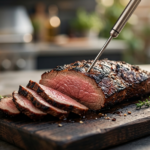
Slicing direction is critical. Brisket has long, tough muscle fibers. Cutting against the grain (perpendicular to those fibers) shortens them, making each slice more tender. The tricky part: the grain direction changes between the flat and the point. Learning how to slice brisket properly can make the difference between a great plate and a chewy one.
Brisket Has Different Names in Different Places
Depending on where you’re shopping or what cuisine you’re exploring, brisket goes by different names. In the UK, the cut overlaps with what’s sometimes called “breast.” In French butchery, it’s poitrine. Across Latin America, it’s often called pecho or falda, though the exact boundaries of those cuts can vary.
Even within the United States, you might hear terms like “first cut” (flat), “second cut” (point), “deckle” (which confusingly can refer to either the point or the fat layer depending on the region), or “packer” (whole brisket). If you want the full rundown, the other names for brisket guide covers this thoroughly.
FAQ
Is brisket a good cut of meat?
Brisket is an excellent cut when cooked correctly. It’s one of the most flavorful beef cuts available because of the heavy muscle use and connective tissue in the chest area. The catch is that it requires patience — low-and-slow methods like smoking or braising are essential. Cooked with high heat or rushed timing, it’ll be tough and disappointing.
Why is brisket so expensive?
Each cow only produces two briskets, and the demand — especially for barbecue — has grown significantly over the past couple of decades. Higher USDA grades (Choice and Prime) cost more because of the marbling. That said, brisket is still generally less expensive per pound than premium steaks like ribeye or filet mignon.
Can you grill brisket instead of smoking it?
You can, but you’ll need to adjust your approach. Thin-sliced brisket (like Korean-style) works on a hot grill. A whole brisket, though, really needs indirect heat and time. Some people use a charcoal or pellet grill set up for indirect cooking at low temperatures — essentially turning the grill into a smoker. If you’re considering what equipment to use, the pellet grill vs. gas grill comparison might help.
What’s the difference between brisket and tri-tip?
Tri-tip comes from the bottom sirloin — the rear of the cow — and is a much smaller, more tender cut. It cooks faster and works well with higher heat. Brisket comes from the chest and is tougher, larger, and needs slow cooking. The tri-tip vs. brisket comparison covers this in depth.
How much brisket do I need per person?
Plan for about ½ pound of cooked brisket per person. Since brisket loses roughly 40–50% of its weight during cooking (from fat rendering and moisture loss), that means buying about 1 pound of raw brisket per guest. The brisket per person guide walks through the math for different group sizes.
Now that you know exactly where brisket comes from on the cow and why its anatomy shapes everything about how it cooks, you’re in a much better position to buy the right cut, choose the right cooking method, and avoid the mistakes that turn this incredible cut into a tough, dry disappointment. Grab a whole packer, clear your schedule for a long cook day, and let the collagen do its thing.