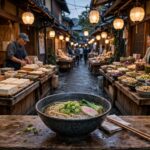
In Japan, soup is not an opening act. It is not the small cup that arrives while you wait for the real food, and it is certainly not an afterthought. In an ordinary kitchen, soup is the thing the rest of the meal gathers around. Rice in one bowl, soup in another, something pickled or grilled on the side, and suddenly you have a complete meal — not because anyone followed a rulebook, but because that combination just works.
The Bowl That Anchors the Meal
Ask someone in Japan what a proper meal looks like and you will often hear the same shape described: ichiju-sansai, one soup and three dishes, with rice at the center. The soup is not there to fill space. It balances the plate. Something salty meets something plain, something hot meets something cool, and the rice has a partner instead of sitting alone.
This is why miso soup shows up at breakfast as easily as at dinner. A bowl of rice, a bowl of miso soup, a piece of grilled fish or an egg, some pickles — that is a morning that does not ask much of anyone and still feels finished. Sushi, for all its fame abroad, is the celebration food, the night-out food. Miso soup is the everyday food, and everyday food is what a cuisine is really made of.
There is also a tenderness attached to it. In Japan, wanting to drink someone’s miso soup every day is a roundabout way of talking about a shared life together: not a grand gesture, but the same warm bowl, made by the same hands, day after day.
Miso Is Not One Soup
It helps to stop thinking of miso soup as a single recipe. Miso itself is fermented soybean paste, and it comes in shades and moods. White miso, or shiromiso, is mild and a little sweet, the kind that suits a gentle breakfast bowl. Red miso, akamiso, is deeper, saltier, and bolder, the kind associated with Nagoya and with heartier cooking. Blended miso sits somewhere in between and is what many home cooks reach for without thinking twice.
Then there is the broth underneath it all: dashi. Usually it is made from kombu seaweed and bonito flakes, a clear stock that tastes of the sea without tasting fishy. That umami base is what makes a simple bowl of tofu and wakame taste like more than the sum of its parts. The one rule most Japanese cooks agree on is to stir the miso in at the end, off a rolling boil. Boiling miso hard flattens its fragrance and dulls the fermented character that makes it interesting in the first place. Warm, not furious — that is the temperature of a good miso soup.
What goes into the bowl changes with the season, the market, and whatever is left in the fridge. Wakame and tofu is the classic pairing, familiar to the point of invisibility. But a cook might add daikon in winter, eggplant in summer, clams when they are good, or a handful of greens that need using up. The bowl flexes. That flexibility is the whole point.
Ton-jiru: The Soup That Eats Like a Meal
If everyday miso soup is a quiet companion, ton-jiru is the version that rolls up its sleeves. Pork and vegetables — often root vegetables cut into generous pieces — simmer in a miso-seasoned broth until everything is tender and the soup itself has thickened slightly with the miso. Thin strips of pork, daikon, carrot, burdock root, konnyaku, green onion: nothing fancy, everything filling.
For families with hungry kids and busy parents, ton-jiru has always been practical magic. One pot, one bowl of rice alongside it, and dinner is done. Nobody leaves the table still hungry, and nobody had to cook three separate dishes to get there. It is the soup you make when the weather turns and you want something that sticks to your ribs without weighing down the evening.
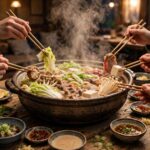
The same logic is what makes chunky soups so welcome on a seafood buffet table, too. A ladle of something hearty lets a diner slow down between plates of cold and grilled things, reset the palate, and warm up before going back for more. Soup is the pause that makes the rest of the meal better.
Kenchin-jiru: The Meatless Cousin With Temple Roots
Kenchin-jiru is often described as ton-jiru’s meatless cousin, and the comparison is a useful one. Its name is said to come from Kencho-ji, a Zen temple in Kamakura, where a vegetable soup of this kind is believed to have originated. The original temple version is thought to have been made without miso; today, many cooks add miso at the end, and most would say the soup is better for it.
The technique matters as much as the ingredients. Vegetables are first stir-fried in sesame oil, which gives the soup a toasted, nutty depth before any liquid goes in. Then comes a kombu-based dashi, and the whole pot simmers until the vegetables are tender but not collapsed. Daikon, carrot, burdock, taro, mushrooms, tofu — the exact mix shifts, but the feeling stays the same: earthy, warming, and somehow both humble and complete.
For anyone who eats mostly or entirely plant-based, kenchin-jiru is a quiet argument that a meatless soup does not have to be a lesser soup. The sesame oil does real work here. So does the patience of a slow simmer. Skip either one and you will taste the difference.
It also pairs naturally with the vegetables of the cold months. If you want to know which roots and leaves belong in a winter pot, our guide to Japanese winter vegetables walks through the same cast of characters — daikon, burdock, and the leafy greens that hold up to heat.
Seafood Soups Deserve the Same Respect
It would be a mistake to talk about Japanese soup and stop at miso. The sea shows up in the bowl in many other ways. Clam miso soup, where the shellfish open in the broth and season it from the inside out, is one of the simplest and best things a cook can make. Clear soups with shrimp or white fish, seasoned lightly, let the seafood speak instead of burying it. And the great seafood stews of other traditions — a bouillabaisse, a cioppino, a Louisiana gumbo — all share the same instinct: take what the water gives you, give it a good broth, and let people gather around it.
That instinct crosses borders easily. A fish-market breakfast in Tokyo, eaten standing up with a bowl of something hot, and a seafood boil in Louisiana are not the same meal, but they come from the same hunger: fresh catch, simply cooked, eaten while it is still steaming. You can read about the Tokyo side of that story in our piece on breakfast at Tsukiji, where the market’s early-morning bowls were as much a part of the ritual as the sushi.
At home, the rule for seafood soup is the same as for miso: do not overcook it. Fish and shellfish go in late, come out just done, and the broth should taste like the sea on a good day — clean, savory, and not muddied by too many competing flavors.
The Second Life of a Big Pot
Soup rewards the cook who makes too much of it. A big pot on Sunday is lunch on Monday, and sometimes it becomes something else entirely. Leftover vegetable soup thins out nicely with noodles — udon dropped into kenchin-jiru, for example, turns yesterday’s soup into today’s noodle bowl, with a pinch of shichimi seven-spice on top to wake it up. You may need to adjust the salt, since noodles soften a broth’s punch, but the trade is worth it.
Leftover minestrone, that most Italian of soups, can take an even stranger and happier turn: stir in a block of Japanese curry and it becomes a thick, spiced curry soup that belongs to no country and every hungry evening. It is not traditional, and nobody pretends it is. It is just good, which is a better credential than tradition on a weeknight.
This is the real secret of soup culture, and it has nothing to do with technique. Soup forgives. It takes yesterday’s vegetables, today’s leftovers, and a cook who is a little tired, and it still turns out warm and generous. Make a pot, eat well, and let the rest keep for tomorrow. Then make another one. That is how every day becomes a soup day — not by ceremony, but by habit, one bowl at a time.
And like rice, which we wrote about in For the Love of Rice, soup is one of those foods that teaches you to pay attention to the ordinary. A bowl of rice and a bowl of soup will not impress anyone on a menu board. Eaten together, slowly, on a cold evening, they are hard to beat.