On Christmas morning in most of America, the house smells like cinnamon and vanilla. In south Louisiana it smells like chicory coffee and butter, with something peppery underneath, because somebody’s grandmother started the grillades an hour ago and the gravy is doing its slow, dark work on the stove. That is the whole difference between a holiday brunch and a Cajun one. Same table, same people crowding the kitchen in their socks — but the food answers to a different calendar and a different instinct.
Brunch is the meal Louisiana does better than anywhere else. Long before it was a trend, New Orleans was doing jazz brunch in courtyards with brass bands drifting over the eggs, and Acadiana farmhouses were turning yesterday’s roast into this morning’s gravy. A Cajun holiday brunch isn’t a menu so much as a method: feed everyone, waste nothing, and never let a holiday pass without something bubbling on the stove.
What Makes a Brunch Cajun
Ask what makes a dish Cajun and you’ll get a long answer — we’ve tried to give the short version here. But the brunch version comes down to three habits. First, thrift with a sense of occasion: the best Cajun brunch dishes were invented to stretch what was already in the kitchen. Grillades are just thin medallions of beef or pork braised down in onion-and-pepper gravy, which is to say they’re what a smart cook does with the roast that was too tough to slice. Pain perdu — “lost bread” — is stale French bread rescued with custard and a hot skillet. Nothing is precious. Everything is delicious.
Second, the spice is seasoning, not heat for its own sake. A Cajun brunch doesn’t set your mouth on fire; it wakes it up. Cayenne shows up in the gravy and the remoulade, not in a dare. And third, the table runs long. A Cajun holiday brunch starts when the coffee’s ready and ends when the last uncle finally stands up, which is to say sometime after noon. Plan for it. Nobody in Louisiana has ever complained that brunch went on too long.
The Anchor: Grillades and Grits
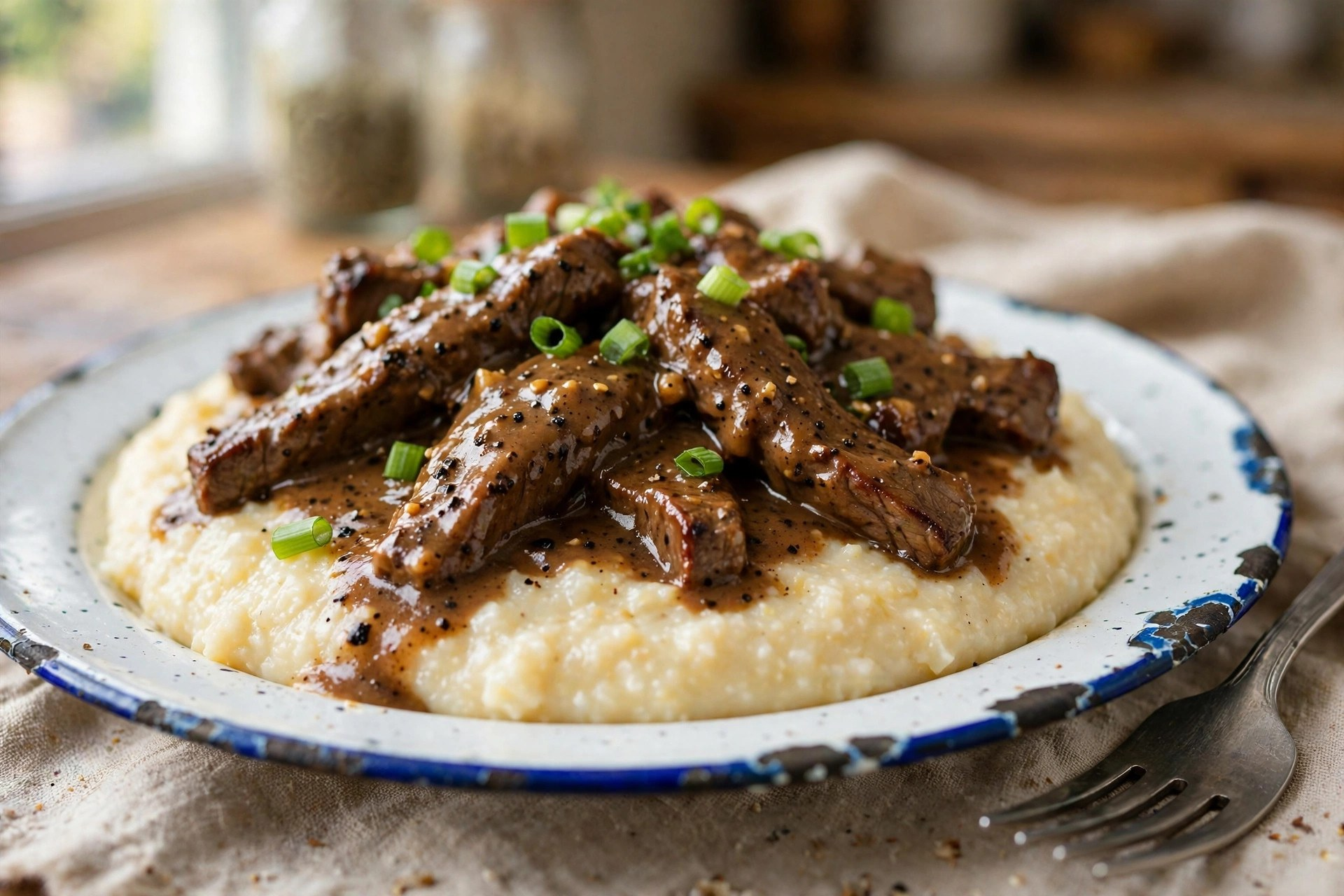
Every great brunch needs a center of gravity, and in Louisiana that center is grillades and grits. It’s the dish that separates the serious holiday tables from the cereal-box crowd. Grillades are thin-sliced rounds of beef or pork, browned hard, then braised low and slow in a dark gravy built on the holy trinity — onion, bell pepper, celery — until the meat gives up and goes tender. That goes over a bowl of stone-ground grits cooked the slow way, with butter and enough salt to matter.
Here’s the practical part, because a holiday morning is no time for heroics: the grillades are better made the day before. Braised meat always is — the gravy thickens overnight and the flavors settle into each other. Reheat it gently on Christmas morning while the grits cook, and you’ve got the hardest part of the meal done before the kids are awake. Use a cast-iron skillet if you have one; it holds the heat and it looks right sitting on the table, because in Cajun country the serving dish is whatever you cooked it in.
If grillades feel like a project, there is an honorable shortcut Louisiana cooks have used forever: a big pan of baked eggs or a crawfish omelet feeds the same crowd with less ceremony. The principle is identical. One substantial, make-ahead centerpiece, and everything else orbits around it.
Build It Like a Buffet Line
The smartest way to host a holiday brunch for a crowd is to stop plating and start laying out — which is advice that comes naturally to a buffet restaurant. Set the table as stations and let people serve themselves. The egg station: a crawfish omelet cut into wedges, a pan of baked eggs with andouille, maybe a nod to the French Quarter with eggs Sardou if you’re feeling grand (poached eggs over creamed spinach and artichoke hearts, born at Antoine’s and still the most elegant thing on any brunch table in the state).
The bread station: beignets, obviously, fried to order if you’re brave or kept warm under a towel if you’re sane, buried under powdered sugar. Pain perdu made from yesterday’s French bread. Hot biscuits for the gravy that escaped the grillades. The sweet station: pralines, a bowl of Louisiana satsumas — they’re in season from late fall right through the holidays, and nothing says December in the citrus parishes like a pile of them — and bread pudding if someone in the family has a recipe, which someone always does.
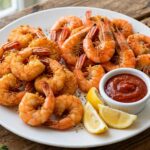
Then the cold station, because a holiday table needs contrast: shrimp remoulade over shredded lettuce, deviled eggs with a whisper of cayenne, pickled okra. This is the station people graze at while the coffee kicks in, and it’s the one that makes the whole spread feel abundant rather than heavy. Keep it simple. Cold food should be cold, and everything else should be hot — that’s the entire secret of buffet hosting.
The Night-Before Plan
A Cajun holiday brunch that runs on panic is a contradiction in terms, so here is how the timing actually works. The night before: make the grillades and refrigerate; assemble any baked egg casserole so it just needs the oven; mix the beignet dough or buy it; set out every plate, platter, and serving spoon you’ll need. Christmas morning kitchens are too crowded for hunting through cabinets.
Morning of: first coffee, always, before anything else goes in the oven. Then the grillades go on low to reheat, the grits start their long simmer, the baked eggs go in, and the beignets get fried last, in batches, while everyone gathers. Put the cold station out first so early arrivals have something to eat. Everything hot hits the table at once, ideally within shouting distance of noon. After that, your job is done. Sit down. The host who eats standing up has misunderstood the assignment.
What to Pour
Coffee is not optional. In Louisiana that means café au lait — strong coffee cut with scalded milk — and in a lot of houses it means chicory in the blend, the old New Orleans habit that started as a wartime stretch and stayed because people liked it. Make it strong, make a lot of it, and keep it coming all morning.
For the grown-ups who want something with a kick, a bloody mary with a Cajun-spiced rim is the correct holiday-brunch cocktail in this state — Worcestershire, a shake of hot sauce, pickled okra or a boiled shrimp as garnish. Bourbon eggnog has its defenders too, and the holidays are the one time of year nobody will argue with you about it. But the coffee is the main event. Everything else is decoration.
A Note on the Season
A Cajun holiday table doesn’t exist in isolation; it’s part of a calendar the whole state lives by. On Christmas Eve, the bonfires go up along the Mississippi River levee in St. James Parish — great wooden structures built to light the way for Papa Noël, a tradition older than anyone can quite pin down. The Creole side of the family might be holding réveillon, the old Christmas Eve late-night feast. Your brunch is the morning chapter of that same story.
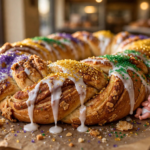
And it doesn’t end in December. The moment the holiday plates are washed, king cake season starts — Twelfth Night opens Carnival, and from then until Mardi Gras the state eats its way through the winter. We’ve written about those Mardi Gras food traditions before, and the through-line is the same: Louisiana never eats alone, never eats bland, and never lets a season pass without putting it on the table.
That is what a Cajun-style holiday brunch really is. Not a recipe — a room full of people, a table that runs the length of the thing, and food that tastes like somebody meant it. If you’d rather let someone else do the cooking this year, come see us at Ombu Buffet. The grillades are already on the stove.