Most people cook bacon by gut feeling — watching, poking, maybe burning a strip or two before getting it right. And honestly, that approach works fine once you’ve cooked enough batches. But if you’ve ever pulled bacon off the heat too early and gotten a chewy, rubbery strip, or left it a minute too long and ended up with something closer to charcoal, you know there’s a real window between underdone and overdone.
The tricky part? Bacon doesn’t behave like a chicken breast or a steak. It’s thin, it cooks fast, and it keeps changing after you take it off the heat. There’s no single internal temperature that tells the whole story the way there is with, say, brisket or pork chops.
So how do you actually tell when bacon is done? Let’s break it down by what you can see, feel, hear, and — when it matters — measure.
What “Done” Means Depends on How You Like It
Before anything else, it’s worth being honest about something most bacon cooking guides gloss over: there’s no single correct doneness for bacon. Unlike poultry, where you need to hit a specific temperature for safety, bacon gives you a range. Some people want it soft and barely crisp at the edges. Others want it stiff enough to snap in half.
Here’s a rough spectrum:
- Soft/chewy bacon — Still pliable, fat is rendered but not fully crisp. Slightly translucent in spots. Think diner-style bacon draped over eggs.
- Medium bacon — Firm but with a little flex. Edges are crispy, center has some chew. This is where most people land when they say they want “perfectly cooked bacon.”
- Crispy bacon — Rigid, deep reddish-brown, shatters when you bend it. Fat is fully rendered and golden. Great for crumbling over salads or burgers.
None of these are wrong. What matters is knowing how to hit the one you’re after — and not accidentally ending up somewhere else.
Visual Cues: What Bacon Looks Like at Each Stage
Your eyes are your best tool here. With practice, you won’t even need to touch the bacon.
Raw bacon starts out pink, with soft white or pale fat. As it cooks, both the meat and the fat change color.
Undercooked bacon still has visible pink or light areas in the meat, and the fat looks white or translucent. It’ll feel floppy if you lift it with tongs. This isn’t necessarily unsafe (more on that below), but most people find the texture unappealing.
Done bacon — at whatever level you prefer — shows clear browning. The meat portions turn from pink to a deep reddish-brown. The fat renders from white to golden or light amber. If you’re aiming for chewy bacon, you’ll still see some lighter patches. If you want it crispy, the entire strip should be uniformly dark golden-brown with no soft pale spots remaining.
Overdone bacon goes past brown into very dark brown or black. The fat turns dark amber. It smells sharp and acrid instead of savory. If you see any blackening, it’s gone too far.
Quick Fact: Bacon darkens a bit more after you remove it from the heat, especially if it’s sitting in residual grease on a hot pan. Pull it about 30 seconds before it looks “perfect” to you, and it’ll finish on the plate or paper towel.
The Sound and Bubble Test
This is something experienced cooks rely on almost unconsciously, but it’s rarely explained.
When bacon first hits a hot pan, it starts sizzling gently. As the fat renders, the sizzling gets louder and more active — you’ll see the fat bubbling vigorously around the strips. This is the active cooking phase.
As the bacon approaches doneness, the sizzling changes. It becomes sharper and higher-pitched because most of the water in the fat has cooked off. The bubbling slows down noticeably. When those bubbles get smaller and less frequent, your bacon is close.
If you’re cooking a batch and the pan goes nearly quiet, you’ve likely pushed it to the crispy end of the spectrum — or past it. Silence in a bacon pan is a warning sign.
Can You Use a Meat Thermometer for Bacon?
Technically, yes. Practically, it’s not that useful.
The USDA recommends cooking pork to an internal temperature of 145°F (63°C), and bacon is a pork product. So in terms of food safety, 145°F is your safe bacon temperature.
But here’s the problem: bacon strips are so thin that getting an accurate reading with a standard meat thermometer is nearly impossible. By the time you insert a probe into a strip of bacon and wait for a reading, the temperature has already changed. The strip isn’t thick enough to give you a reliable measurement the way a pork shoulder or a turkey burger would.
If you’re curious about how to read a meat thermometer for other cuts, that’s a useful skill. But for bacon, your eyes, ears, and tongs are more reliable.
There’s one exception: thick-cut bacon. Slices that are 1/4 inch or thicker can sometimes be probed if you insert the thermometer sideways through the meatiest section. If you see 145°F or above, you know it’s safe. But even then, most people judge thick-cut bacon by color and texture rather than temperature.
The Tong Test: How Done Bacon Should Feel
Pick up a strip with tongs and let it dangle.
- Undercooked: The strip droops completely, almost folding in half under its own weight. It feels slippery.
- Chewy/soft done: The strip bends easily but holds some shape. It doesn’t fold over like a wet noodle.
- Medium done: The strip bends with resistance. You can flex it, but it wants to stay relatively straight.
- Crispy done: The strip barely bends. It feels stiff and light. If you flex it too hard, it’ll crack.
This tong test takes about one second and tells you more than a thermometer ever could for a cut this thin.
Method Matters: Timing Varies by How You Cook It
Bacon behaves differently depending on the cooking method. What looks done in a skillet might not match what looks done on a sheet pan.
Skillet on the Stovetop
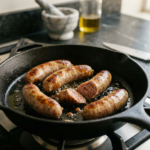
The most common method. Start with a cold pan, lay the strips flat, and cook over medium to medium-low heat. This gives the fat time to render slowly and evenly.
A common mistake is cranking the heat to high. That gives you burnt edges and still-raw centers. Low and slow is genuinely better here — you’re not searing a steak.
Flip the strips every few minutes. Total cook time is usually 8 to 12 minutes depending on thickness, but watch the visual cues rather than the clock. Bacon on the stovetop can go from perfect to burnt in under a minute.
Oven-Baked Bacon
Lay strips on a wire rack over a sheet pan (or directly on parchment-lined sheet pan) and bake at 400°F (200°C). This method gives you the most even results, especially for bigger batches.
Oven bacon takes about 15 to 20 minutes for regular-cut and up to 25 minutes for thick-cut. Check it at the 12-minute mark and then every 2–3 minutes after that.
One detail that’s easy to overlook: oven-baked bacon doesn’t sizzle as loudly, so you lose that audio cue. Rely more on color. When the fat looks golden and the meat is deep reddish-brown, pull it out.
Microwave
Place strips between paper towels on a microwave-safe plate. Cook on high for 1 minute per strip as a rough starting point, then check. Microwave bacon crisps up fast and can go from done to burnt in 15–20 seconds.
Microwave bacon also firms up more as it cools, so pull it when it still looks slightly underdone. It’ll tighten up within a minute.
On the Grill
If you’re already grilling and want to throw some bacon on, use indirect heat or a cooler zone. Direct flames plus bacon grease equals flare-ups. A lot of people who grill regularly — and already understand equipment like pellet grills vs. gas grills — still get caught off guard by how quickly bacon flares on open flame.
Grill bacon over medium-low heat, turning frequently. It cooks faster than you expect outdoors because of the ambient heat from the lid.
Is Slightly Pink Bacon Safe to Eat?
This comes up a lot, and the answer isn’t as simple as “pink means raw.”
Bacon is cured — it’s been treated with salt, nitrates, and/or nitrites before you ever open the package. That curing process changes the color of the meat. Cured pork can retain a pinkish hue even when fully cooked. This is the same reason ham stays pink after cooking.
So a faint pink tint in cooked bacon doesn’t necessarily mean it’s unsafe. What you’re really looking for is whether the texture has changed from raw (soft, slimy, translucent) to cooked (firm, opaque, easy to chew or snap).
That said, if the bacon still looks and feels like raw meat — very pink, very soft, gelatinous fat — it needs more time. Trust the combination of color, texture, and how the fat has rendered rather than any single indicator.
Warning: While commercially cured bacon has some food safety advantages due to the curing process, you should still cook it thoroughly, especially if you’re serving it to young children, elderly family members, pregnant individuals, or anyone with a compromised immune system.
How Bacon Keeps Cooking After You Remove It
This trips people up more than almost anything else.
Bacon retains heat, and the residual fat on the strip continues cooking the meat for 30 to 60 seconds after you take it out of the pan or oven. If you pull bacon when it looks absolutely perfect to you, it’ll be slightly past your ideal by the time you eat it.
The fix is simple: remove the bacon when it’s just slightly less done than you want. Drain it on a paper towel or wire rack. By the time it cools enough to eat, it’ll be right where you wanted it.
This is especially important for crispy bacon lovers. If it looks crispy in the pan, it’s about to be overcooked on the plate.
Common Bacon Cooking Mistakes
A few things that consistently lead to disappointing bacon:
- Overcrowding the pan. Strips overlapping means uneven cooking. The overlapping sections stay pale and chewy while exposed edges burn. Give each strip its own space. Cook in batches if you need to.
- Starting in a hot pan. Cold bacon into a hot pan causes the outside to seize before the fat renders. Start with a cold or barely warm pan and bring the heat up gradually.
- Not draining the grease. If bacon is swimming in its own rendered fat, it poaches instead of crisps. For really crispy bacon tips, pour off excess grease midway through cooking — carefully.
- Walking away. Bacon goes from done to burnt quickly. This isn’t a “set it and forget it” food, even in the oven. Stay nearby during the last few minutes.
- Judging doneness by time alone. Every stove, oven, and brand of bacon is different. Thickness varies. Fat content varies. A recipe that says “cook for 10 minutes” might be perfect for one person’s setup and produce burnt strips in another’s.
Storing and Reheating Cooked Bacon
Once your bacon is done, you can store it in the fridge for up to 4–5 days in an airtight container. This is handy for meal prep.
Reheat it in a skillet for about a minute per side, in the microwave for 20–30 seconds, or in a 350°F oven for a few minutes. If you’ve got leftover cooked meat from a weekend cookout, the same general reheating principles apply — gentle heat, don’t overdo it.
Cooked bacon also freezes well. Lay cooled strips flat on parchment, freeze them on a sheet pan, then transfer to a freezer bag. They’ll keep for about a month and reheat quickly.
FAQ
What temperature is bacon done?
The USDA recommends pork reach an internal temperature of 145°F (63°C) for safety. In practice, most bacon is too thin to measure accurately with a thermometer. Rely on visual and texture cues instead — the meat should be opaque and browned, and the fat should be rendered and golden.
Can you eat bacon that’s still a little chewy?
Absolutely. Chewy bacon isn’t the same as raw bacon. As long as the meat has changed from translucent pink to opaque and the fat has started to render, it’s cooked. Some people genuinely prefer their bacon soft and flexible rather than crispy.
Why does my bacon curl up when cooking?
Bacon curls because the meat and fat shrink at different rates when heated. Starting in a cold pan and cooking over lower heat reduces curling. You can also press strips flat with a spatula or use a bacon press. Some people cut small slits in the fat edge before cooking, which helps the strip stay flatter.
Is crispy bacon healthier than chewy bacon?
Crispier bacon has had more fat rendered out of it, so it technically contains slightly less fat per strip than chewy bacon. The difference isn’t dramatic, though. Choose whichever texture you enjoy — the calorie and fat difference between the two is small enough that it shouldn’t drive your preference.
How do you make bacon for a crowd without babysitting each strip?
Oven-baking is the answer. Lay strips on sheet pans (use parchment or wire racks), bake at 400°F, and you can cook 2–3 pans at once. Rotate the pans halfway through for even cooking. This is the go-to method for feeding a group and keeps you out of the grease-splatter zone.
The honest truth about knowing when bacon is ready is that it’s mostly a visual and tactile skill, not a science experiment. Watch the color shift from pink to deep brown. Listen for the sizzle to change pitch. Pick up a strip with tongs and see how much it bends. And always pull it off the heat a little earlier than you think you should — it’ll catch up on its own. After a few batches paying close attention, you won’t even have to think about it.