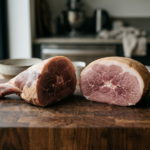
Brisket shrinks. A lot. That 15-pound packer you proudly loaded onto your smoker at sunrise? By the time it’s rested, sliced, and plated, you’re looking at roughly half the weight you started with. If you’ve ever run out of meat at a cookout — watching guests politely scrape the last shreds off the cutting board — you already know the sting. And if you’ve massively over-bought, you know the wallet sting too, because brisket isn’t cheap.
So how much brisket per person do you actually need? The quick answer: plan for about ½ pound (8 ounces) of cooked brisket per person. Since brisket loses roughly 40–50% of its raw weight during cooking, that means you need to buy approximately 1 pound of raw brisket per person.
That’s the baseline. But the real number depends on a handful of factors most people forget to think about — your crowd, your sides, the cut you’re buying, and whether leftovers are part of the plan. Let’s walk through all of it so you buy the right amount every time.
Why Brisket Math Is Different From Other Meats
If you’ve ever bought steaks or chicken breasts for a group, you probably estimated close to the final serving weight. A 10-ounce ribeye loses a little moisture, but you still end up with something close to 10 ounces on the plate.
Brisket doesn’t work that way. It’s one of the most shrink-heavy cuts you can cook, and there are three reasons:
Fat rendering. A whole packer brisket can be 25–35% fat by weight. During a long, low-and-slow cook, much of that fat renders out. That’s what makes brisket taste incredible — but it also means a big chunk of your starting weight literally melts away.
Moisture loss. Brisket cooks for hours (often 10–14 hours at 225°F). Even with careful technique, moisture evaporates steadily throughout the cook. Wrapping in butcher paper or foil helps retain some moisture, but you’ll still lose a significant amount.
Trimming. Before the brisket even hits the smoker, most pitmasters trim off a fair amount of hard fat and silver skin. If you’re buying an untrimmed packer, expect to lose another pound or two right at the cutting board before cooking begins.
All told, a raw brisket typically yields about 50–60% of its starting weight as finished, sliceable meat. Some cooks report even lower yields, closer to 45%, especially with fattier cuts or longer cooks. This is why the “1 pound raw per person” rule exists — it accounts for all that loss.
If you’re curious about the differences between a full packer and just the flat, our brisket flat vs packer comparison breaks that down. The cut you choose directly affects how much shrinkage you’ll see.
The Simple Formula (And When to Adjust It)
Here’s the straightforward brisket amount calculator:
Number of guests × 1 pound of raw brisket = total pounds to buy
Feeding 10 people? Buy 10 pounds of raw brisket. Twenty people? Twenty pounds.
That formula works well for an average gathering with a normal spread of side dishes. But real life isn’t always average. Here’s when you should adjust up or down.
Buy More (1.25–1.5 lbs raw per person) When:
- Brisket is the star. If you’re serving it as the main attraction with only light sides like coleslaw and pickles, people will eat more meat.
- Your crowd skews toward big eaters. A table full of adults who love barbecue is going to demolish brisket faster than a mixed group with kids.
- You want leftovers. Smoked brisket makes phenomenal sandwiches, tacos, chili, and hash the next day. If leftovers are part of the plan, bump your estimate up by 20–25%.
- It’s a long event. A backyard party that stretches over several hours tends to invite second (and third) plates.
Buy Less (0.75 lbs raw per person) When:
- You have heavy sides. Mac and cheese, baked beans, potato salad, cornbread — when the sides are substantial, people eat less meat.
- There are multiple proteins. Serving ribs, chicken, or sausage alongside the brisket? You can safely reduce the brisket amount per person.
- Kids make up a big portion of the guest list. Children under 10 typically eat about a quarter of what an adult eats. Count every two kids as roughly one adult serving.
- It’s a buffet with lots of variety. Buffet-style events with many options naturally spread demand across dishes.
Brisket for a Crowd: Scaling Up Without Panic
Cooking brisket for a crowd — say, 25, 50, or even 100 people — is where the math starts to feel high-stakes. A miscalculation at this scale means either running short in front of a large group or spending hundreds of extra dollars on meat you didn’t need.
Here’s a quick reference to keep things simple:
| Number of Guests | Raw Brisket Needed (Standard) | Raw Brisket Needed (Brisket-Heavy Menu) |
|---|---|---|
| 10 | 10 lbs | 12–15 lbs |
| 20 | 20 lbs | 25–30 lbs |
| 30 | 30 lbs | 38–45 lbs |
| 50 | 50 lbs | 63–75 lbs |
| 75 | 75 lbs | 94–112 lbs |
| 100 | 100 lbs | 125–150 lbs |
A few practical notes when you’re cooking at this scale:
You’ll likely need multiple briskets. Whole packers usually weigh between 12 and 20 pounds. For 50 guests, that’s roughly 3–4 full packers. Make sure your smoker can handle that capacity, or plan to cook in batches.
Stagger your timing. Multiple briskets don’t always finish at the same rate, even if they go on at the same time. One might hit the right internal temperature an hour before the other. Give yourself a buffer. Brisket holds beautifully wrapped in a cooler for 2–4 hours, so finishing early is always better than finishing late.
Buy from a butcher or wholesale. At large quantities, grocery store brisket prices add up fast. A local butcher or a wholesale club like Costco or Restaurant Depot can save you real money. Buying prime vs choice grade also affects cost — choice works perfectly well for crowds.
The Smoked Brisket Factor
People frequently ask how much smoked brisket per person, and the answer is the same baseline — about ½ pound cooked per adult — but smoking tends to produce slightly higher shrinkage than oven-braising or other methods because of the longer cook time and the bark formation on the exterior.
If you’re smoking your brisket low and slow (and you should be), lean toward the higher end of the buying estimate. A pound and a quarter of raw brisket per person is a safe bet for a smoked cook, especially if you’re smoking at 225°F for the full duration without wrapping.
Wrapping partway through — what competition pitmasters call the Texas Crutch — reduces moisture loss and can bump your yield up a few percentage points. If you’re wondering about the best point to wrap, check out our guide on what temp to wrap brisket. It makes a noticeable difference in your final yield.
What About Brisket Flat Only vs. Whole Packer?
This matters more than most people realize.
A whole packer includes both the flat and the point. It’s fattier overall, which means more rendering loss but also more flavor. Expect about 45–55% yield from a whole packer.
A brisket flat is leaner. You’ll lose less weight during cooking — yield is typically closer to 55–65%. But flats can also dry out more easily if overcooked, so there’s a tradeoff.
If you’re buying flats only, you can adjust your estimate down slightly — about 0.85 pounds of raw flat per person instead of a full pound. If you want to understand how these two cuts compare in more detail, including flavor and texture differences, take a look at our brisket flat vs packer breakdown.
Common Mistakes When Estimating Brisket Amounts
A few pitfalls trip people up repeatedly:
Forgetting to account for trimming. If your butcher hands you an untrimmed packer, you’ll trim off hard fat cap excess and maybe some of the deckle before cooking. That can easily be 1–2 pounds on a big brisket. If your brisket is already trimmed, you don’t need to worry about this — but make sure you know what you’re getting.
Using cooked weight as the buying weight. This is the single most common mistake. Someone reads “½ pound per person” and buys ½ pound of raw brisket per guest. Then they end up with about ¼ pound per person after cooking, and everyone goes home hungry.
Ignoring the crowd composition. Ten adults at a barbecue-focused party is a completely different situation than ten people at a birthday party with cake, appetizers, and three other dishes. Context matters.
Not planning for the “brisket tax.” Someone always wants seconds. The pit crew (that’s you and whoever is helping) will snack while slicing. A few pieces will end up too burnt or too fatty for the serving plate. Build in a small buffer — an extra pound or two beyond your calculated amount is cheap insurance.
Tips for Slicing and Serving Efficiently
Even if you buy the perfect amount, poor slicing can tank your yield. Thick slices mean fewer servings. Uneven slices mean some guests get huge portions while others get scraps.
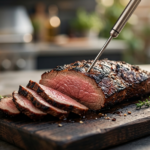
Aim for slices about the thickness of a pencil — roughly ¼ inch. Use a long, sharp slicing knife (a serrated bread knife works in a pinch, but a proper brisket knife is better). And always slice against the grain. This isn’t just about tenderness — it also gives you more uniform slices, which helps you portion consistently.
Pro Tip: If you’re serving a crowd, pre-slice the entire brisket and fan it out on a sheet pan or cutting board. This makes it much easier for guests to grab a consistent portion, and it looks great too.
What If You Have Leftovers?
Leftover brisket is a gift, not a problem. Stored properly — wrapped tightly and refrigerated within two hours of serving — smoked brisket stays good in the fridge for 3–4 days. You can also freeze it for up to 3 months.
The best way to reheat brisket without drying it out is low and slow in the oven (around 250°F) with a splash of beef broth added before covering with foil. Microwaving works in a pinch, but it tends to toughen the edges.
Leftover brisket works brilliantly in breakfast tacos, grilled cheese sandwiches, loaded baked potatoes, fried rice, or just piled onto a roll with pickles and onions.
FAQ
How much brisket should I buy for 10 adults?
Buy roughly 10 pounds of raw brisket for 10 adults. If brisket is the only protein and sides are light, bump it to 12–15 pounds. After cooking, you’ll end up with approximately 5–6 pounds of sliceable meat, which gives each person a generous ½-pound serving.
Does bone-in brisket change the per-person calculation?
Brisket is almost always sold boneless, so this rarely applies. If you do end up with bone-in cuts, add about 15–20% to your total weight estimate to account for the bone weight.
Can I use this same per-person estimate for other smoked meats like pulled pork?
Pulled pork has a similar shrinkage rate, so the 1 pound raw per person rule works as a rough guide there too. The main difference is that pulled pork tends to be a bit more forgiving because people often eat it in sandwiches, which naturally limits portion size. For a deeper look at how these two meats compare, check out our brisket vs pulled pork guide.
What if I’m serving brisket on slider buns instead of as a plated main?
Sliders use about 2–3 ounces of meat per bun. If you expect each person to eat 2–3 sliders, you’re looking at roughly 4–9 ounces of cooked brisket per person. You can buy a bit less raw brisket — around ¾ pound per person — and likely be fine.
Is it better to have too much brisket or too little?
Too much, always. Running out of meat at a barbecue is stressful for the host and disappointing for guests. Extra brisket reheats well, freezes easily, and gives you lunch for the rest of the week. The cost of an extra pound or two of raw brisket is almost always worth the peace of mind.
The Bottom Line
Start with 1 pound of raw brisket per person. Adjust up for meat-heavy menus, big eaters, or if you want leftovers. Adjust down for kid-heavy groups, buffets with lots of sides, or events with multiple proteins.
The most common regret people have isn’t buying too much — it’s buying too little and watching the cutting board empty out while half the line is still waiting. A couple of extra pounds costs a few dollars. Running short costs you the whole vibe of the cookout. Buy a little more than you think you need, slice it right, and you’ll have a crowd that’s well-fed and a fridge full of incredible leftovers tomorrow.