Somewhere toward the end of November in Japan, the signs start appearing. Restaurant windows fill with banners, menus add a new page, and someone at the table says the word everyone has been waiting to hear: nabe. It is not just dinner. It is the announcement that winter has properly arrived, and that the proper response to it is a pot, a burner, and a table full of people.
A child hearing “it’s nabe tonight” does not ask what kind. The answer hardly matters. What matters is the steam, the shared pot, and the slow, happy business of cooking dinner together instead of waiting for it to be served. Grown up, the feeling survives intact: suggest nabe to friends on a cold night and watch how quickly the planning is settled. Nobody argues with a hot pot.
What Nabe Actually Is
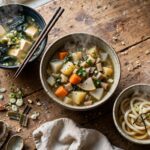
The word nabe means both the pot and the meal cooked in it. A Japanese hot pot is a communal dish: seasoned broth in a large pot — often an earthenware donabe — set over a burner at the table, with meat, seafood, tofu, and vegetables cooked in it as the meal goes on. Everyone eats from the same pot. That single fact shapes everything else about it.
Hot pots are old. Earthenware made it possible to boil food over a fire thousands of years ago, and by the late Edo period families were gathering around the irori, the traditional sunken hearth, to share meals from a common pot. When meat became more common in the Meiji era, beef hot pots like gyunabe — the ancestor of sukiyaki — spread across the country.
Part of the appeal is practical. Nabe is quick to assemble: cut the ingredients, arrange them, bring the broth to a simmer, and you are cooking. It is economical, because it leans on whatever is in season and therefore at its cheapest and best. And it is filling in a way that sneaks up on you. By the time the pot is empty, everyone is warm, full, and slightly amazed at how much they ate. Every time. Nobody learns the lesson, and nobody minds.
More Than Sukiyaki and Shabu-Shabu
Outside Japan, two hot pots tend to steal the spotlight: sukiyaki and shabu-shabu. Both deserve their fame. Sukiyaki simmers thinly sliced beef, tofu, vegetables, and noodles in a sweet soy-based broth, and the cooked morsels are dipped in beaten raw egg — a combination that sounds strange until the moment it tastes inevitable. Kanto-style sukiyaki simmers everything together, while Kansai-style sears the meat first; regulars will defend their version with feeling. Shabu-shabu is lighter: paper-thin meat swished briefly — the name mimics the swishing sound — through a delicate kombu broth, then dipped in sesame sauce or citrusy ponzu.
But those two are the front door, not the whole house. Yosenabe throws seafood, meat, tofu, and vegetables into one rich dashi broth and lets them sort themselves out. Chanko nabe, the hearty stew long associated with sumo wrestlers, is built to feed a crowd generously. Oden simmers daikon, eggs, fish cakes, and tofu in a light broth for hours, the kind of slow food sold from winter stalls and convenience-store counters alike. There are kimchi pots, curry pots, soy-milk pots, tomato pots, and regional specialties most visitors never meet — Akita’s hunter hot pot, Hiroshima’s oyster pot, a tofu pot from an old Tokyo kitchen, a mizuna “needle” pot prized for the crisp green’s texture.
The variety is the point. A hot pot is not a recipe you memorize; it is a format you adapt. Change the broth, change the main ingredient, change the seasonings on the side, and you have a different dinner from the same pot.
Building a Pot Worth Gathering Around
A good nabe starts with the broth, and the broth starts with restraint. For shabu-shabu, water and kombu are nearly enough — the dipping sauces do the seasoning. For yosenabe or a seafood pot, a proper dashi of kombu and bonito gives depth without heaviness. Sukiyaki’s broth is sweeter and more assertive: soy sauce, mirin, sake, and sugar, balanced so the beef tastes richer rather than candied.
Then come the ingredients, and winter is generous with them. Napa cabbage (hakusai) wilts into silk. Daikon turns translucent and sweet after a long simmer. Burdock root (gobo) adds an earthy note that nothing else quite replaces. Spring onions, mizuna greens, enoki and shimeji mushrooms, shirataki noodles, tofu in several forms — broiled yaki-dofu holds its shape beautifully in a bubbling pot. If you want a closer look at this winter cast, our guide to Japanese winter vegetables covers the roots and leaves that make a cold-weather pot taste like itself.
Order matters, a little. Root vegetables and anything that needs time go in first. Delicate greens like mizuna go in last, barely kissed by the heat, so they keep some bite for the first helping — they will wilt soon enough on a second. Seafood goes in when the broth is simmering steadily, and comes out as soon as it is just done. Meat for shabu-shabu is cooked a slice at a time, by each diner, which is half the fun: everyone is a cook, not an audience.
Condiments are personal. Ponzu with grated daikon, sesame sauce, a squeeze of yuzu — the fragrant citrus in our yuzu guide suits hot-pot dipping sauces well — chili, or nothing at all. Nobody’s bowl has to taste like anyone else’s, even though it all came from the same pot.
The Table Manners of a Shared Pot
Eating from one pot has its own quiet etiquette, and it is mostly common sense. Use the serving chopsticks or ladle for the pot if they are provided, and your own chopsticks for your bowl. Take what you can eat, leave the pot balanced — do not fish out all the shrimp and leave someone else the cabbage — and keep an eye on the broth level, topping it up before it runs low. If you are the host, that last job is yours.
There is also a rhythm to it that first-timers sometimes miss. A hot pot is not a race. Ingredients go in, conversation goes on, someone tops up the broth. The meal stretches because the cooking stretches, and that is not a flaw — a meal that asks everyone to participate feels slower, warmer, and more like an evening than a transaction.
Never Skip the Shime
Ask a Japanese hot-pot lover about the best part of the meal and many will not name the meat or the seafood. They will name the shime — the finish. When most of the solid ingredients are gone, the broth left in the pot is not leftover. It is the essence of everything that was cooked in it, concentrated and seasoned by an evening’s worth of flavors.
The usual move is to add rice, making zosui, a soupy rice porridge, often finished with a beaten egg, or to add noodles, usually udon, which hold up well to a second simmer. Do not waste the broth: it is the best part.
And if you are too full to face it, there is no shame in the next-day version. Leftover hot-pot broth, kept overnight, makes a superb lunch with fresh rice or noodles stirred in. Some cooks even go further, turning the remaining broth into a curry — a trick that also rescues leftover soup of other kinds. Do noodles first and rice second if you want both, by the way: rice absorbs the liquid, and once it has, there is no broth left for noodles.
Hot Pot at Home, Hot Pot Out
At home, nabe is gloriously low-effort. The prep is chopping and arranging; the cooking happens at the table, with help from everyone. A donabe is lovely if you have one, but any large, sturdy pot over a portable burner does the job. Spend on ingredients at their peak — winter vegetables, good tofu, seafood you trust — because a simple broth has nowhere to hide.
Out at a restaurant, a hot pot is a different kind of pleasure: someone else chose the broth, someone else prepped the mountain of vegetables, and your only job is to cook slices and talk. Specialist hot-pot restaurants exist across Japan, and many general restaurants add nabe to the menu as soon as the weather turns. It is worth ordering one at least once with a group, if only to learn how little ceremony a great communal meal actually needs.
However you eat it, the season itself is the invitation. Winter will do what winter does — cold wind, early dark, shoulders hunched on the walk home. The answer, in Japan, has been the same for generations: put a pot in the middle of the table, fill it with the season’s best, and linger until the steam fogs the windows. That is winter, handled properly.