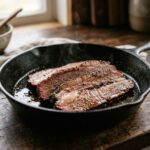
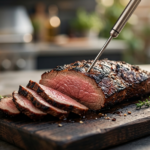
You grilled a beautiful ribeye last night, ate half, and wrapped the rest in foil before tossing it in the fridge. Now it’s two days later and you’re staring at it, wondering — is this still safe to eat?
Short answer: cooked steak lasts 3 to 4 days in the fridge when stored properly. That’s the guidance from the USDA, and it applies to pretty much all cooked beef, whether it’s a filet mignon, a flank steak, or sliced sirloin from a stir-fry.
But “3 to 4 days” only holds true under the right conditions. How you store it, how quickly it went into the fridge after cooking, and even how your refrigerator is set up all play a role. Let’s break this down so you know exactly what to do with that leftover steak — and when it’s time to let it go.
Why the 3-to-4-Day Window Matters
Bacteria don’t care how expensive your steak was. Once meat is cooked and starts cooling down, it enters what food safety experts call the “danger zone” — temperatures between 40°F and 140°F (4°C to 60°C). In this range, bacteria like Salmonella, E. coli, and Staphylococcus aureus can multiply quickly.
Cooking kills most of the bacteria on the surface and inside the steak. But once it cools and sits in the fridge, new bacteria begin growing slowly — even at refrigerator temperatures. After about 3 to 4 days, the bacterial load can reach levels that increase the risk of foodborne illness, even if the steak still looks and smells okay.
That’s the tricky part. Spoilage bacteria (the ones that make food smell off) and pathogenic bacteria (the ones that make you sick) aren’t always the same. A steak can harbor dangerous levels of pathogens before it starts smelling bad.
Quick Fact: The 3-to-4-day rule applies to all cooked beef, not just steak. Cooked beef fridge life is roughly the same whether you’re dealing with roast beef, ground beef patties, or steak leftovers.
The Two-Hour Rule You Might Be Ignoring
Here’s a detail that a lot of people overlook: the clock on your cooked steak’s fridge life starts ticking the moment it comes off the heat.
The USDA recommends refrigerating cooked meat within 2 hours of cooking. If the ambient temperature is above 90°F (32°C) — say, at a summer cookout — that window shrinks to 1 hour.
Leaving a cooked steak sitting on the counter for three or four hours before refrigerating it doesn’t just shorten its fridge life. It can make the steak unsafe before it even hits the refrigerator.
A common scenario: you finish grilling, eat dinner, chat for a while, clean up, and eventually put the leftovers away. By then, two hours may have already passed. If you know you’ll have leftover steak, get it into the fridge sooner rather than later.
You don’t need to wait until the steak is completely room temperature before refrigerating it. Modern refrigerators handle warm food just fine. Waiting for it to fully cool on the counter is an outdated habit that does more harm than good.
How to Store Cooked Steak the Right Way
The way you wrap and store your leftover steak makes a real difference — not just for safety, but for taste and texture too.
Tossing a steak on a plate with some loosely draped plastic wrap is technically better than leaving it uncovered, but it’s far from ideal. Air exposure dries out the meat and can introduce flavors from other items in your fridge.
Here’s what actually works well:
- Airtight containers — Hard-sided containers with tight-fitting lids are your best bet. They protect against air, moisture loss, and cross-contamination.
- Heavy-duty aluminum foil wrapped tightly — This works in a pinch, especially if you wrap the steak snugly with no gaps.
- Zip-top bags with the air pressed out — Squeeze as much air out as you can before sealing. This reduces oxidation and keeps the steak moist.
One thing to avoid: stacking warm steak directly into a crowded fridge where it’s surrounded by other items on all sides. Give it a little space so the cold air can circulate and bring the temperature down quickly.
Also, make sure your refrigerator is set to 40°F (4°C) or below. A fridge running at 42°F or 45°F might seem close enough, but that small difference can speed up bacterial growth noticeably over several days.
Does the Cut or Doneness Level Matter?
People ask this a lot, and the answer is nuanced.
From a food safety standpoint, the cut of steak doesn’t significantly change how long it lasts in the fridge. A cooked T-bone has roughly the same fridge life as a cooked strip steak or a leftover piece of skirt steak. The 3-to-4-day guideline applies across the board.
Doneness level is a slightly different story. A rare or medium-rare steak has a lower internal temperature at the center, which means the interior wasn’t heated as thoroughly as a well-done steak. Does that make it more dangerous as a leftover? Not necessarily — the surface, where most bacteria reside on whole cuts, was still exposed to high heat. But if you’re someone who’s immunocompromised or particularly cautious about food safety, you might want to consume rare leftover steak a bit sooner or reheat it more thoroughly.
If you’re curious about how different doneness levels affect flavor and texture, our steak doneness guide covers what each level actually means in terms of internal temperature.
What does change with different cuts is how well they reheat. Thin steaks like flank or skirt tend to dry out faster when reheated. Fattier cuts like ribeye hold up better. More on that in a moment.
How to Tell If Leftover Steak Has Gone Bad
Even within the 3-to-4-day window, things can go wrong if the steak wasn’t stored properly or if your fridge had a temperature fluctuation (power outage, door left open, etc.).
Trust your senses, but understand their limits.
Smell is your most reliable indicator. Fresh cooked steak should smell like… cooked steak. If it has a sour, ammonia-like, or generally “off” odor, throw it away. Don’t try to mask the smell with seasoning or sauce.
Texture changes can also signal spoilage. If the surface of the steak feels slimy or tacky — not just moist from being in a sealed container, but genuinely slimy — that’s bacterial growth, and the steak should go.
Color is less reliable. Cooked beef can darken slightly in the fridge due to oxidation, and that’s normal. A grayish-brown surface on a three-day-old steak doesn’t automatically mean it’s bad. But if the discoloration is accompanied by a strange smell or slimy feel, that’s your answer.
Warning: If you’re unsure whether a leftover steak is safe, err on the side of throwing it out. Foodborne illness from spoiled beef isn’t a mild inconvenience — it can mean several days of serious discomfort or worse, especially for young children, elderly individuals, and anyone with a weakened immune system.
Can You Freeze Cooked Steak Instead?
Absolutely, and this is the move if you know you won’t eat the leftovers within a few days.
Cooked steak freezes well and stays safe indefinitely in terms of food safety (as long as it stays at 0°F / -18°C or below). For best quality, though, aim to eat it within 2 to 3 months. After that, the texture and flavor start to degrade — the steak dries out and can develop freezer burn.
To freeze cooked steak properly:
- Let it cool to at least room temperature first (this is one case where cooling before storage actually matters, since putting hot food directly in the freezer can raise the freezer’s internal temperature and affect other frozen items).
- Wrap it tightly in plastic wrap or foil, then place it in a freezer-safe zip-top bag.
- Label it with the date. You’ll forget when you froze it — everyone does.
When you’re ready to eat it, thaw the steak in the fridge overnight rather than on the counter. Thawing at room temperature puts the meat back in the danger zone for too long.
This same principle applies to other proteins, by the way. If you’ve ever wondered about how long salmon lasts in the fridge or how to handle thawed chicken, the logic is similar — cold storage slows bacteria, freezing stops growth almost entirely, and proper wrapping prevents quality loss.
Reheating Leftover Steak Without Ruining It
This is where most people go wrong. You stored the steak perfectly, it’s only two days old, and then you microwave it on high for three minutes and end up with a gray, rubbery slab that barely resembles what you grilled.
The best reheating method depends on your equipment and how much time you have.
Oven method (best results): Preheat your oven to 250°F (120°C). Place the steak on a wire rack set over a baking sheet. Heat it until the internal temperature reaches about 110°F (43°C) — usually 20 to 30 minutes depending on thickness. Then sear it in a hot skillet with a little oil or butter for about 60 seconds per side. This gives you a warm, tender steak with a re-crisped exterior.
Skillet method (fastest good option): Heat a skillet over medium heat, add a small amount of oil, and warm the steak for about 2 minutes per side. Don’t crank the heat to high — you’ll overcook the outside before the center warms up.
Microwave (last resort): If you must use a microwave, set it to 50% power and heat in 30-second intervals, flipping the steak between rounds. It won’t be great, but it’ll be edible.
If you enjoy reheating barbecue leftovers, you might also find our guide on how to reheat brisket useful — the low-and-slow oven approach works similarly for both.
Cooked Steak Fridge Life at a Glance
| Storage Method | How Long It Lasts | Quality Notes |
|---|---|---|
| Refrigerator (40°F or below) | 3–4 days | Best eaten within 2–3 days for flavor and texture |
| Freezer (0°F or below) | 2–3 months (safe indefinitely) | Wrap tightly to prevent freezer burn |
| Left on counter | 2 hours max (1 hour if above 90°F) | Discard after this window |
What About Steak That’s Been Marinated or Sauced?
Marinades and sauces don’t extend the fridge life of cooked steak. A steak sitting in leftover chimichurri or teriyaki sauce still follows the same 3-to-4-day rule.
That said, sauces and marinades can actually mask early signs of spoilage, which makes it harder to rely on smell and texture alone. If your sauced leftover steak has been in the fridge for four days, don’t assume the sauce kept it fresh — it didn’t.
One exception worth mentioning: heavily salted or acid-marinated preparations (like carne asada soaked in lime juice) may slow surface bacterial growth slightly, but not enough to meaningfully extend safe storage time. Stick with the standard timeline.
Using Leftover Steak Wisely
If you regularly end up with leftover steak, planning ahead can help you actually enjoy it rather than forgetting about it until it’s questionable.
Slice it thin and use it in sandwiches, steak salads, quesadillas, fried rice, or pasta within a day or two. Cold sliced steak over a salad is genuinely delicious and requires zero reheating.
The key is treating leftover steak as an ingredient, not just a sad version of last night’s dinner. The texture changes slightly in the fridge no matter what you do — so instead of trying to recreate the original meal, use the steak in something where that slight change doesn’t matter.
Knowing the difference between cuts can help here too. Fattier, well-marbled cuts like ribeye or Wagyu-style beef tend to stay juicier as leftovers than leaner cuts. And if you’re comparing cuts for grilling and leftovers, our New York strip vs. ribeye comparison breaks down how each one performs.
FAQ
Can you eat cooked steak after 5 days in the fridge?
It’s not recommended. The USDA’s guideline is 3 to 4 days for cooked beef stored at 40°F or below. At day 5, the risk of bacterial growth that could cause foodborne illness increases, even if the steak still looks and smells fine. When in doubt, throw it out.
Is it safe to reheat cooked steak more than once?
Technically, you can reheat steak multiple times as long as it reaches an internal temperature of 165°F (74°C) each time. Practically, each reheating cycle degrades the texture and flavor significantly. A better approach is to only reheat the portion you plan to eat.
Does wrapping steak in aluminum foil keep it fresh longer than a container?
Not really. What matters most is creating a seal that limits air exposure. A tightly wrapped piece of foil can work, but airtight containers and zip-top bags with the air pressed out tend to do a better job at preventing both drying and contamination.
Can I tell if cooked steak is bad by tasting a small piece?
This is a bad idea. Pathogenic bacteria that cause food poisoning don’t always produce noticeable off-flavors. You could taste a small piece, think it’s fine, eat the rest, and still get sick. Rely on smell, texture, visual inspection, and how long it’s been stored rather than tasting.
Does cooked steak last longer if it’s vacuum sealed?
Vacuum sealing removes most of the air around the steak, which slows oxidation and can help maintain quality. Some sources suggest vacuum-sealed cooked meat may stay safe for up to 5 days in the fridge, but the conservative and widely accepted recommendation remains 3 to 4 days. Vacuum sealing is most beneficial for freezer storage, where it significantly reduces freezer burn.
The bottom line is simple: get your cooked steak into the fridge quickly, store it in something airtight, and eat it within three to four days. If you’re not going to get to it by then, freeze it right away rather than letting it sit and hoping for the best. Leftover steak is too good to waste — but it’s not worth a bout of food poisoning either. When you’re ready to enjoy it, reheat it gently, and consider using it as an ingredient in something new rather than just microwaving a cold slab. Your stomach — and your taste buds — will thank you.